What is the lifespan of a transparent LED screen?

What is the lifespan of a transparent LED screen

What is the lifespan of a transparent LED screen?

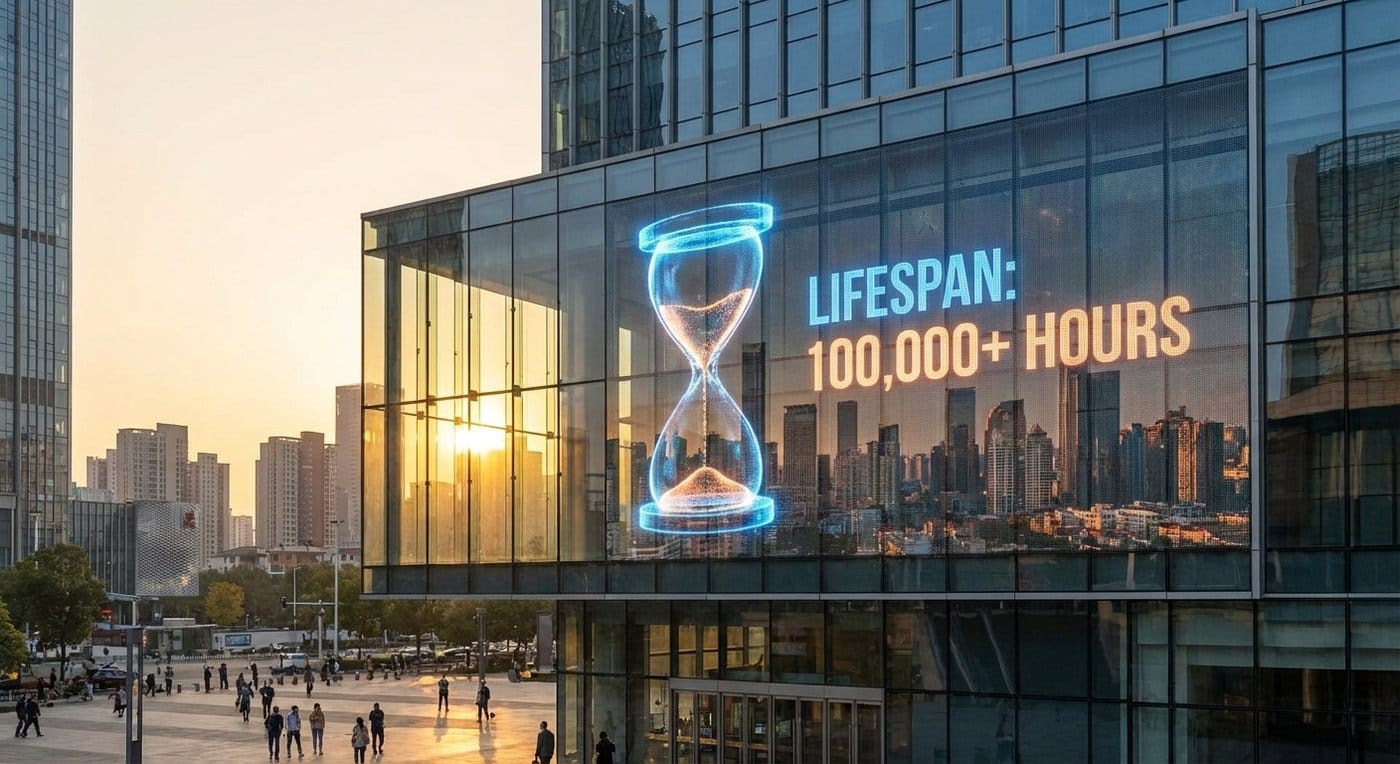
Transparent LED is one of those product categories where “lifespan” gets oversimplified into a single number—50,000 hours, 80,000 hours, 100,000 hours—as if the screen is a light bulb that’s either ON or OFF.

In real projects, lifespan is more like a performance curve: brightness slowly drops, color uniformity drifts, a few pixels fail over time, and maintenance decisions (module swaps, power supply replacements, cleaning cycles) determine whether the screen still looks “brand-new” in year 5—or looks tired in year 2.

This guide breaks lifespan down the way engineers, integrators, and project owners actually manage it—so you can specify, budget, and procure transparent LED with confidence. If you’re new to our solutions, start from the homepage for portfolio context: ChinaLEDScreens.


Lifespan vs. service life: the definition that changes everything

“LED chip life” is not “screen life”

Most suppliers quote LED lifespan in hours, but that number usually refers to the light source under controlled lab conditions.

Your screen’s real-world lifespan is determined by the whole system, including:

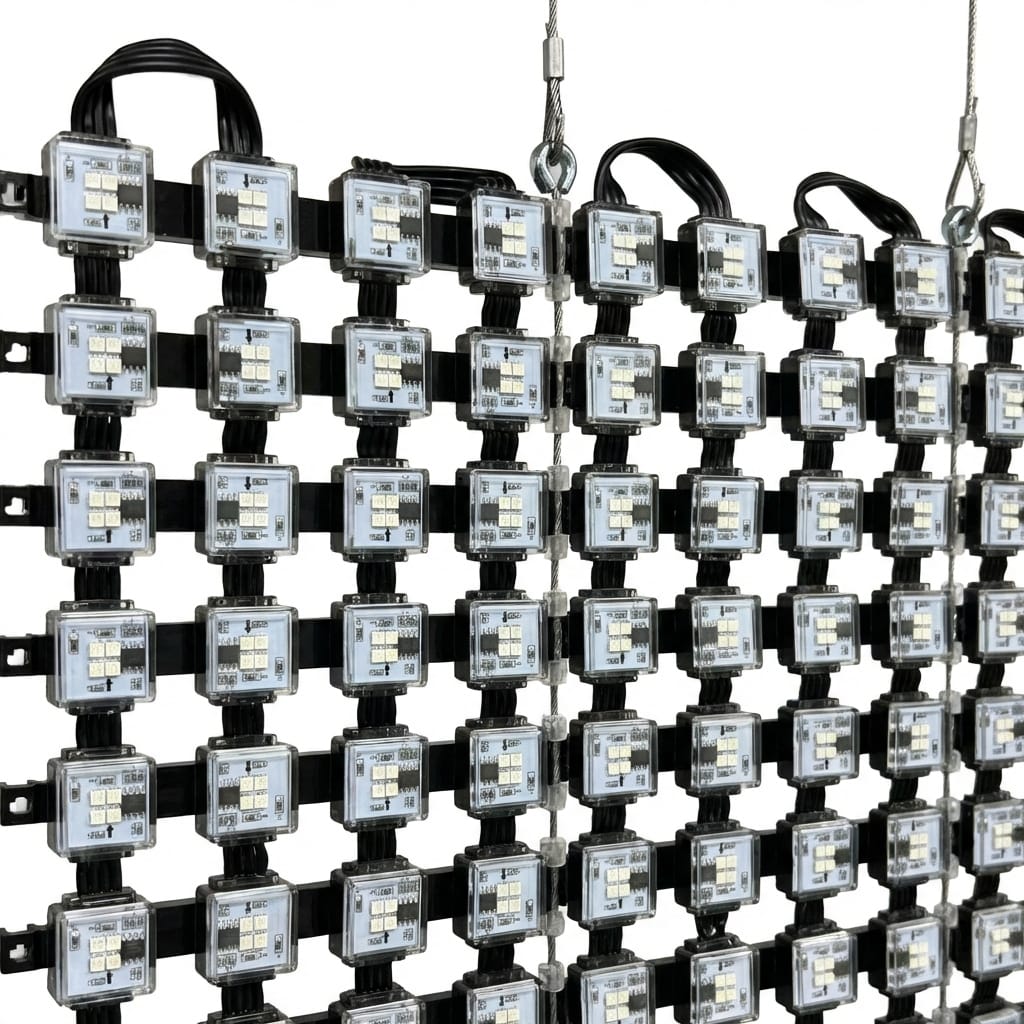
  • LED modules and solder quality
  • Driver IC stability and refresh behavior
  • Power supplies and surge exposure
  • Thermal design (module heat + airflow + ambient temperature)
  • Environmental sealing (humidity, salt fog, dust)
  • Installation structure (vibration, wind load, cable strain)
  • Maintenance discipline (cleaning, inspection, spare parts strategy)

The common engineering metrics: L50, L70, and “acceptable degradation”

When someone says “50,000 hours,” ask: to what endpoint?

  • L70 = brightness drops to 70% of initial
  • L50 = brightness drops to 50% of initial

Many LED lighting specs use L70; some display marketing uses L50; many quotes don’t define it at all.

For display owners, the real endpoint is usually:

  • “When it no longer meets the intended visual standard” (daylight readability, brand color accuracy, uniformity, premium appearance)
  • Or “when maintenance cost outweighs the upgrade”

What lifespan looks like in practice (a realistic expectation)

Transparent LED screens are often deployed in high-visibility locations—retail glass, façades, curtain walls—where “still works” isn’t good enough. Most projects care about how long it stays visually impressive.

A practical way to think about it:

Lifespan cheat sheet (field reality)

  • Rated LED hours: often quoted as 50,000–100,000 hours (depends on definition and test conditions)
  • Typical “premium visual” service life: commonly 5–8 years (sometimes longer with good thermal + power + maintenance)
  • Long-run operational service life (with part replacement): can extend 8–12+ years in many installations, especially with a planned spare-parts strategy

What pushes you toward the high end? Lower average brightness, strong thermal design, stable power, proper sealing, and disciplined maintenance.
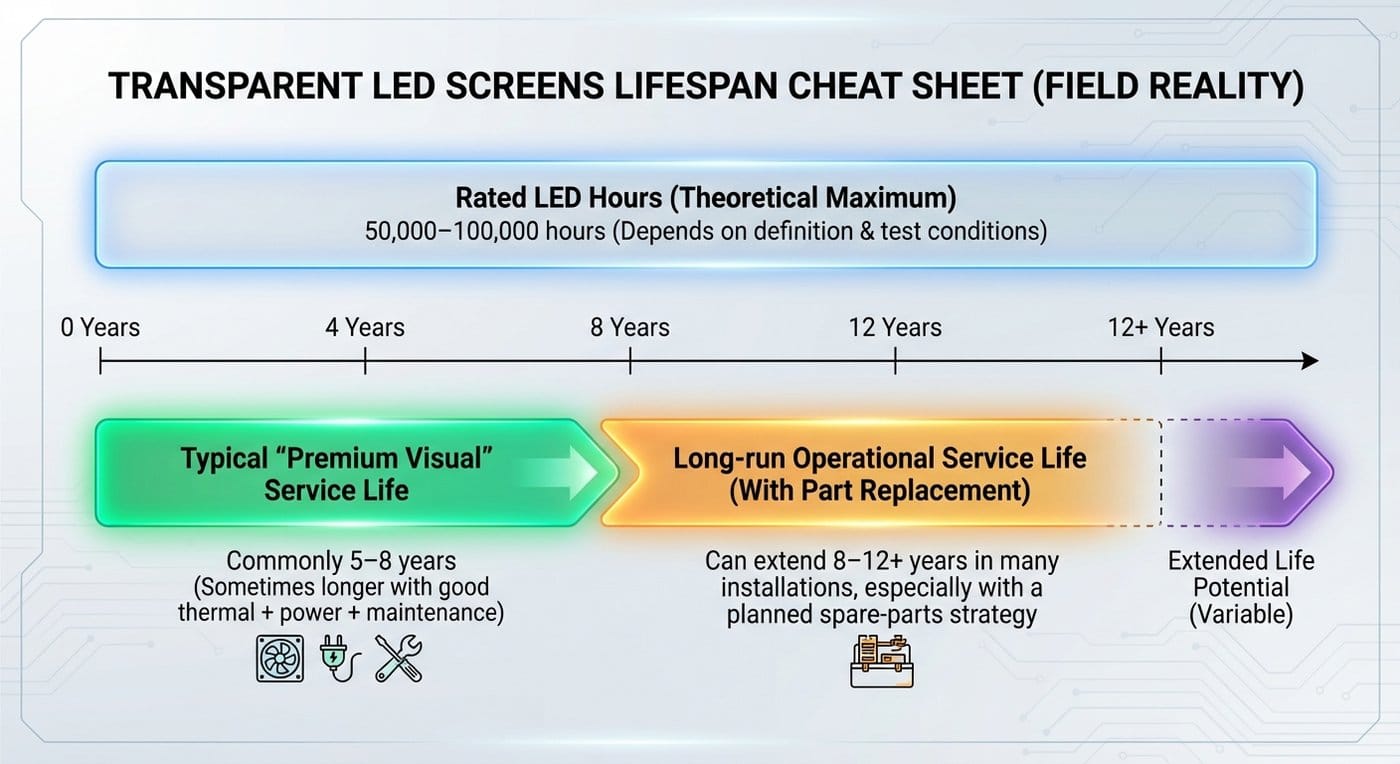
transparent led screens Lifespan cheat sheet

The biggest lifespan drivers (and what to do about them)

1) Heat: the #1 silent killer

Heat accelerates:

  • LED lumen depreciation (brightness drop)
  • Color shift over time
  • Solder fatigue and micro-cracking
  • Driver IC stress and failure rates
  • Power supply aging

What to specify / verify

  • Thermal path design in modules and cabinets
  • Airflow behind the screen (especially in glass façades with constrained cavities)
  • Safe operating ambient range and derating guidance
  • Aging tests that reflect the intended use case (indoor vs outdoor)

Real-world tip: If you run the screen at 100% brightness all day, you’re trading lifespan for visibility. A smarter approach is day/night profiles and ambient-light-based brightness control.


2) Power quality and surges: the most underestimated risk

Power supplies don’t “die suddenly” only—many degrade first:

  • ripple increases
  • regulation stability declines
  • intermittent issues show up (flicker, random resets)

What to implement

  • Surge protection (especially for outdoor and high-rise projects)
  • Grounding and lightning considerations in the installation plan
  • Redundant power design for critical sites (where downtime is expensive)

3) Environment: outdoor transparency means more exposure

Transparent systems are often visually “open,” which can be good for airflow—but it also means:

  • Dust, pollution, and oily residues can settle on optical surfaces
  • Humidity cycles cause condensation risk
  • Coastal installations add salt fog corrosion risk

For outdoor deployments, your starting point category usually looks like outdoor transparent LED screen solutions, because lifespan is tightly linked to sealing strategy and serviceability.

What to specify / verify

  • IP strategy (front/rear, and where the real risk is)
  • Conformal coating approach where appropriate
  • Connector/cable protection and strain relief
  • Cleaning access plan (not just “it can be cleaned,” but how)

4) Usage profile: hours/day matters more than calendar years

A screen running 16 hours/day ages roughly 2× faster (in hours) than one running 8 hours/day—but real aging is not perfectly linear because heat, brightness, and environment change the slope.

A simple planning calculation:

  • 10 hours/day × 365 = 3,650 hours/year
  • 50,000 hours / 3,650 ≈ 13.7 years (in LED-hour terms, not premium-visual terms)

That’s why you must connect “hours” to “acceptable visual degradation” and maintenance.
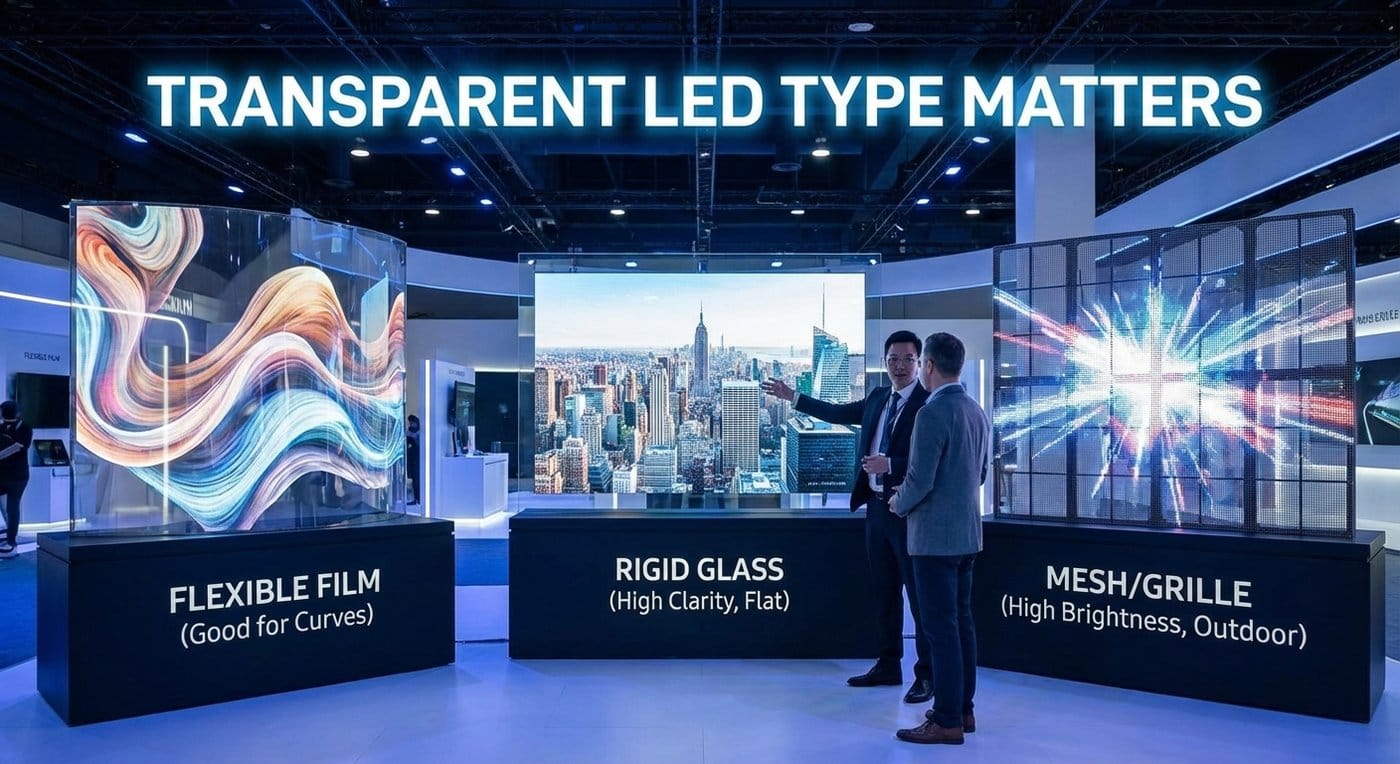

Transparent LED type matters: lifespan differences by product family

Transparent LED type matters

Not all “transparent LED” is built the same way—construction style changes thermal behavior, sealing, and maintainability.

Modular transparent LED screens (cabinet/module systems)

This is the common choice for scalable projects with service access and long-term maintainability. For indoor applications with controlled environments, you’ll often see systems similar to indoor transparent LED screen configurations.

Lifespan advantage: replaceable modules and power components make long-term service life easier.

LED film (thin-profile glass-applied solutions)

Film systems are loved for minimal visual obstruction—great aesthetic—but lifespan depends heavily on:

  • adhesive stability
  • heat dissipation through glass
  • installation quality (bubbles, edge lifting, cable stress)

If you’re comparing options, reference a typical transparent LED film screen form factor and ask how they manage heat and replacement logistics.

Flexible / curved film installs

Curved glass and complex geometry adds mechanical stress and installation sensitivity. For this family, see an example like transparent LED flexible film display and pay extra attention to:

  • bend radius limits
  • edge sealing
  • long-run adhesion and service strategy

Mesh / façade systems

Façade-scale mesh can be mechanically robust, but projects are exposed to wind, vibration, UV, and weather cycles. A reference point is mesh façade LED display solutions—where sealing, corrosion resistance, and structural integration dominate lifespan.

“Holographic” transparent systems (floating visual effect)

These are often used for premium showroom effects rather than 24/7 outdoor duty. A typical category example: holographic LED screen display.

Lifespan note: Many of these projects prioritize wow effect and controlled indoor environments; they can last well if kept cool and clean, but they’re not always designed for harsh outdoor life.

Transparent LED glass screens (glass-integrated / “glass-first” systems)

These prioritize the architectural “glass-first” aesthetic—often used where the transparency and premium finish must look like part of the façade, not an added display layer. In our portfolio, you can reference NE Series smart glass LED display and JY Series transparent LED glass screen display.

How lifespan behaves differently

  • Thermal path is dominated by glass + framing. If the glass cavity traps heat (or airflow is limited), lumen depreciation and color drift accelerate.
  • Moisture control becomes critical. Condensation risk (especially with temperature swings) can shorten electronics life if sealing and edge protection aren’t engineered correctly.
  • Service strategy must be defined early. Some glass-integrated systems are easier to maintain from mullion/service channels; others require more complex access planning. If access is hard, minor issues can turn into long downtime.

What to specify to protect lifespan

  • Confirm the operating brightness strategy (day/night profiles + sensor control) so the system isn’t forced to run max nits continuously.
  • Ask for guidance on ventilation / cavity requirements and thermal derating rules.
  • Define service access and replaceability (what can be replaced on-site, and how long it takes).

The procurement traps that shorten lifespan

Trap 1: “Same brightness spec” hides very different stress levels

Two screens can claim the same peak nits, but one achieves it by overdriving (more heat, faster depreciation). Ask for:

  • recommended operating brightness range
  • thermal derating guidance
  • long-run uniformity expectations

Trap 2: no clear acceptance criteria for pixel faults and uniformity drift

Define:

  • allowable dead pixels per square meter over time
  • acceptable brightness uniformity range
  • color calibration and recalibration plan

Trap 3: maintenance is not designed into the install

Transparent LED often sits on glass where access is limited. If you can’t service it efficiently, you’ll postpone maintenance—and the screen will “age faster” visually.
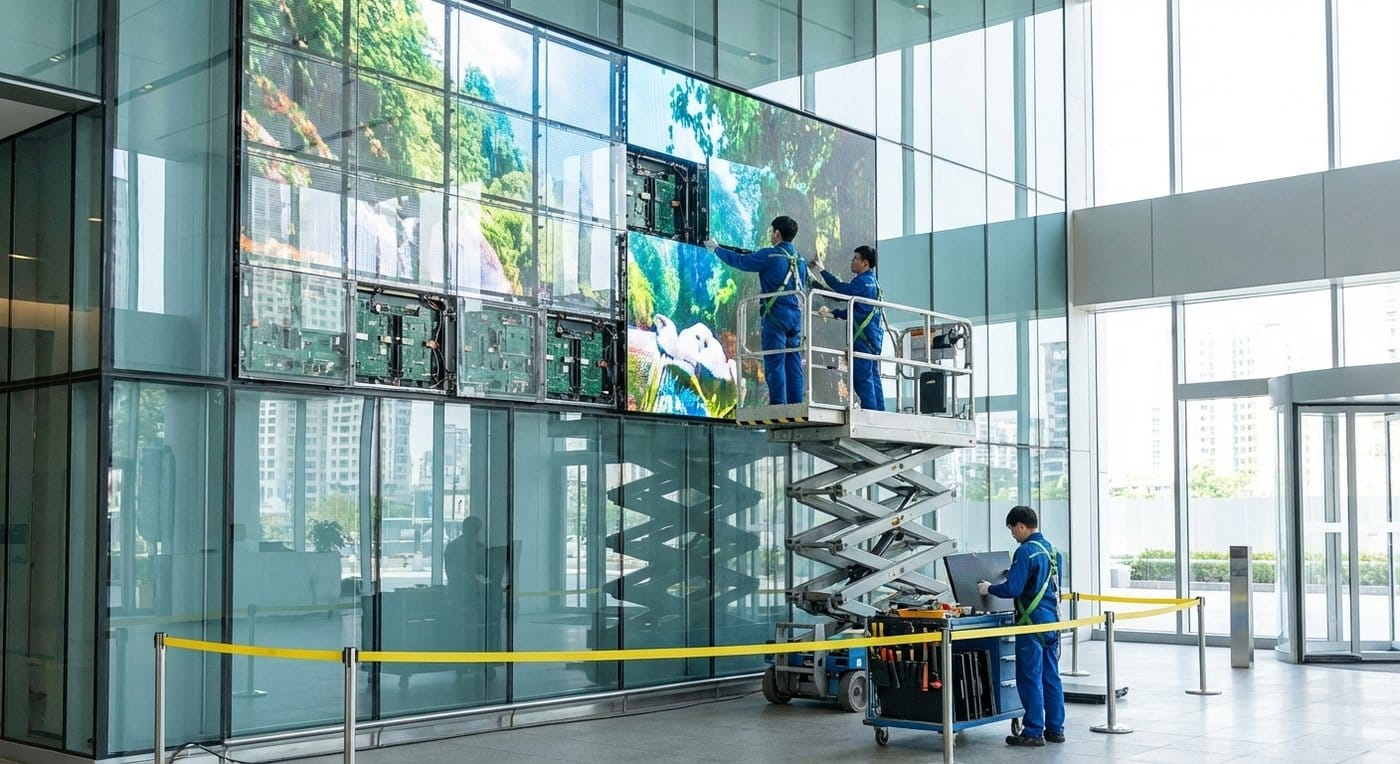
Transparent LED Screen maintenance

How to extend lifespan (engineering + operational playbook)

Brightness management (the easiest win)

  • Use scheduled brightness profiles (day/night)
  • Use ambient light sensors when appropriate
  • Avoid running max brightness unless necessary for readability

Thermal discipline

  • Ensure ventilation behind glass
  • Avoid sealing the screen into a heat trap cavity
  • Verify cabinet/module thermal path and component ratings

Power and protection

  • Surge protection and proper grounding
  • Stable power distribution design
  • Consider redundancy for mission-critical sites

Cleaning and inspection schedule

Dust and residue reduce perceived brightness, pushing operators to crank nits higher—creating more heat and faster aging.

A practical maintenance rhythm:

  • visual inspection: monthly or quarterly (site-dependent)
  • cleaning: as needed (urban pollution and indoor retail vary widely)
  • electrical/connection check: at planned intervals
  • keep spare modules/power supplies: sized to site criticality

What a “factory-grade” lifespan program looks like (what to ask your supplier)

As a factory-direct manufacturer (ChinaLEDScreens, founded in 2009), the biggest lifespan differentiator is not a single component—it’s the quality system behind it:

  • incoming component screening consistency
  • LED binning discipline and uniformity control
  • aging/burn-in processes
  • process controls in SMT/soldering
  • traceability and QC documentation
  • compliance certificates aligned to export markets
  • a spare-parts and support system that keeps projects running

When you evaluate suppliers, ask for evidence of:

  • aging/burn-in methodology (duration, pass/fail criteria)
  • QC checkpoints and traceability
  • warranty scope that matches the real failure modes (not just “module only”)

Buyer takeaway: how to specify lifespan in one paragraph

If you want an RFQ-ready statement, use something like:

“We require a transparent LED solution with defined lumen maintenance criteria (L70/L50), verified thermal management, and a maintenance plan suitable for the installation access conditions. Supplier must provide aging test standards, component traceability, spare parts recommendations, and warranty terms aligned to system-level reliability (modules, power, control).”

That one paragraph forces the conversation away from vague “100,000 hours” marketing and toward real reliability engineering.

Comments

Blog Comments
Share your love