Talk To Our Expert, Get A Solution in 20 minutes
Share your LED screen needs. Our experts will provide solutions and a quick response.

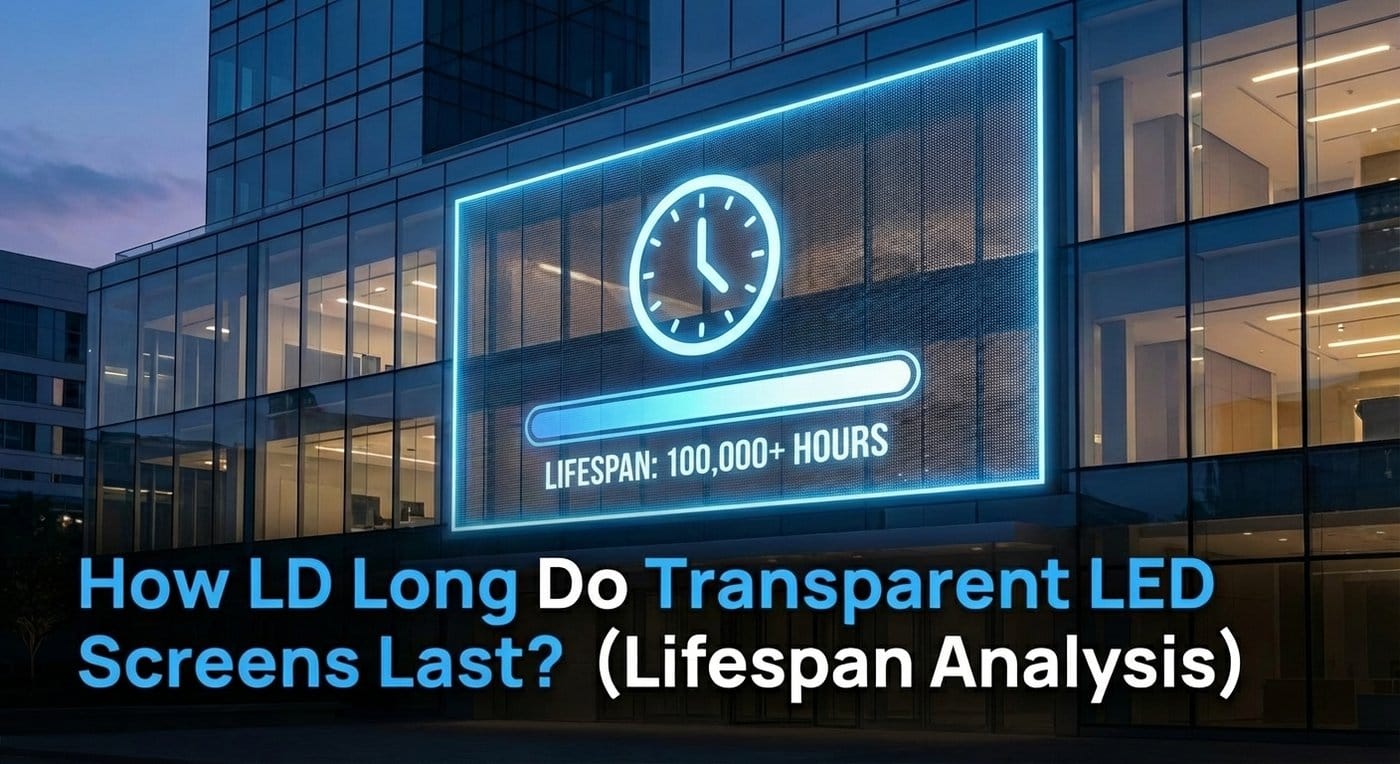
Transparent LED screens are sold like a forever-material: “100,000 hours,” “industrial grade,” “built for architecture.” Some of that is true. Some of it is marketing shorthand.
If you’re planning a storefront window, a curtain-wall façade, or a long-term media feature, the real question isn’t “Do LEDs last a long time?” It’s what defines end-of-life for your project—brightness, uniformity, downtime risk, maintenance access, and parts availability. (Samsung Business Insights)
In this guide, we’ll break lifespan down the way engineers, integrators, and project owners actually experience it—and how to make the system last longer in the field.
(Internal reference) For background on our product families and engineering approach, see ChinaLEDScreens and our technology & quality process.
In LED display conversations, 100,000 hours is a common “industry standard” number. But it’s widely misunderstood.
Samsung’s business guidance makes two critical clarifications:
Samsung also cites field examples of displays running 15+ years with adequate brightness, reinforcing that system design + operating conditions drive outcomes. (Samsung Business Insights)
Use the planning table earlier to translate “hours” into real schedules. A 100,000-hour claim is about 11.4 years at 24/7 operation, but it can represent decades at limited daily schedules—assuming the environment and power electronics don’t become the limiting factor. (Samsung Business Insights)
Unlike incandescent lamps, LEDs typically don’t go from “on” to “off” instantly. They gradually lose light output (lumen depreciation). Lumen maintenance describes the percentage of initial output remaining after a given number of hours. (維基百科)
That’s why many lighting and LED discussions use thresholds such as:
For transparent LED screens, “end of life” is often reached earlier than diode death because uniformity and appearance matter: patchiness, color shift, or uneven brightness can become unacceptable even when everything still turns on. (Samsung Business Insights)
A second source of confusion: reliability metrics (like MTBF) are not the same as lumen-maintenance life. MTBF describes expected time between failures for repairable systems, while lumen maintenance describes gradual brightness decay. (Avixa Portal)
For a transparent LED wall, practical service life is usually governed by:
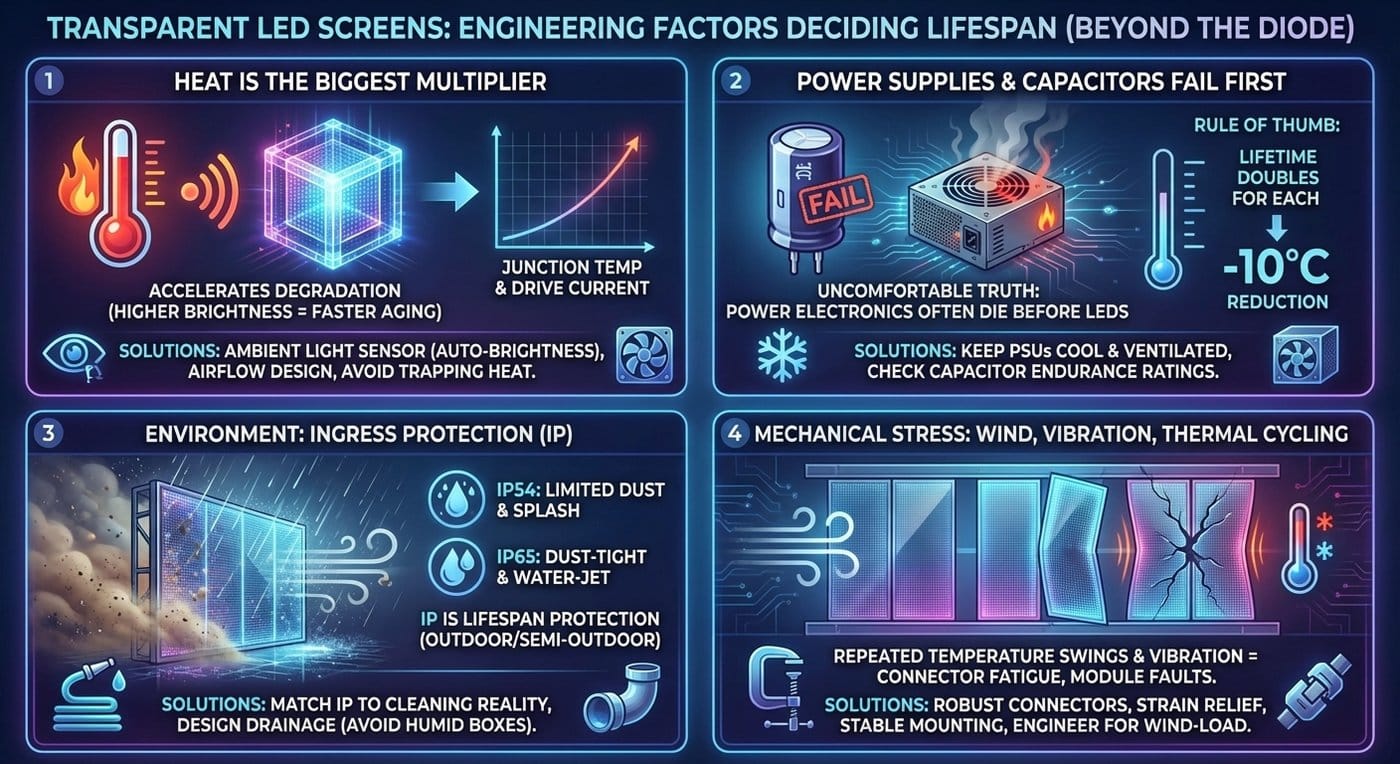
Heat accelerates LED degradation—especially at higher brightness (higher drive). Samsung explicitly calls out heat as a major contributor to diode degradation, and that temperature conditions (like extreme hot climates) can speed aging. (Samsung Business Insights)
Academic reliability work supports the same direction: LED lifetime behavior is strongly affected by junction temperature and driving current (thermal + electrical stresses). (PMC)
Practical takeaway: When you spec or operate transparent LEDs for maximum “wow,” you’re also pushing the main aging accelerator.
What to do
Here’s the uncomfortable truth: many LED installations don’t die because the LEDs are exhausted. They die because power electronics fail first.
Analog Devices explains that electrolytic capacitors have an “endurance spec” tied to temperature and time, and a common rule of thumb is lifetime doubles for each 10°C reduction (and halves for each +10°C). (Analog Devices) XP Power similarly describes Arrhenius-driven temperature dependence and the same doubling-per-10°C guideline in power supplies. (XP Power)
Practical takeaway: If your power box runs hot (common in sealed or poorly ventilated builds), your “100,000-hour” dream can turn into a power-supply maintenance plan.
What to do
Transparent displays used in architecture are often placed in “beautifully exposed” areas—wind, dust, humidity, and cleaning chemicals included.
IP ratings help you reason about how protected the enclosure is:
Practical takeaway: If your project lives outdoors (or in semi-outdoor atriums), IP strategy is part of the lifespan strategy.
What to do
Facade and window installations experience repeated temperature swings. Over time, thermal cycling and vibration can turn into intermittent connectors, solder fatigue, or module-level faults. The reliability literature treats thermal and electrical stresses as key drivers in degradation and lifetime modeling. (PMC)
What to do
Transparent LED is a category. Lifespan behavior changes with construction and where the fragile interfaces are.
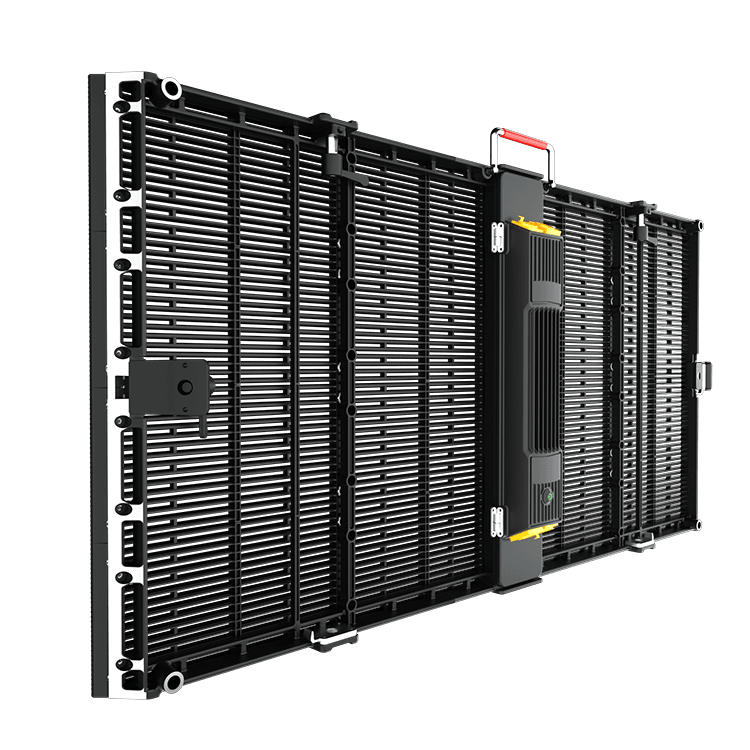
This is the classic see-through LED cabinet: rigid frames, open-area structure, and modular service.
Strengths
Main lifespan risks
(Internal reference) See our transparent LED screens lineup.
LED glass integrates display elements with laminated glass structures. This shifts some risk from “open cabinet exposure” to “glass system integration.”
Strengths
Main lifespan risks
(Internal reference) Explore LED glass screens.
Film solutions often prioritize minimal structure and maximum transparency. That usually means different tradeoffs: adhesives, ultra-thin conductors, and installation quality become more important.
Strengths
Main lifespan risks
(Internal reference) Start with our LED film screens guide.
These are “air passes through” architectures—often good for wind load and lightweight design, but they live in harsher airflow, dust, and outdoor conditions.
Strengths
Main lifespan risks
(Internal reference) For how we handle testing and QC, see Technology & Quality.
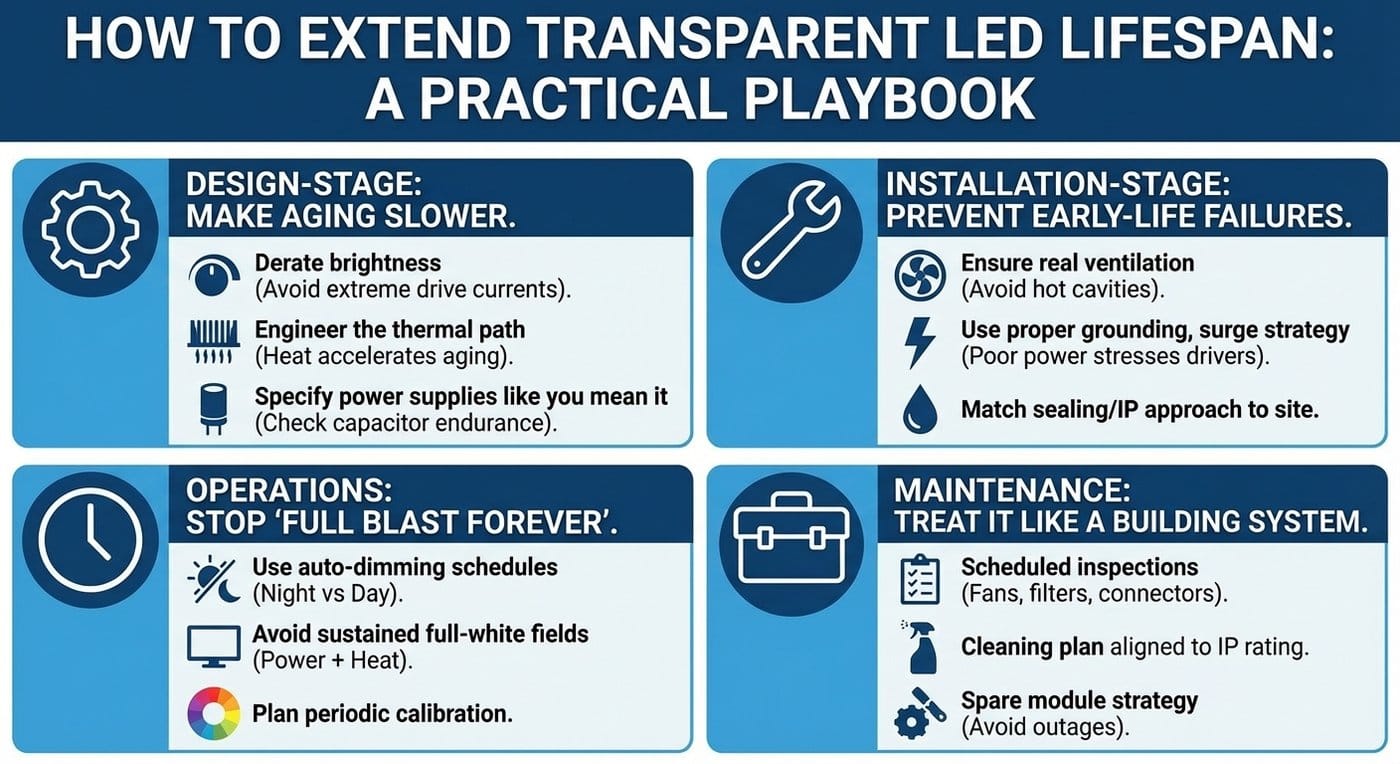
Samsung highlights that the “100,000-hour” figure assumes full brightness continuously—something most real screens don’t do. Using that insight intentionally is how you extend life. (Samsung Business Insights)
Practical policies:
A long-life transparent LED deployment looks less like “install and forget” and more like “HVAC mindset”:
(Internal reference) If you need engineering support or lifecycle planning, see our Services.
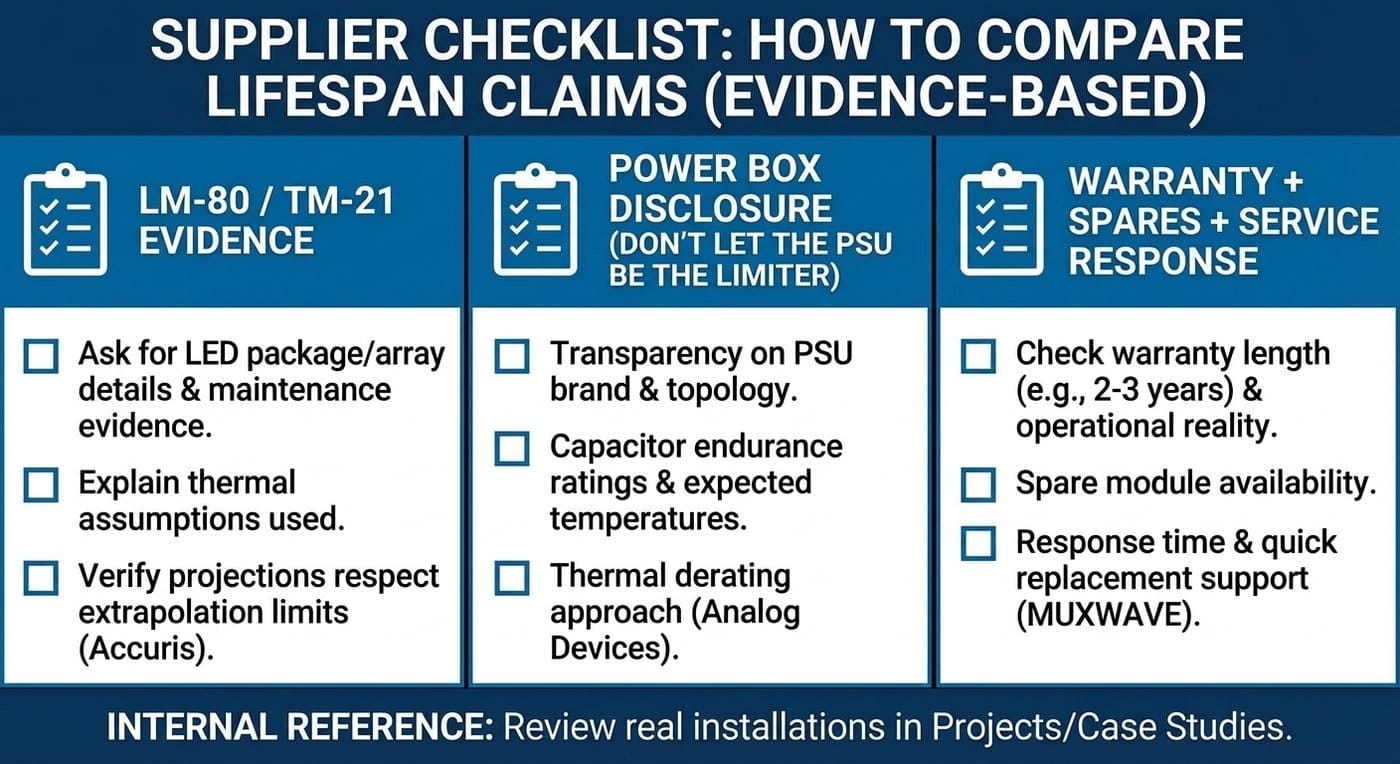
LM-80 defines how LED packages/arrays/modules are tested for lumen and color maintenance. TM-21 defines how long-term lumen maintenance can be projected from that data. (Accuris Standards Store)
Even though display vendors won’t always hand you raw LM-80 files, a credible supplier should be able to explain:
You want transparency on:
Because capacitor lifetime is temperature-sensitive and can be the real bottleneck. (Analog Devices)
In the transparent LED market, 2–3 year warranties are commonly seen, but what matters is the operational reality: spare modules availability, response time, and whether the design supports quick replacement. (Shenzhen MUXWAVE Technology Co., Ltd.)
(Internal reference) Review real installations and maintenance realities in our Projects/Case Studies.
A responsible lifespan plan separates three timelines:
If you build for serviceability (module swaps, PSU swaps), you can often extend system life well beyond “diode hours,” and time upgrades around business needs rather than breakdowns. (Samsung)
A transparent LED screen can absolutely be a long-life asset—but only if you treat lifespan as a system outcome:
If you want, I can also generate a one-page spec checklist (RFP-ready) that forces suppliers to disclose thermal assumptions, PSU details, serviceability, and lifespan evidence—so bids become comparable.