Talk To Our Expert, Get A Solution in 20 minutes
Share your LED screen needs. Our experts will provide solutions and a quick response.

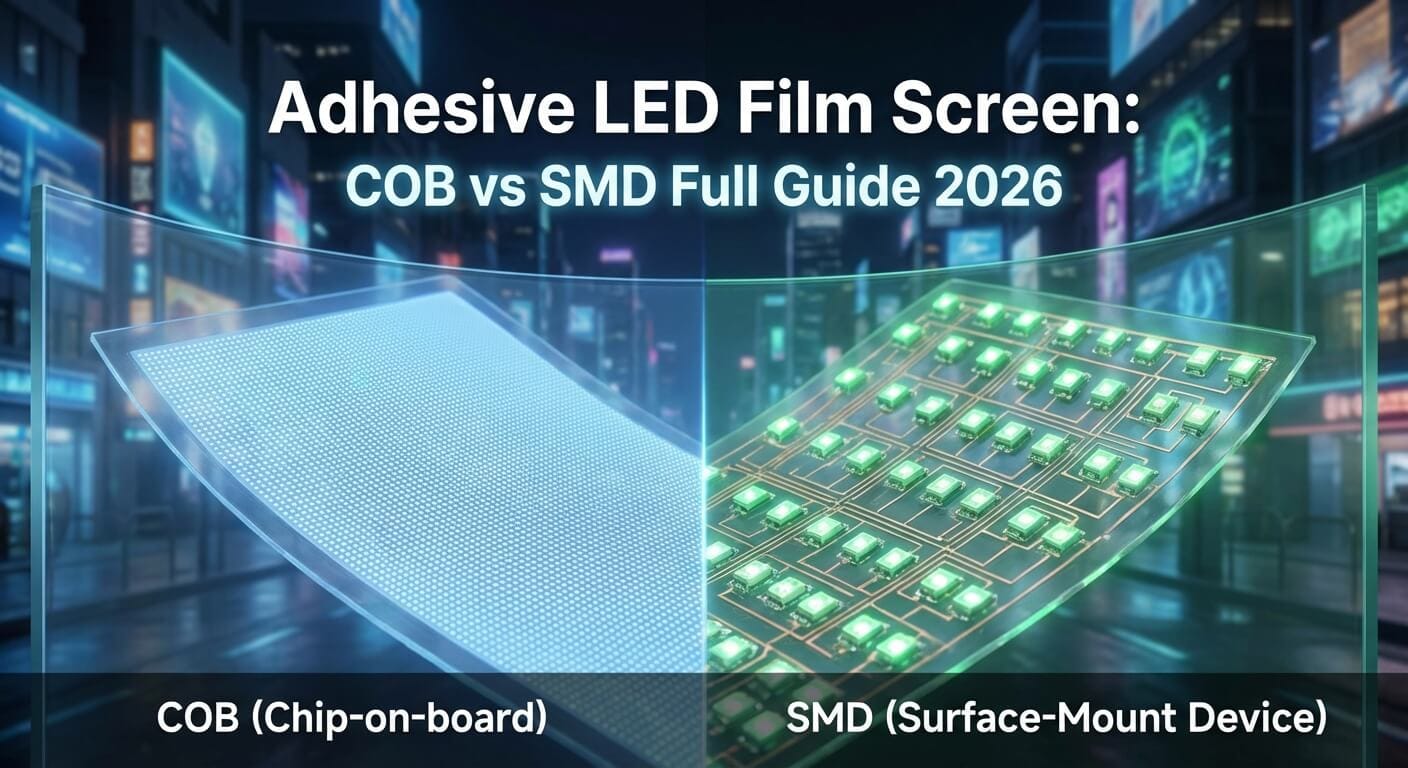
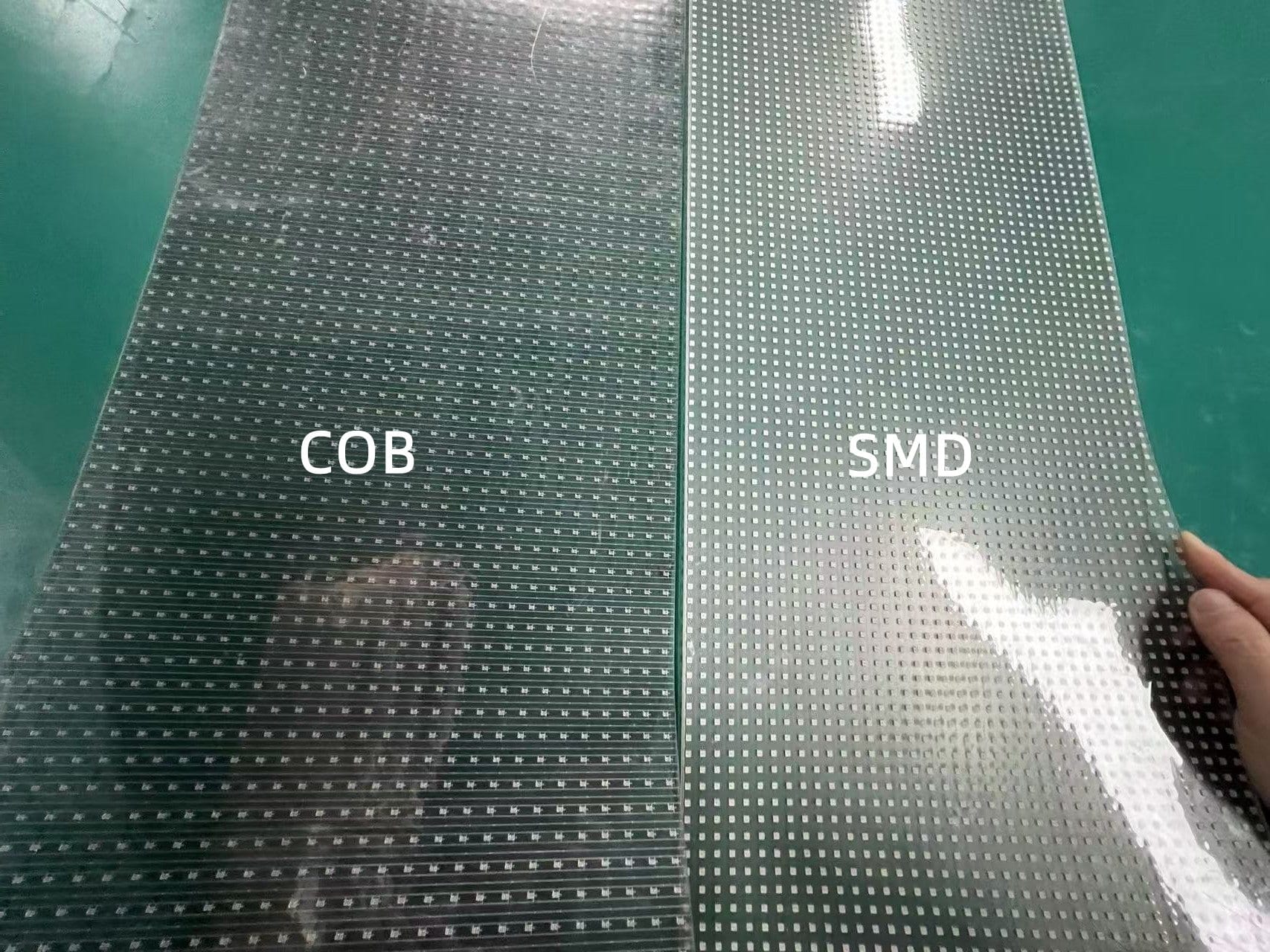
If you’re choosing an adhesive LED film screen for glass—shop windows, atriums, balustrades, curved vitrines—your first “fork in the road” is usually COB vs SMD.
On paper, both can look similar: transparent, self-adhesive, cuttable, quick to install, and designed to keep the glass “feeling like glass.” In real projects, they behave very differently in:
This article compares them using three real product references from our portfolio:
You’ll also see practical decision rules and a selection checklist based on how architects, brands, and integrators actually buy.
ChinaLEDScreens (founded 2009) is a China-based factory dedicated to transparent LED display solutions—transparent LED screens, LED glass, LED film screens, flexible LED film, holographic LED screens, and mesh LED displays—with OEM/ODM support for overseas partners. Start here: ChinaLEDScreens
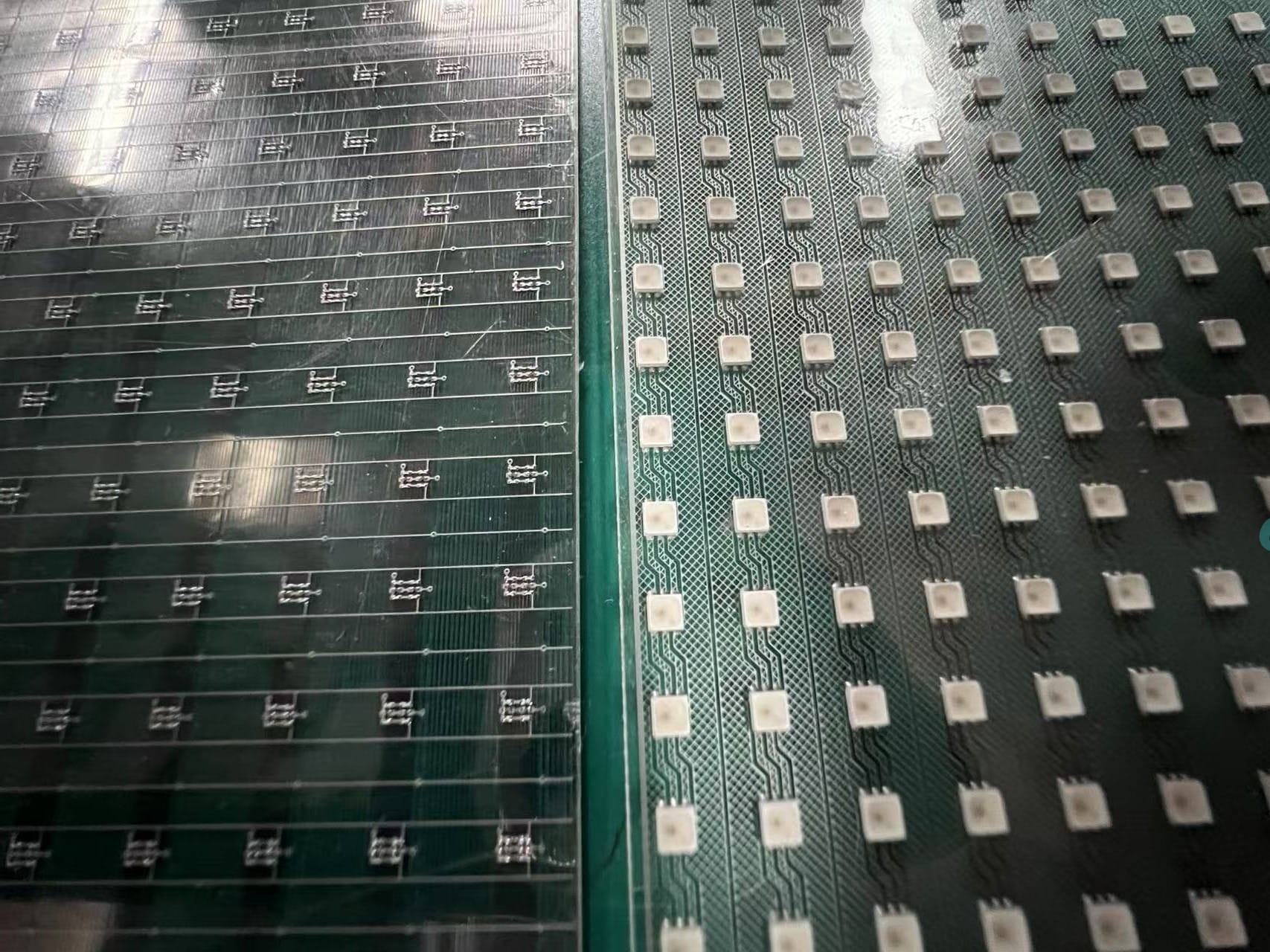
In an adhesive LED film, COB typically means the LED dies are packaged and bonded in a more integrated way (often flip-chip COB) onto a transparent circuit layer. In our COB film reference, the structure is designed to reduce common failure points and keep the film ultra-thin.
SMD means the LEDs are surface-mounted components placed along transparent circuits, then encapsulated/laminated for protection. This is the more widely adopted approach in the market today, so it often offers more pitch options and broader supplier availability.
If you want the fastest recommendation without reading everything:
And if you’re not sure, the best “middle ground” in real-world sales is usually a premium SMD film (like RF/JF class) with the right pitch + brightness + encapsulation quality.
Now let’s break it down like an engineer and sell it like a marketer.
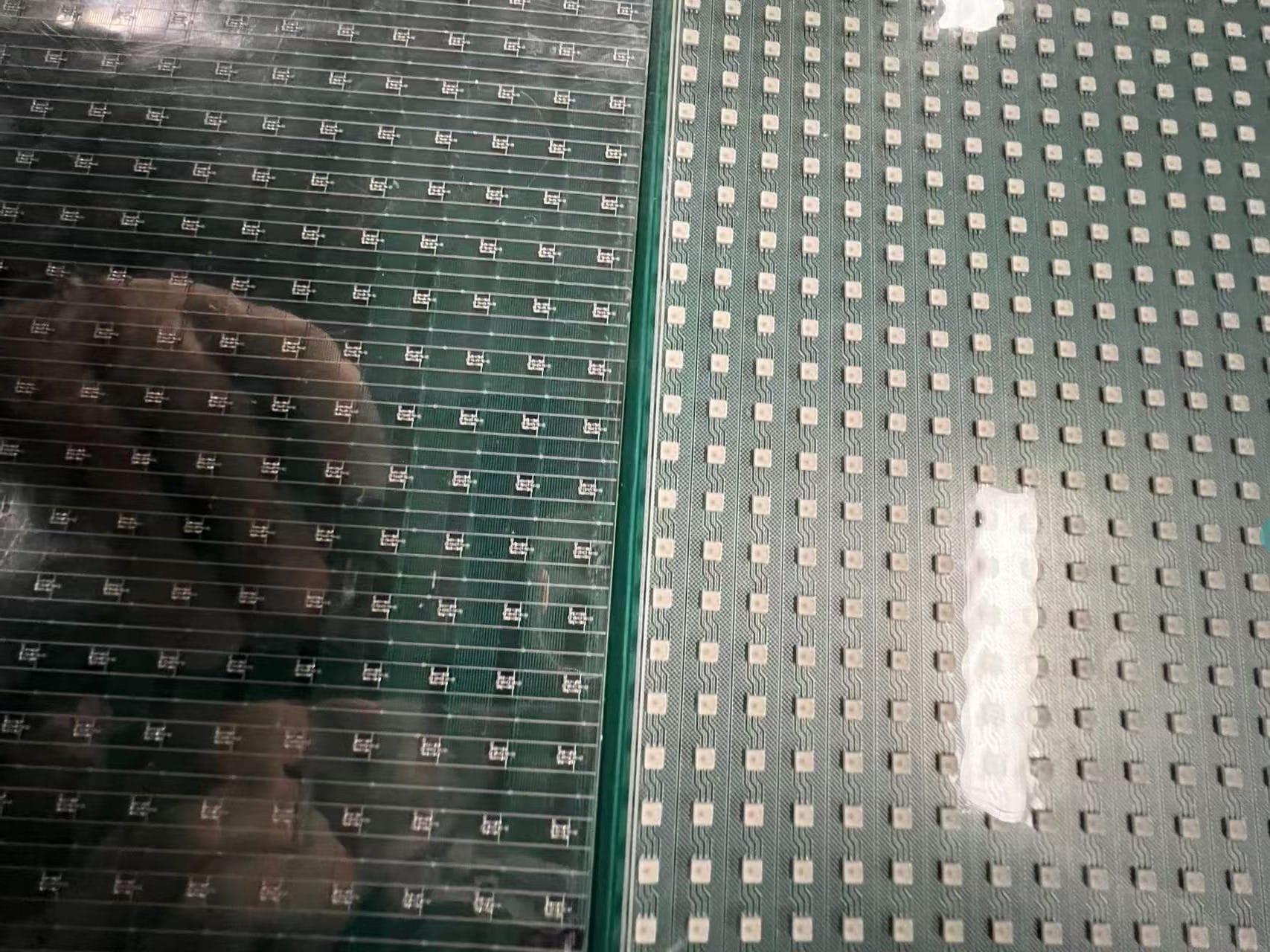
| Dimension | COB Adhesive LED Film | SMD Adhesive LED Film |
|---|---|---|
| Reliability / dead pixels | Usually stronger for long-term stability (fewer packaging failure points) | Depends heavily on LED grade + encapsulation; can be excellent with good QC |
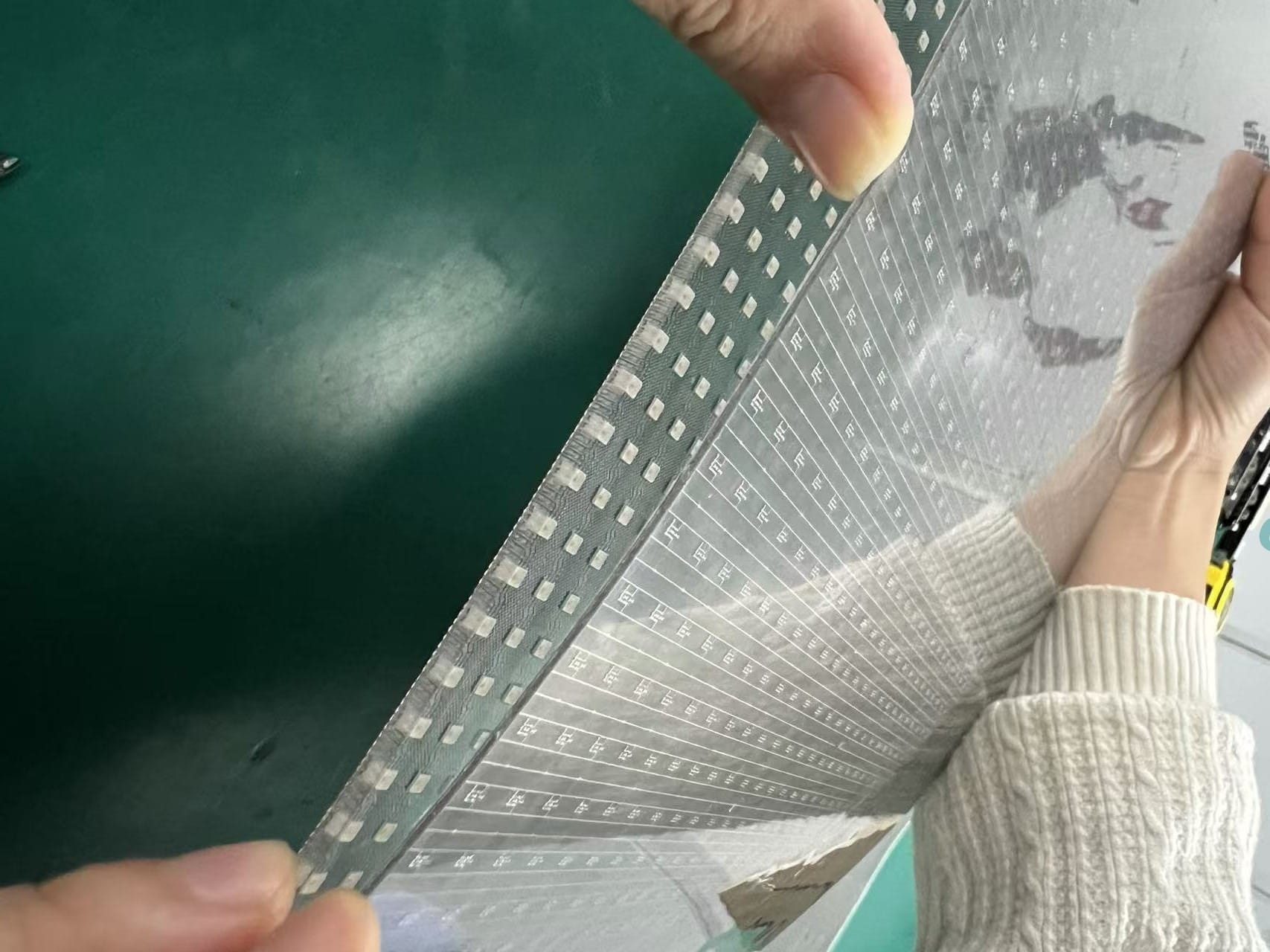
| Thickness / “invisible when off” | Can be extremely thin and discreet | Thin, but typically thicker than ultra-thin COB films |
| Transparency | High (project-dependent) | Very high possible (RF claims very high VLT with hidden circuits) |
| Brightness options | Typically optimized for premium architectural use (balanced heat + clarity) | Often broader brightness range; some models push higher for sunlit windows |
| Thermal behavior | Often cooler per watt at similar perceived output (design dependent) | Can run hotter at higher brightness; needs good heat spread + dimming strategy |
| Flexibility / cut-to-fit | Flexible for gentle curves | Strong advantage in cut/splice/custom shapes; great for mosaic tiling |
| Pitch availability | Often fewer standard pitches (but can be customized) | Wide pitch menu from close-view to “max transparency” designs |
| Cost | Higher unit price (premium positioning) | More options at mid/premium price bands |
| Maintenance | Designed for stability; replacement approach depends on design | Often supports strip-level service; good for multi-pane programs |
| Best buyers | Luxury retail, flagship façades, museums, premium glass signage | Retail chains, mixed-use projects, airports/metros, glass showcases at scale |
To avoid theory, here’s what our own reference products highlight.
Our COB adhesive film is positioned as:
RF is positioned as:
JF is positioned as:
So in practical product positioning:
In adhesive film projects, buyers often say:
“We need it to look super 3D and pop in daytime.”
But on glass, what “pops” is not only brightness—it’s:
This is where COB vs SMD becomes a sales strategy question:
If the customer wants:
Then tighter pitch matters more than “COB vs SMD.”
Rule of thumb for glass film signage:
JF and RF both present multi-pitch thinking; RF even provides a practical selection narrative for close/mid/iconic panes.
This is the “hidden killer” of LED film projects.
Traditional LED screens can hide a few dead pixels because the viewer expects a display. But on glass film, a dead pixel can look like a blemish on architecture.
That’s why COB is attractive: the product messaging highlights fewer failure points and reduced dead/weak pixel risk.
If your buyer is luxury retail, you’ll win deals by selling “stability and consistency,” not only brightness.
This is where premium buyers decide emotionally.
Sales truth: for premium projects, “OFF performance” is often the main buying reason.
If the glass is sunlit, you must manage:
JF positions itself up to ~4,500 cd/m² for sun-lit windows. COB film emphasizes a relatively low average power band and “cooler” behavior in typical operation.
Recommendation: For sun exposure, don’t sell peak brightness alone—sell auto-dimming + day/night profiles + content schedules as part of the system.
You said your market strategy is mid/premium + remote instruction for installation. That matches adhesive film perfectly if you productize the process:
RF and JF both lean heavily into “peel-and-place install” messaging (no steelwork, no façade alteration).
This means you can sell internationally even without sending engineers—if your documentation and kit discipline are strong.
Both RF and JF mention ~R1100 class single-axis bending. That’s a practical threshold: many “curved glass” in retail showcases can be gentle curves, not extreme radii.
Selling tip: Ask for radius early. If radius is too tight, the project fails late.
For trading companies, maintenance is where your margin can disappear.
What you want:
JF explicitly mentions strip-level replacement without glass removal as part of the engineering narrative. RF emphasizes encapsulation and protection for public environments.
COB often looks expensive on the quote. But if it reduces:
…it can be cheaper in lifetime cost.
SMD often wins when:
Pick COB adhesive LED film when one or more of these are true:
They care about:
COB’s thin, stable positioning makes it easier to sell “confidence,” not just hardware.
At 1–5 meters, every defect shows:
This is where you want the most conservative reliability choice.
The COB reference emphasizes typical power and thermal efficiency narrative. In some installations, heat is the enemy (adhesive, laminate stability, and color shift risk).
If you’re new, your first goal is reputation. COB can become your premium signature product.
Pick SMD adhesive LED film when one or more of these are true:
RF and JF series show multi-pitch reference tables and selection logic. That makes SMD film easier to sell across a wide set of projects.
RF is positioned aggressively on VLT and hidden circuits. That’s a powerful hook for architects and premium retail.
JF positions up to ~4,500 cd/m² for daylight punch. For certain storefront orientations, that brightness story wins.
RF especially emphasizes cut-to-size, splicing, mosaic tiling, and custom shapes. That makes SMD film strong for rollout programs and irregular glass.
Best choice: COB film Why: stability + premium “off look” + lower dead pixel risk narrative Start with: COB transparent LED film screen Support content: Adhesive flexible LED film guide
Best choice: RF SMD film (or COB if ultra-premium) Why: cut-to-fit + curve support + very high transparency positioning See: RF series flexible LED film screen
Best choice: JF SMD film (or high-brightness SMD spec) Why: brightness headroom + day/night profile messaging See: JF series flexible LED film display
Use: LED film screens and adhesive LED film screens And for product families: Product categories
Most failures aren’t “LED quality.” They’re process.
Here’s the installation truth you should teach customers (and build into your remote instruction):
If the adhesive bonds poorly, you get:
Film projects should ship with:
RF and JF both sell “install in minutes,” but that only happens when the kit is engineered like a system.
Don’t go live with random videos.
You need:
Since you’re positioning mid/premium, don’t compete on price. Compete on risk removal.
Package your offer like this:
This is how you win countries where you can’t send engineers.
Adhesive film is often a “gateway product.” Once a client trusts you, they buy more:
This is a clean funnel: film → bigger transparent systems.
If your trading company is starting now and wants high win-rate with manageable complexity:
Why:
Use it when:
This 2-tier structure is how you cover both volume and margin.
Ask these 10 questions before quoting:
If you collect these, remote installation becomes realistic and profitable.
If you want, paste a typical customer scenario (country + glass size + viewing distance + sun exposure), and I’ll recommend: (1) COB vs RF vs JF, (2) pixel pitch, (3) brightness plan, and (4) a remote-install SOP outline you can reuse for future deals.