Talk To Our Expert, Get A Solution in 20 minutes
Share your LED screen needs. Our experts will provide solutions and a quick response.

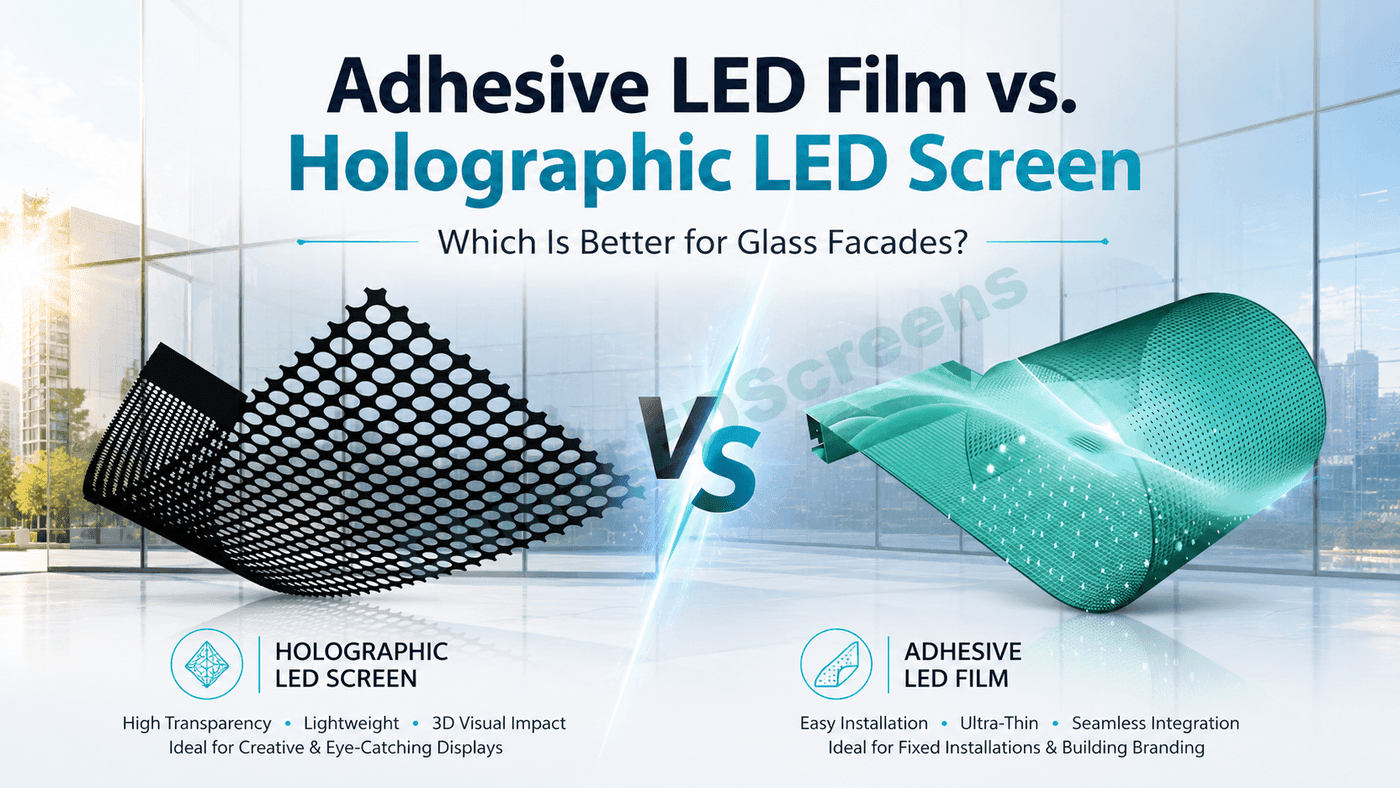
Transparent LED display technology is changing how brands use glass. A shop window, showroom wall, shopping mall atrium, or building façade no longer needs to stay as a passive glass surface. With the right transparent LED solution, it can become a dynamic advertising screen while still keeping daylight, visibility, and a modern architectural appearance.
Two popular options are often compared today: adhesive LED film and holographic LED screen. Both are thin, transparent, lightweight, and visually impressive. Both can be used for retail windows, glass façades, exhibitions, showrooms, and commercial digital signage.
However, they are not the same product. From a professional LED display perspective, the right choice should not be based only on how the screen looks in a demo video. The real decision should depend on sunlight exposure, heat dissipation, brightness requirements, maintenance access, installation conditions, and long-term reliability.
As a transparent LED display solutions provider, ChinaLEDScreens offers different glass-based LED solutions for different project environments. In this article, we will compare adhesive LED film and holographic LED screen in a practical way, so you can choose the right product for your project.
For indoor or shaded glass applications, adhesive LED film is often a clean and elegant solution. It is thin, lightweight, and can be applied directly to glass, making it suitable for shopping mall stores, indoor glass partitions, showrooms, and retail displays.
For sun-exposed glass façades or outdoor-facing storefronts, holographic LED screen is usually a better choice. Its structure allows better heat dissipation, stronger brightness stability, and improved long-term performance in demanding environments.
| Factor | Adhesive LED Film | Holographic LED Screen |
|---|---|---|
| Best use | Indoor or shaded glass | Sun-exposed glass and high-brightness applications |
| Main strength | Thin, clean, lightweight | Better heat dissipation and stability |
| Installation | Directly attached to glass | Mounted or applied with a more open structure |
| Heat dissipation | More limited | More efficient |
| Maintenance | More difficult after bonding | Easier to plan for service access |
| Visual effect | Clean digital glass look | Floating-image holographic effect |
| Best projects | Retail windows, showrooms, indoor branding | Glass façades, storefronts, premium advertising |
Adhesive LED film, also called self-adhesive LED film, transparent LED film, or crystal LED film, is a thin LED display product designed to be attached directly to glass. It usually includes LED chips, circuit layers, a transparent substrate, and an adhesive backing.
The biggest advantage of adhesive LED film screens is the clean appearance. The film can be applied to existing glass without a heavy steel frame or bulky LED cabinet. When the screen is off, the glass can still look open and transparent. When the screen is on, it becomes a digital advertising display.
This makes adhesive LED film popular for:
For these applications, adhesive LED film can be a very attractive solution. It is lightweight, thin, modern, and relatively easy to integrate into existing spaces.
But adhesive LED film also has limitations. Because LED components are usually encapsulated inside a film and glue layer, heat dissipation is not as efficient as more open-structure products. This becomes a serious consideration when the glass is exposed to strong sunlight.
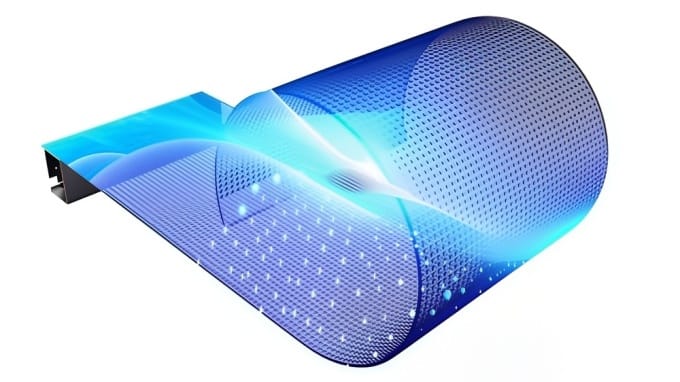
A holographic LED screen is a transparent display solution designed to create a floating visual effect. It can display vivid content while still allowing people to see through the screen.
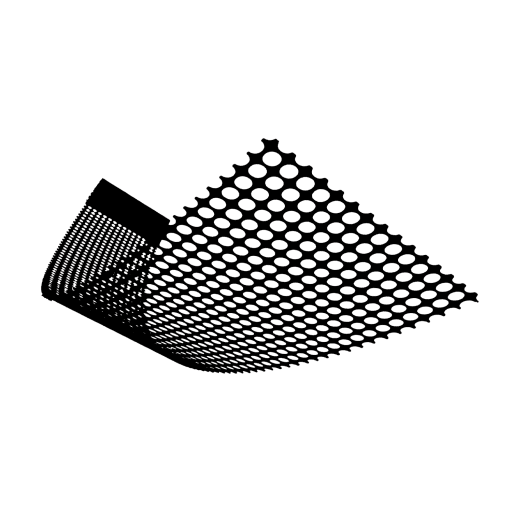
Unlike adhesive LED film, many holographic LED screens use a hollow mesh, honeycomb-style, or open circuit structure. This means the LED chips are not fully sealed inside a continuous glue layer. As a result, air can circulate more easily, and heat can be released more efficiently.
Holographic LED screen technology is suitable for:
Its key advantage is the balance between transparency, visual impact, brightness, and thermal performance. For projects where the screen needs to operate for long hours or face strong sunlight, holographic LED screen is often the safer engineering choice.
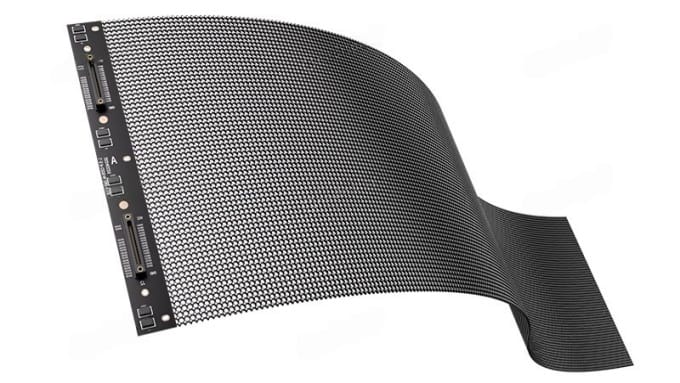
When buyers compare adhesive LED film and holographic LED screen, they often ask about pixel pitch, brightness, transparency, and price. These are all important. But in real projects, especially sun-exposed glass projects, the most important difference is often heat dissipation.
LED displays generate heat during operation. At the same time, glass façades can become very hot under direct sunlight. If the screen is installed on sun-facing glass, it must handle both LED operating heat and solar heat.
If heat cannot escape efficiently, it may cause:
This is where holographic LED screen has a clear advantage.
Holographic LED screen usually has a more open structure. Its honeycomb-style or hollow design allows better airflow around the LED chips and circuit areas. This helps reduce heat accumulation and supports more stable operation.
For glass façades, this is very important. A product may look bright in a showroom, but the real test is whether it can stay stable after months or years of daily operation under sunlight.
Better heat dissipation helps the display maintain brightness, protect components, and reduce long-term maintenance risk.
Adhesive LED film is usually more enclosed. The LEDs and circuits are integrated into a film structure and attached directly to glass. This creates a clean look, but it also restricts heat release.
Under strong sunlight, the glass becomes hot. The LED film also produces heat during operation. If the film and adhesive layers trap heat, the temperature around the LEDs may rise. Over time, this can affect brightness, stability, and lifespan.
This does not mean adhesive LED film is a bad product. It means it should be used in the right environment. For indoor and shaded areas, it can work very well. For large sun-exposed façades, the risk needs to be evaluated carefully.
Some clients worry that the adhesive used in holographic LED displays may detach after long sunlight exposure. This is a reasonable concern, especially for projects in hot regions.
Based on our internal testing, the 3M industrial-grade adhesive used in the holographic LED display system was tested within a temperature range of 25°C to 105°C. The result showed stable bonding performance without detachment. Testing videos can be provided for project evaluation.
However, adhesive reliability does not depend only on the adhesive material. It also depends on correct installation.
Key installation factors include:
In other words, the better question is not simply, “Will the adhesive detach?” The better question is: Has the full installation system been designed and installed correctly for the actual environment?
With professional installation and proper surface preparation, industrial-grade adhesive can perform reliably. Poor installation, however, can create risk even with good materials.
Because we also manufacture adhesive LED film, our recommendation is based on practical project experience, not product bias. For large glass façades with long sunlight exposure, adhesive LED film is generally not our first recommendation.
The main reason is heat.
Adhesive LED film relies on full-surface bonding. The film is attached directly to glass, and the LED components are usually enclosed inside the film/glue structure. This creates a beautiful appearance, but it makes heat dissipation more difficult.
In strong sunlight, several problems may appear:
For a small indoor window, these risks are usually manageable. For a large sun-facing façade, they become much more serious.
If the project is truly outdoor-facing, it is better to evaluate a dedicated outdoor transparent LED screen or another façade-grade transparent LED solution.
Maintenance is another important difference.
Adhesive LED film is bonded to the glass surface. Once installed, removing it can be difficult. If one section is damaged, technicians may need to peel the film from the glass, remove adhesive residue, replace the section, and reinstall everything carefully. This can increase labor cost and downtime.
Holographic LED screen systems are often easier to plan for maintenance, depending on the installation design. Because the structure is usually more open, it is easier to design access for service and replacement.
For retail advertising and commercial media projects, this matters a lot. If the screen is used every day for brand promotion or paid advertising, downtime means lost value.
Many videos show adhesive LED film being bent or rolled. This makes the product look very flexible. In reality, flexibility must be handled carefully.
Adhesive LED film contains LED chips, circuits, solder joints, connectors, and conductive layers. If it is bent too much, the circuits may be stressed. This can lead to failure after installation.
Possible risks include:
Gentle curves may be possible if the product is designed for that purpose. But excessive bending should not be treated as normal installation. Before using LED film on curved glass, buyers should confirm the bending radius, cable direction, module layout, and long-term stress conditions.
For more general product selection, the transparent LED display guide can help compare different transparent display solutions.
Another long-term concern for adhesive LED film is UV exposure. Many adhesive LED films use PET-based transparent layers and adhesive materials. Under long-term direct sunlight, these materials may age.
Possible results include:
This is especially important for luxury storefronts and high-end retail windows. The value of adhesive LED film comes from its clean and transparent appearance. If the film becomes yellowish or hazy, the premium effect is reduced.
Holographic LED screen is usually more suitable for demanding environments because its open structure supports better heat release and long-term stability.
Choose adhesive LED film if your project is indoor, shaded, small to medium-sized, and focused on a clean frameless look. It is a good option for shopping mall stores, indoor retail windows, showrooms, exhibitions, office glass partitions, and controlled environments.
Choose holographic LED screen if your project is exposed to direct sunlight, requires higher brightness, operates for long hours, or needs stronger long-term reliability. It is a better fit for sun-facing storefronts, commercial glass façades, museums, exhibitions, brand centers, and premium architectural media projects.
For retail environments such as flagship stores, boutique windows, and shopping malls, it is also worth reviewing suitable retail window LED display solutions based on brightness, viewing distance, and installation conditions.
For large architectural projects, a professional glass curtain wall LED screen solution should consider heat, structure, wind load, maintenance access, and long-term serviceability.
Both adhesive LED film and holographic LED screen are valuable transparent LED technologies. Adhesive LED film offers a thin, clean, lightweight, and modern display effect. It is ideal for indoor and shaded glass applications where appearance, transparency, and simple installation are the main priorities.
However, for large glass façades with strong sunlight exposure, adhesive LED film is usually not the safest choice. Its film and glue structure can restrict heat dissipation, and long-term UV exposure may affect the PET and adhesive layers. Maintenance can also be more difficult because of full-surface bonding.
Holographic LED screen provides a better balance of transparency, brightness, heat dissipation, and structural stability. Its open or honeycomb-style structure allows heat to escape more efficiently, making it more suitable for sun-exposed storefronts, building façades, and high-performance glass advertising projects.
The best choice is not always the thinnest product or the newest product. The best choice is the one that matches your real installation environment, sunlight conditions, operating hours, maintenance plan, and long-term business goals.
Adhesive LED film can be used in some protected semi-outdoor environments, but it is generally more suitable for indoor or shaded glass. For strong sunlight or large outdoor-facing façades, holographic LED screen or outdoor transparent LED screen solutions are usually more reliable.
Based on internal testing from 25°C to 105°C, the 3M industrial-grade adhesive used in the holographic LED display system maintained stable bonding performance without detachment. However, real project reliability depends on correct surface preparation, installation temperature, humidity control, bonding pressure, and system design.
Holographic LED screen is usually better for strong sunlight because its structure provides better heat dissipation and more stable brightness performance.
In many projects, holographic LED screen systems are easier to plan for maintenance because adhesive LED film relies on full-surface bonding, which can make removal and replacement more difficult.
Both can look premium. Adhesive LED film creates a clean and minimal digital glass effect. Holographic LED screen creates a stronger floating-image effect and is often better for high-impact storefront advertising.
For indoor mall stores and shaded windows, adhesive LED film can be excellent. For street-facing retail windows exposed to sunlight, holographic LED screen is usually the better option.