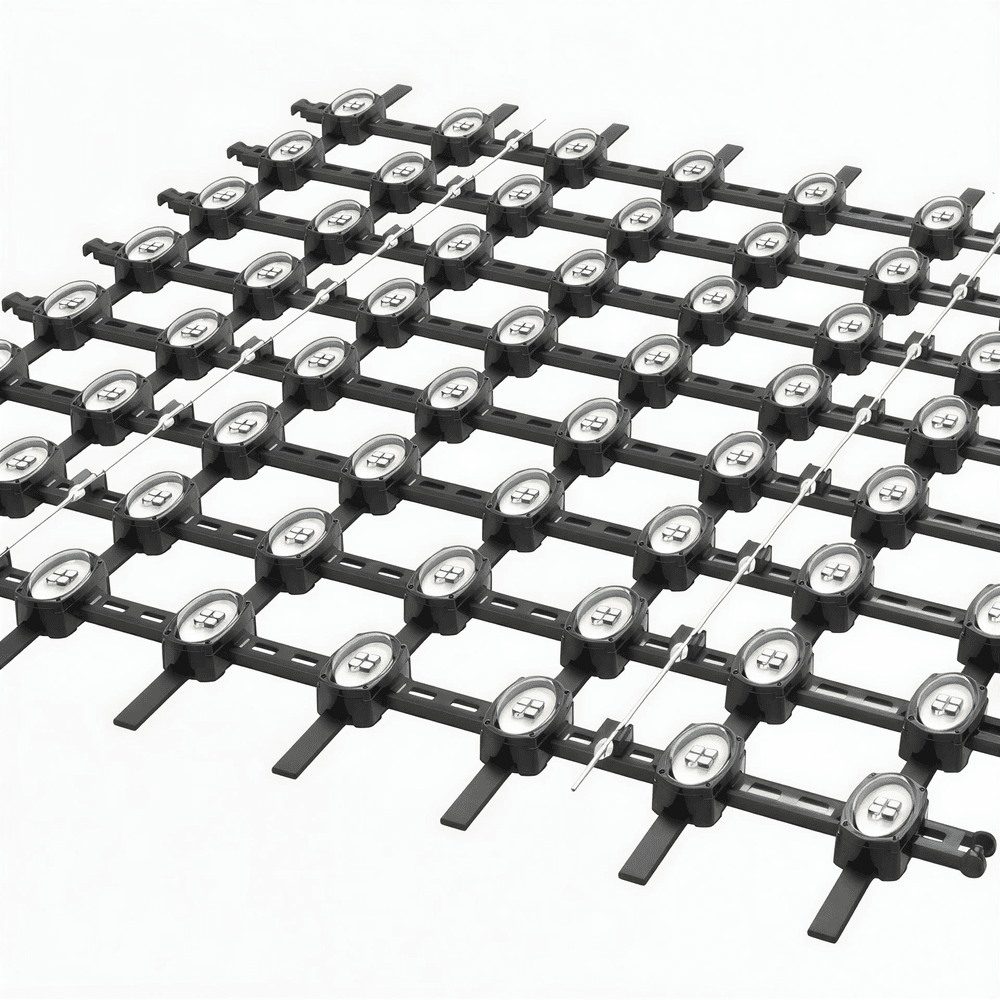
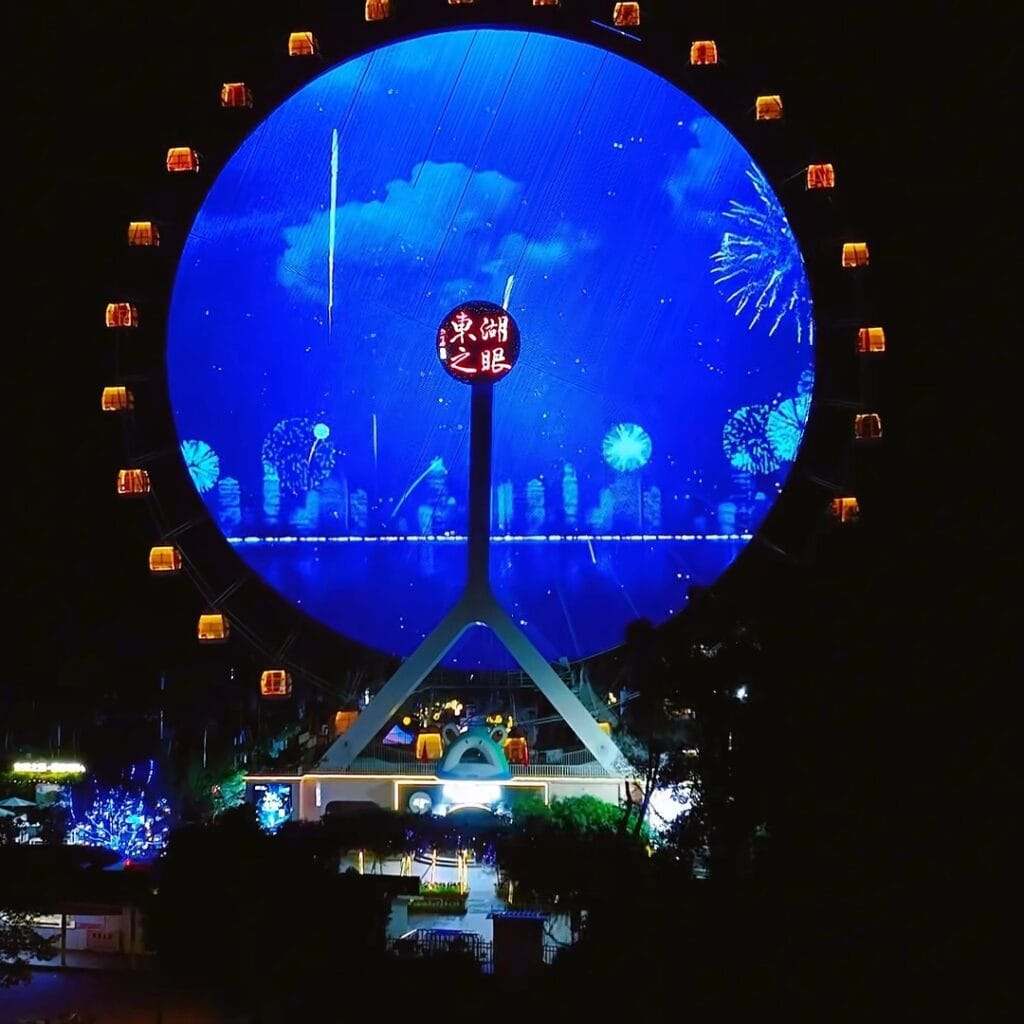
Talk To Our Expert, Get A Solution in 20 minutes
Share your LED screen needs. Our experts will provide solutions and a quick response.

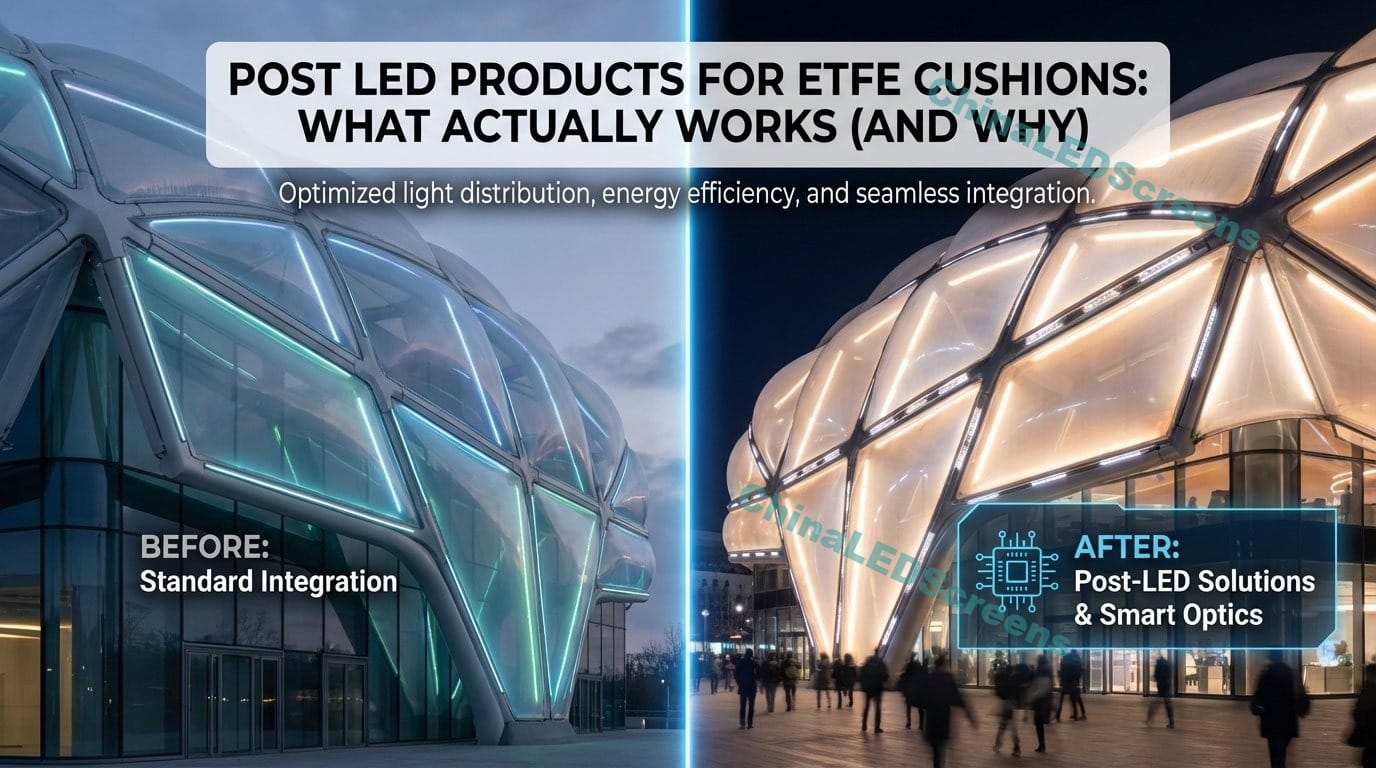
If you’ve ever stood in front of an ETFE “pillow” facade at night, you already know the opportunity: ETFE cushions turn light into architecture. They’re translucent, lightweight, and visually “alive” because the surface reads like a soft volume instead of a hard plane.
But the same reasons ETFE looks amazing are the reasons LED integration goes wrong:
So the right question isn’t “est?” It’s: Which LED system creates the desired media effect while respecting the ETFE cushion system’s structural and operational rules?
For a broader architectural context, you can also review our facade application overview: LED screen solutions for architecture facades & glass structures.
ETFE cushions are typically multi-layer ETFE foils inflated into pillows. They’re used in stadium shells, atriums, canopies, and “bubble” facades because they deliver high translucency and very low dead load. ETFE can transmit a large portion of visible light (often cited around ~90–95% for single-layer foil, with reductions depending on layers/frit).
1) ETFE isn’t your mounting substrate. Even when it looks like a “surface,” it’s not there to carry your loads. Any LED integration should assume no penetrations and no reliance on adhesion.
2) The facade is a dynamic membrane. Cushions change shape with pressure, temperature, and wind. That means your pixel geometry must tolerate small movements without stressing cables, connectors, or mount points.
3) Optics are different than glass. ETFE behaves like a translucent layer; it can help blend light (great uniformity), but in daytime your pixels fight ambient brightness. Your solution needs contrast strategy, not just raw nits.
| Your ETFE project goal | Constraint that matters most | Best-fit LED category |
|---|---|---|
| Make the ETFE facade “glow” with patterns, gradients, team colors | Uniformity + low mass + easy mapping | Pixel-controlled LED video light strips |
| Add video / large graphics across big surfaces | Wind + openness + weight | Mesh LED display |
| Large permanent facade display with strong structure | Wind resistance + rigid mounting | LED grille screen |
| Hybrid: ETFE roof + adjacent glazing wanting “see-through” display | Transparency + indoor mounting | Transparent LED (on glazing / secondary substrate) |
The ETFE cushion is not a rigid plane. You want LED products that either:
Practical rule: Avoid large rigid LED cabinets “touching” the cushion plane. Even tiny repeated contact becomes wear.
ETFE cushion envelopes often exist on buildings where wind performance is heavily reviewed. When you add a facade LED layer, you are changing:
That’s why open-structure solutions (mesh/grille/strips) usually pass review faster: you can defend them with higher openness and lower drag than solid cabinets.
ETFE has excellent daylight potential, but it is still a polymer foil system. Hot air trapped behind dense LED layers is where projects get uncomfortable.
Design goal: keep electronics ventilated, distribute power, and avoid “thermal islands.” Also note that ETFE installations are valued for being lightweight compared to glass (often referenced around ~1% of equivalent glass weight), so adding heavy LED mass defeats one of the system’s selling points.
If your vision is more architectural lighting than “TV screen,” pixel-controlled linear systems are usually the cleanest solution.
Why they work with ETFE:
Where to use them:
Engineering notes (what to specify):
If you want a deeper product and design breakdown, reference: LED video light strip / pixel media linear strips guide.
When strips are NOT enough: If you truly need readable text/video across the whole facade in daylight, strips won’t provide the pixel density or surface coverage. That’s when mesh/grille enters.
Mesh LED is the classic answer when a consultant says: “We want media content, but we must keep wind load low.”
Why mesh works with ETFE projects:
Typical ETFE-friendly applications:
What to watch:
For selection details and engineering tradeoffs, use: Mesh LED displays / flexible mesh curtain display guide.
Think of grille as the “structural cousin” of mesh: still open, but often built as a more rigid, architectural system.
Why grille is popular on large envelopes:
Best use cases around ETFE:
Spec tips:
Guide reference: LED grille screen guide.
Transparent LED is often requested because ETFE is transparent-ish, so clients assume “transparent LED goes on it.”
Reality check: ETFE’s surface properties and cushion motion make it a poor candidate for “apply-on” display layers. The safer pattern is:
If your ETFE project includes glass curtain walls, you canthose zones and let ETFE zones stay “glow + pattern” rather than “high-res video.”
Reference guide for specification language and planning: Transparent LED display guide.
Treat the LED layer as its own facade system:
Even if the LED product is IP-rated, you still need:
ETFE is often described as low maintenance / self-cleaning due to its non-adhesive surface behavior. That does not mean your electronics are self-cleaning—assume water management is a first-class requirement.
An ETFE cushion facade is usually a pattern (rhombus/hex/bubble geometry). Don’t force a flat “rectangle video wall” workflow.
Better approach:
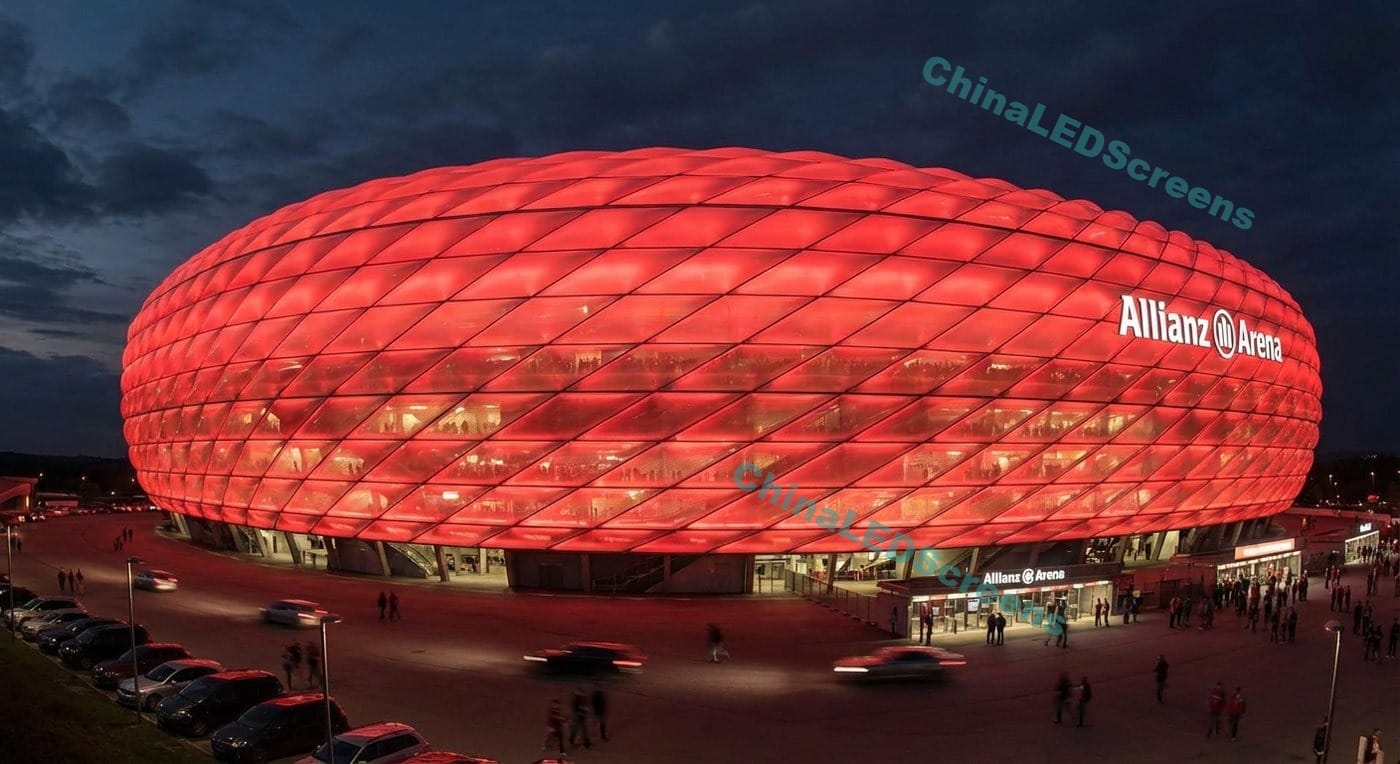
The stadium is a widely cited ETFE cushion facade landmark, and its facade lighting system has been upgraded to LED—demonstrating that ETFE pillow envelopes can support massive dynamic lighting at public-venue scale. Publicly available stadium information references the LED lighting retrofit timeline and the scale of illuminated panels/area.
Arup’s project description highlights ETFE’s very low weight compared with glass, self-cleaning behavior, and notable energy framing (including lighting-energy savings in a pool hall), which supports the argument that ETFE is chosen for performance—and any LED layer should preserve that performance.
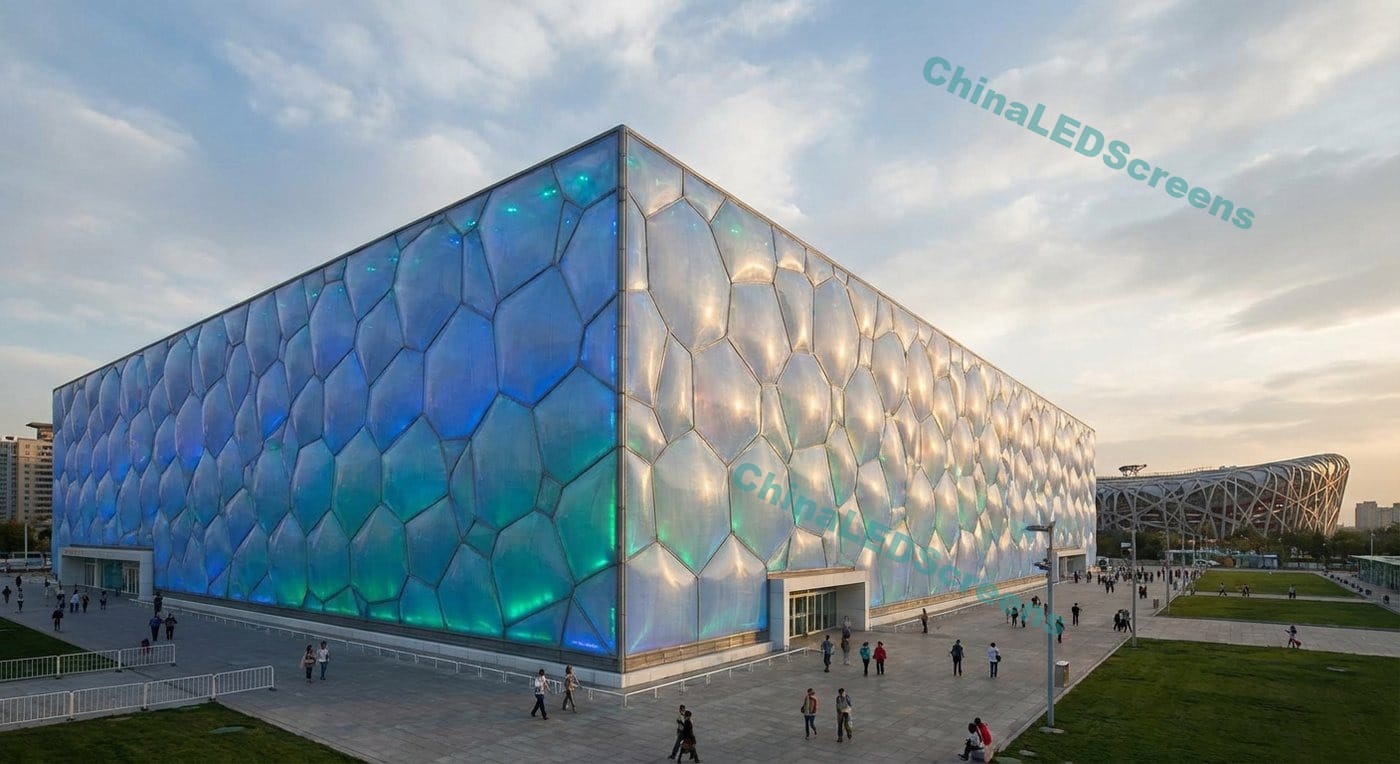
A) Geometry & performance
B) LED product selection
C) Electrical & controls
D) Environmental + service
Can I stick LED film onto ETFE cushions? In most projects, you should assume no—ETFE is not intended as an adhesive substrate and the cushion motion makes bonded installs risky. Use an independent frame or mount transparent LED on adjacent rigid glazing instead.
Mesh vs grille: which passes wind review faster? Both can, but typically the deciding factor is open-area ratio + structural documentation. Mesh is often favored for very large areas; grille is often favored where a more rigid architectural system is required.
How bright does it need to be through ETFE? ETFE can transmit a high portion of visible light, which helps night-time effects, but daytime requires a contrast strategy and correct pixel density. Use day/night scene profiles and avoid overspec brightness that increases heat and power unnecessarily.
What’s the safest “first project” LED product for ETFE facades? If the goal is impact + low risk: pixel-controlled video light strips on a secondary frame are usually the fastest path to a successful outcome.