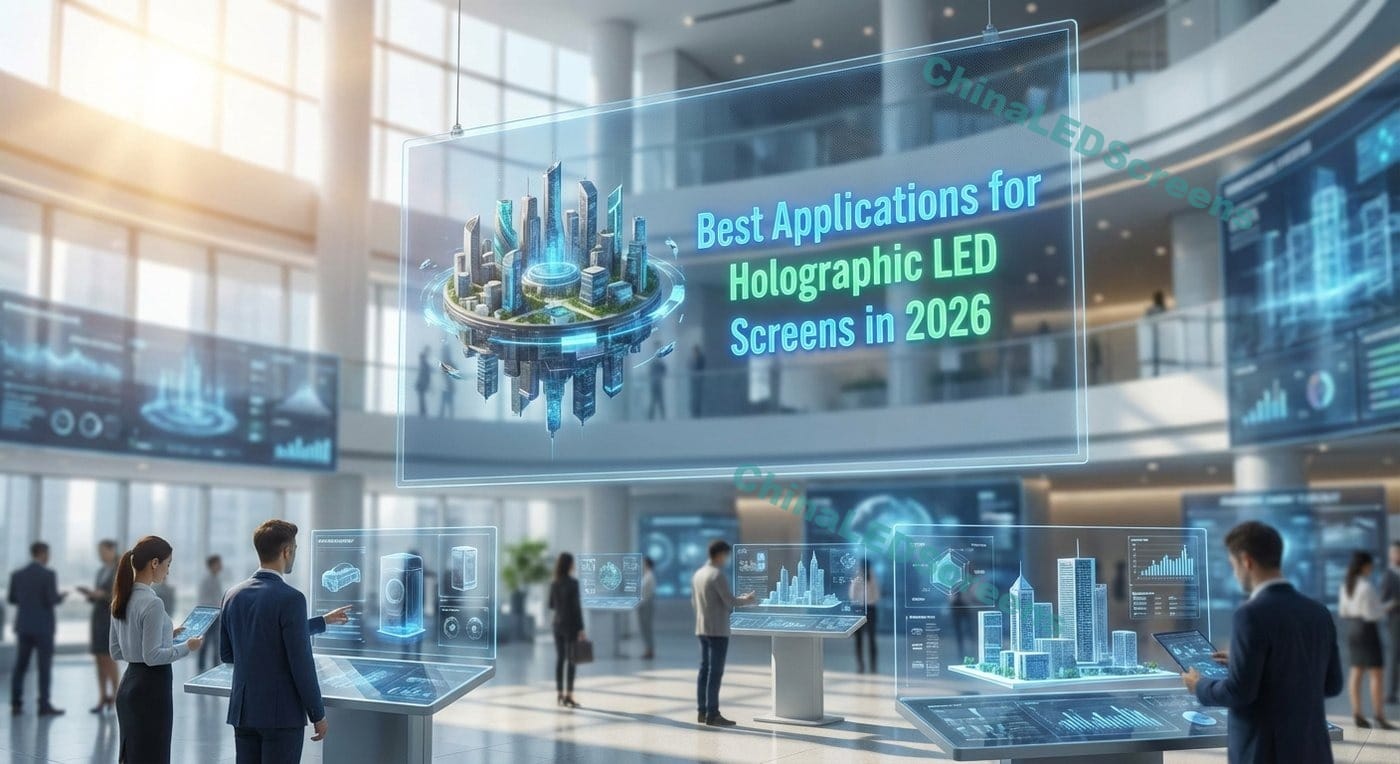
A Technical, Practical, and Engineering-Based Overview for Real-World Buyers
As someone who has spent more than a decade engineering, deploying, and troubleshooting transparent and holographic LED systems in retail, architecture, and commercial environments, I can tell you something upfront:
A holographic LED screen is not “technology for technology’s sake.” It is a visibility-preserving media surface that converts glass into a dynamic communication channel—without blocking light, space, or customer sightlines.
In 2026, holographic LED screens have matured from a “novelty” to a serious commercial tool, especially in high-value environments where storytelling, customer attention, and modern design matter.
This guide covers the most effective applications, why they work, the engineering reasons behind performance differences, and how to plan content, installation, and ROI measurement with a professional mindset.
1. Understanding Holographic LED Screens in 2026 (Clear Definition)
Before discussing applications, we need a precise, engineering-accurate definition—because the industry uses “holographic” loosely.
What holographic LED screens actually are
- They are transparent LED structures, usually ultra-thin and frameless.
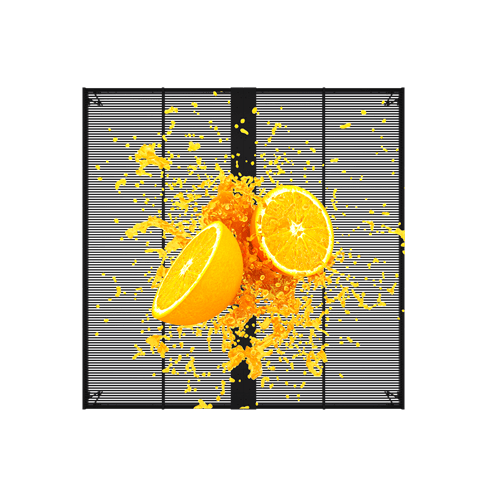
- They use strip-type LED pixel arrangements that leave large open areas between diodes.
- Light-emitting elements create floating visuals, while unused gaps remain visually open.
- The “holographic feel” comes from a combination of:
- Negative space (60–80% open area)
- High contrast visual design
- Motion cues that reinforce depth
- Ambient lighting behind the display
What they are NOT
- They are not laser-based holograms.
- They are not 360° volumetric displays.
- They are not “fan holograms” using rotating blades.
Holographic LED screens are a practical, safe, commercial-grade transparent LED technology built for architectural and retail environments.
Internal reference pages:
2. Why 2026 Is the Breakthrough Year for Holographic LED
After years of experimentation, several factors finally aligned in 2026:
Modern driver ICs, refined LED packaging, and better structural carrier materials greatly improve:
- refresh rate
- viewing uniformity
- contrast
- pixel stability
- heat dissipation
This makes holographic screens more stable in daylight, store windows, and public spaces.
B. Retail and architecture demand more transparency
Brands want digital media, but architects want open sightlines, daylight, and glass purity. Holographic LED solves this tension elegantly.
C. Content production has matured
Creative agencies now understand:
- negative space
- silhouette-dominant animation
- depth perception cues
- minimal text usage …which unlocks the “floating object” effect reliably.
D. The ROI can now be measured clearly
Retail analytics, footfall tracking, and QR-based engagement finally allow brands to quantify the value of holographic windows.
3. The 10 Best Applications for Holographic LED Screens in 2026
Below is the authoritative list—based on actual engineering deployments, customer analytics, and 2026 commercial adoption trends.
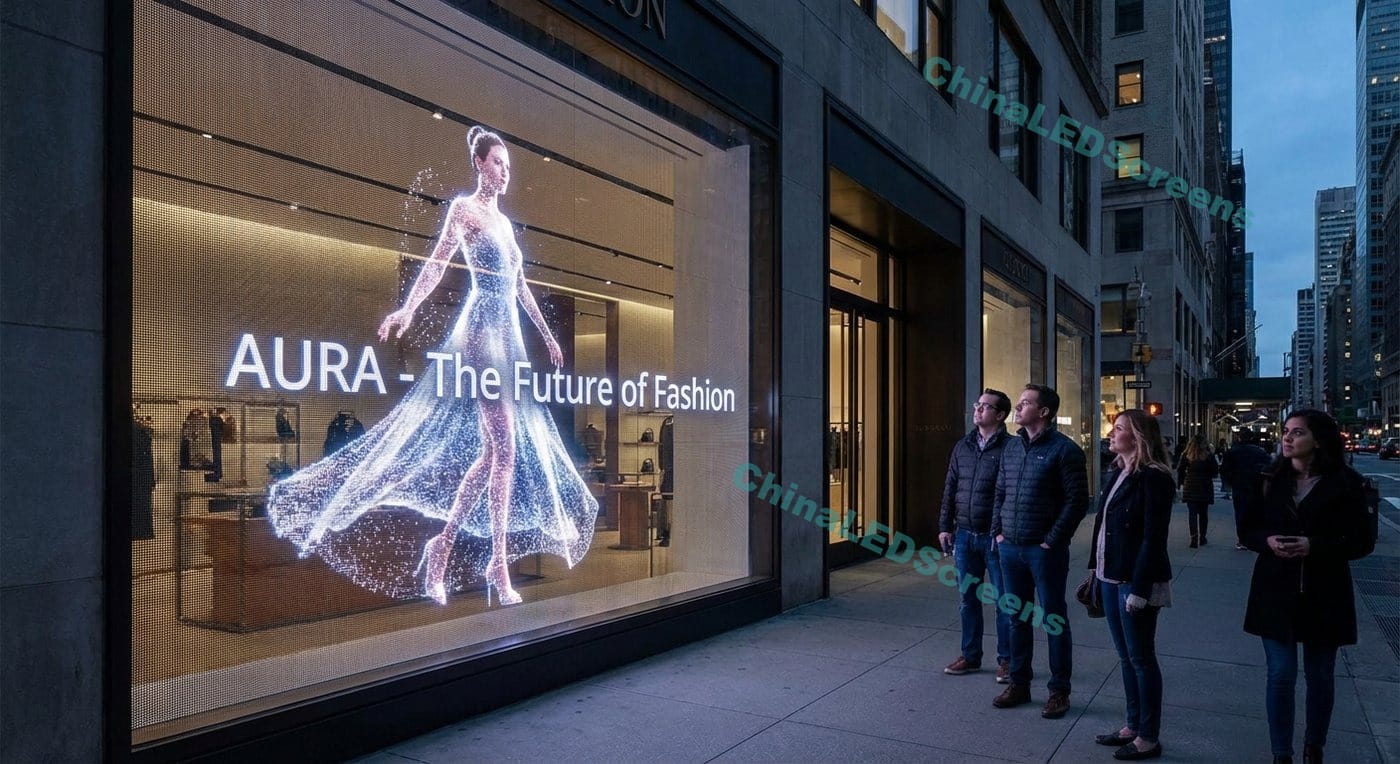
1) Flagship Retail Storefront Windows (Highest ROI)
If you ask me where holographic LED screens produce the most direct revenue impact, the answer is simple:
Retail storefront windows.
Why?
Because the window is:
- the highest-value visual real estate
- exposed to foot traffic
- naturally backlit
- the first touchpoint in customer decision-making
Technical reasons it works
- Large negative space maintains daylight and store visibility
- Floating visuals create motion contrast against real objects inside
- High brightness compensates for ambient daylight
- Frameless design integrates with glass seamlessly
- 15–40% lift in stop rate
- 10–25% increase in entrance rate
- 200–500% higher dwell near the window
- QR scan conversions up to 8%
Internal links:
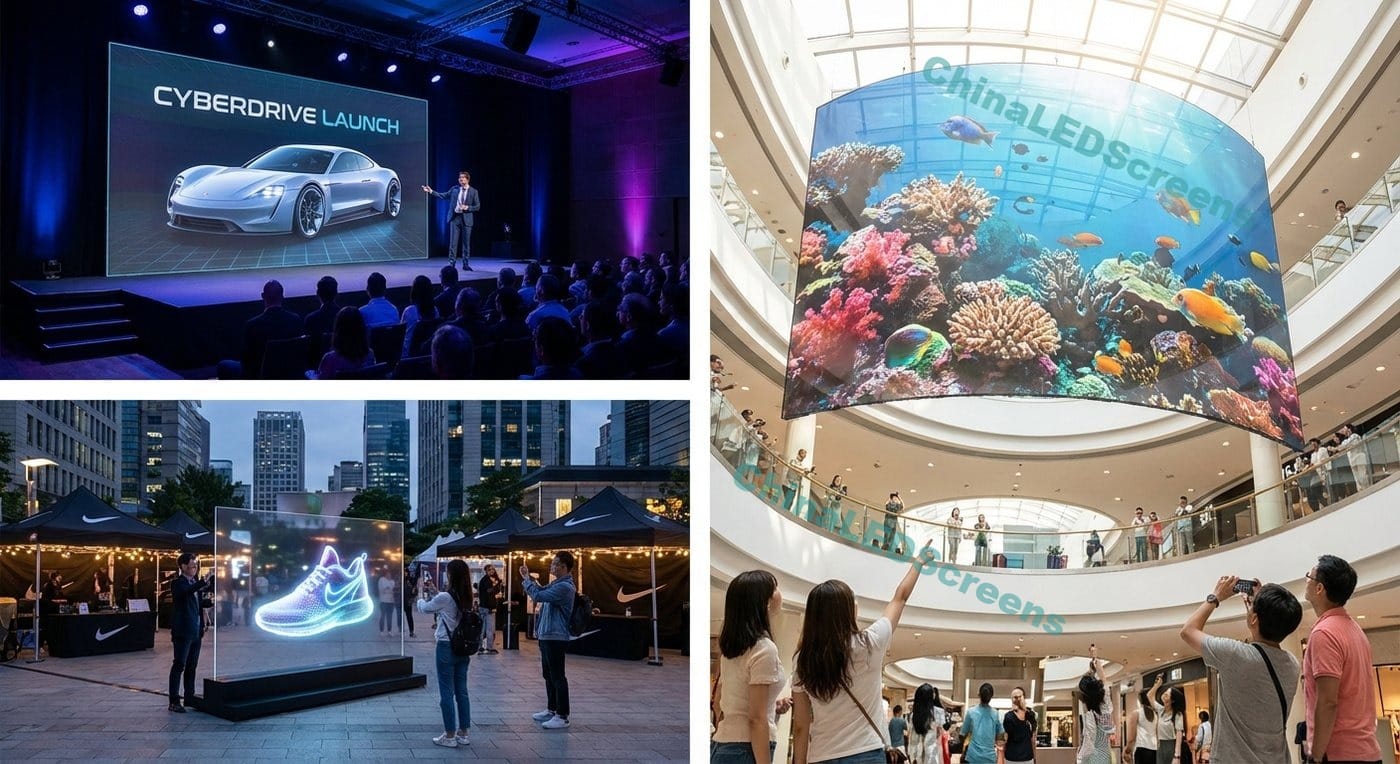
2) Product Launches, Pop-Up Events & Mall Atriums
These environments need impact. Holographic LED screens deliver a “pause-and-look” effect even in visually crowded spaces.
Engineering benefits
- Lightweight and movable
- Frameless structure suits pop-ups and mall kiosks
- Fast installation (1–3 hours in many cases)
- Lower power draw compared to full LED walls
Best content styles
- floating product silhouettes
- assembling/exploding 3D parts
- countdown animations
- minimal typography
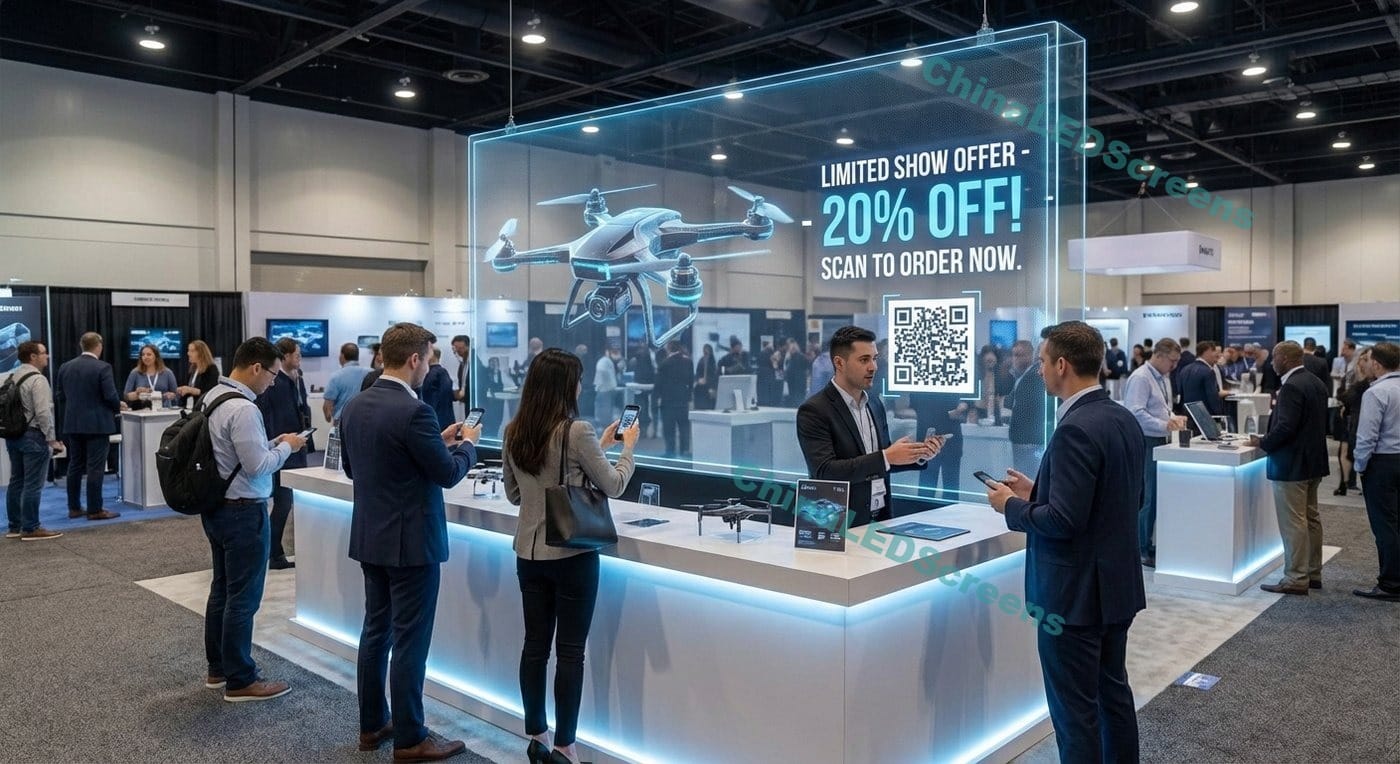
3) Trade Shows & Exhibitions (Conversion-Oriented)
At expos, every booth is fighting for attention. Holographic LED acts as an attention magnet.
- Wide viewing angles catch visitors from the corridor
- Floating visuals create an instinctive pause
- The transparent structure avoids blocking booth interiors
- Works with both small and large booth footprints
Engineering note
Refreshing at 3840–7680Hz ensures camera-friendly performance, important for visitors filming or livestreaming.
Internal link:
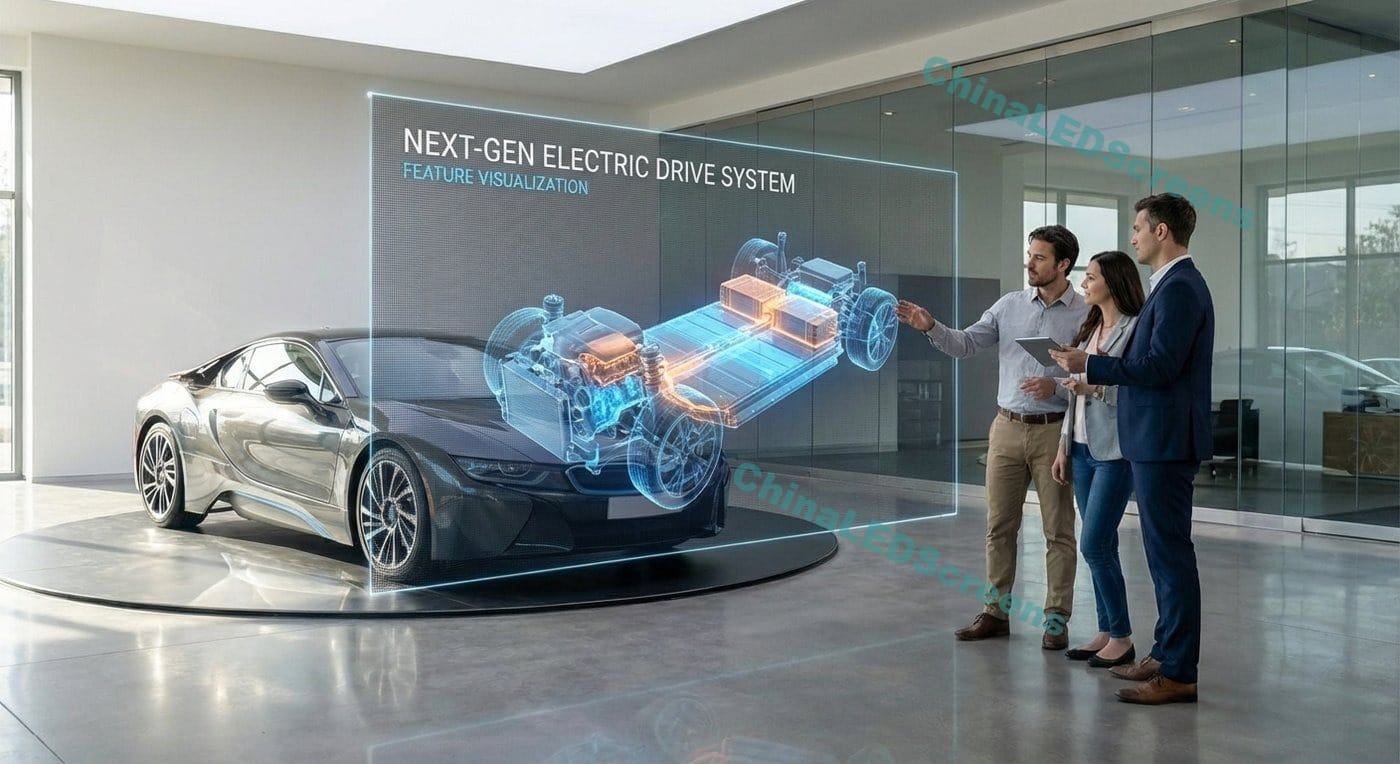
4) Automotive Showrooms (Feature Visualization)
Holographic LED excels at explaining:
- battery pack layers
- powertrain architecture
- ADAS sensors
- aerodynamic features
- trim differences
Why
Cars are complex. Customers love visualizing the “inside,” but showrooms can’t display disassembled vehicles.
Holographic LED delivers “exploded view engineering diagrams” in a premium way.
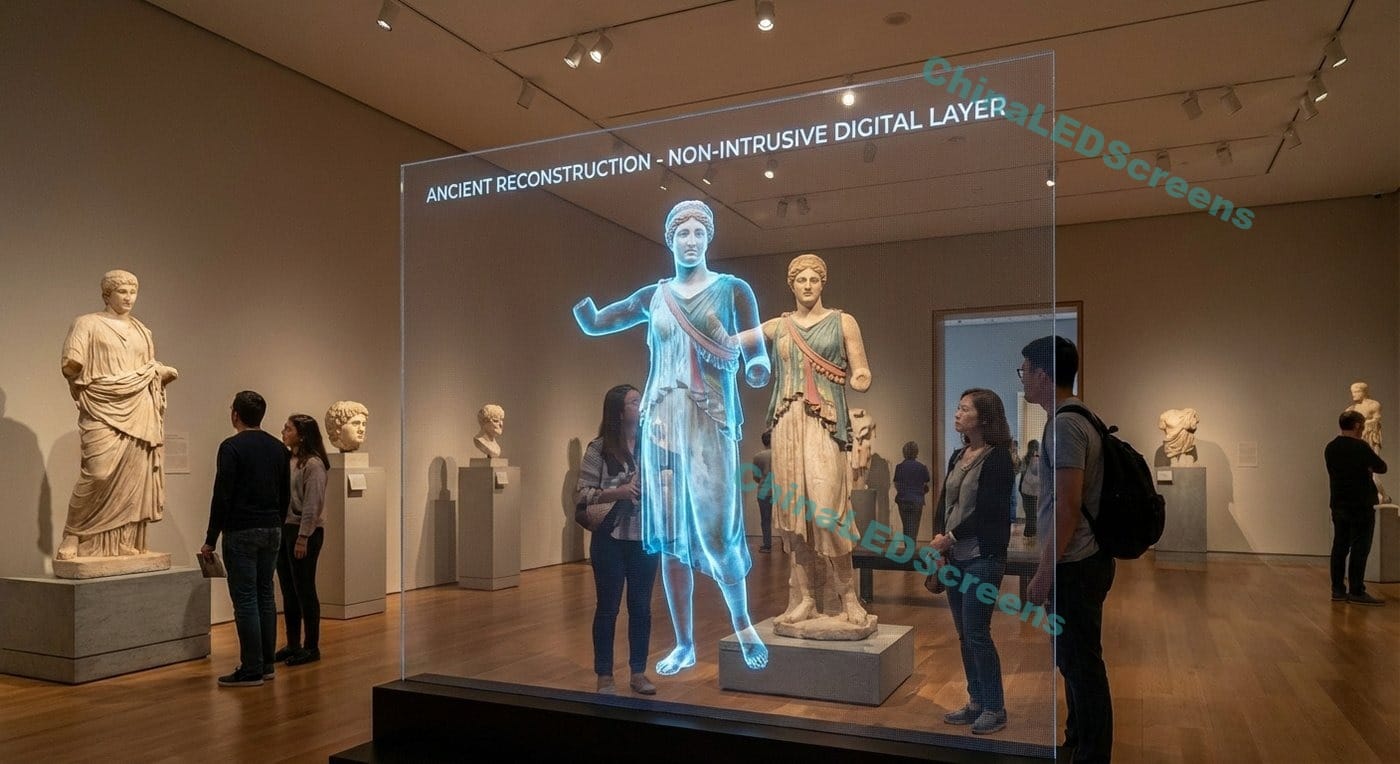
5) Museums, Galleries & Cultural Venues (Non-Intrusive Digital Layer)
In these environments, visibility and authenticity matter.
Holographic LED allows curators to:
- add digital overlays
- provide motion-based storytelling
- show restoration stages
- provide multilingual guides …without blocking the physical object.
Engineering strengths
- Ultra-slim form factor
- No need to alter the exhibition structure
- Low brightness modes for controlled environments
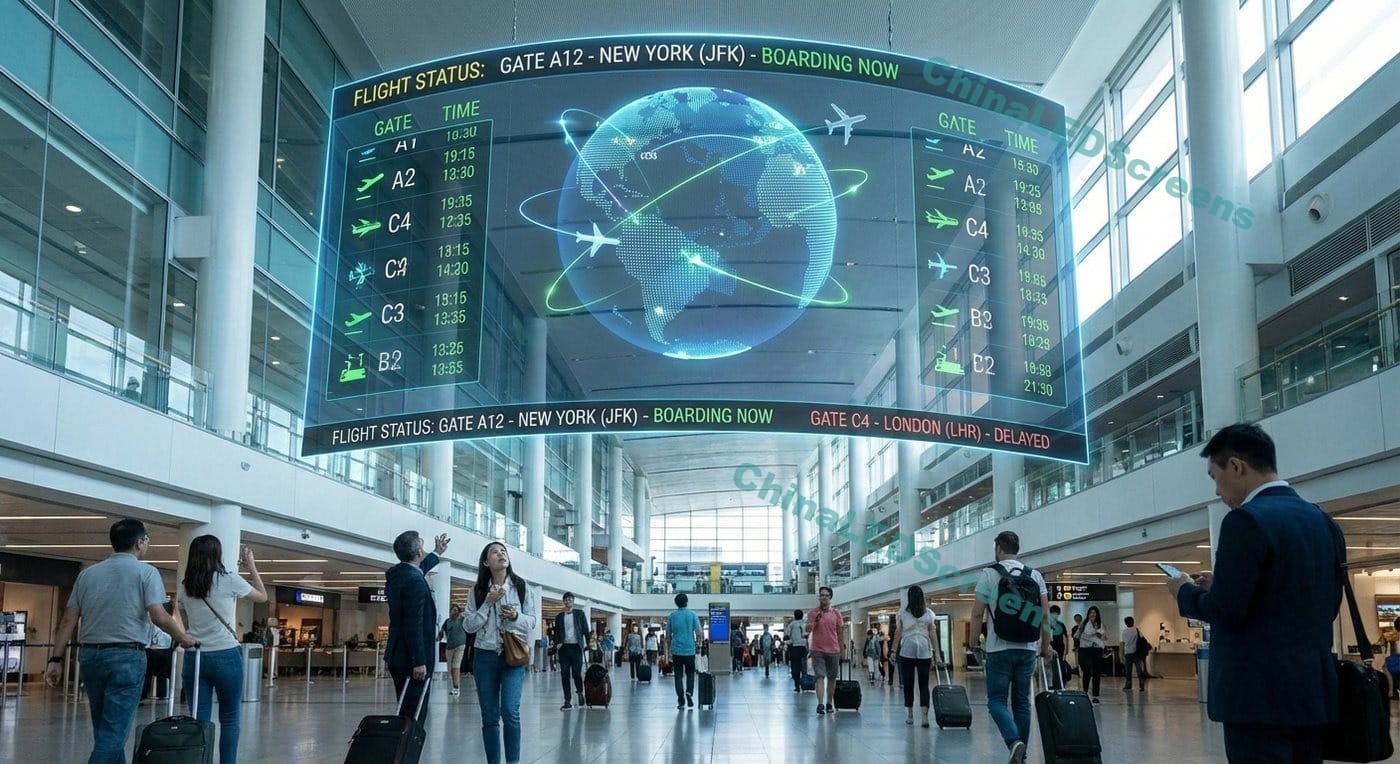
6) Airports & Transportation Hubs
Airports need:
- high reliability
- high-duty-cycle screens
- daylight readable displays
- multilingual communication
Holographic LED fits perfectly into:
- duty-free entrances
- premium brand corridors
- terminal retail
- high-flow directional signage
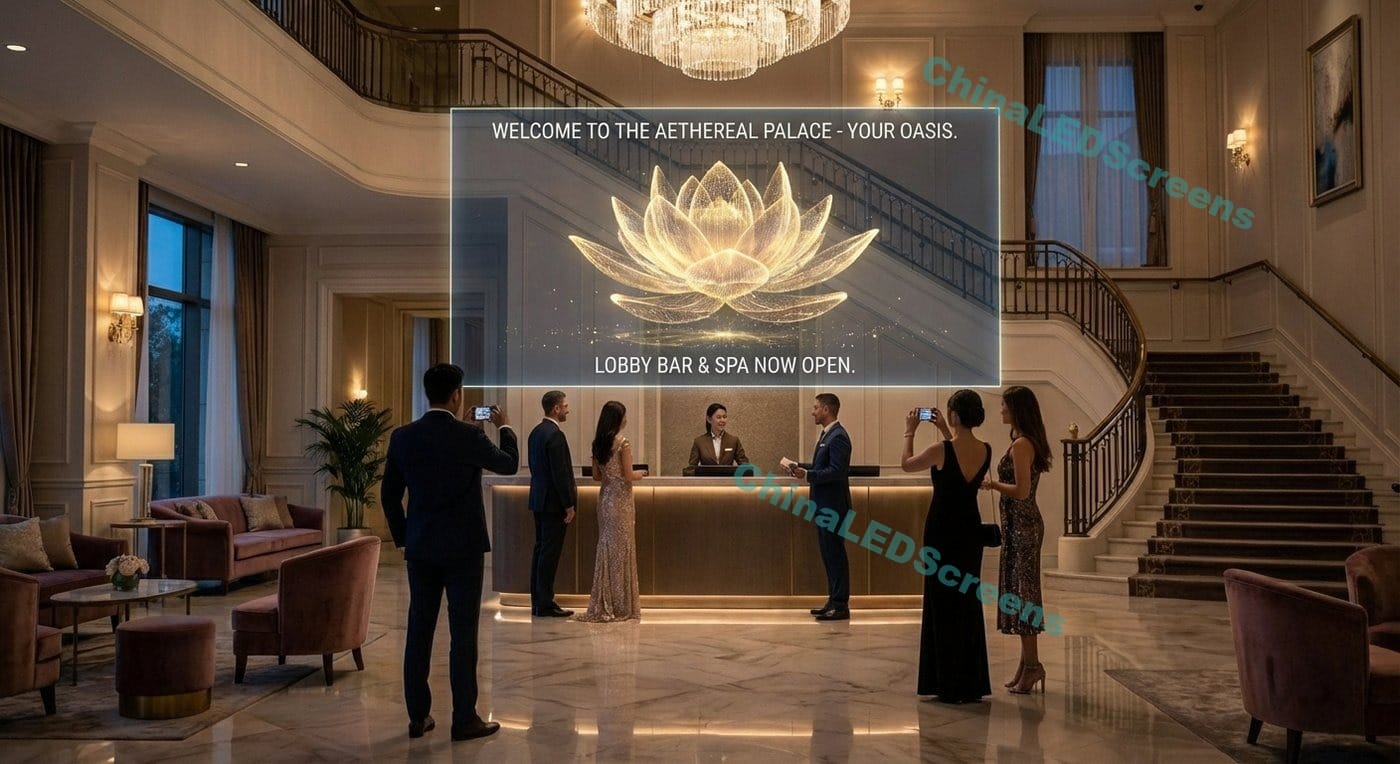
7) Luxury Hotels, Resorts & Hospitality Lobbies
These spaces prioritize:
- premium ambience
- modern aesthetics
- luxury brand tone
Holographic LED creates a digital signature moment without the heaviness of a classic LED wall.
Use cases:
- welcome visuals
- event announcements
- high-end brand showcases
- concierge-driven storytelling
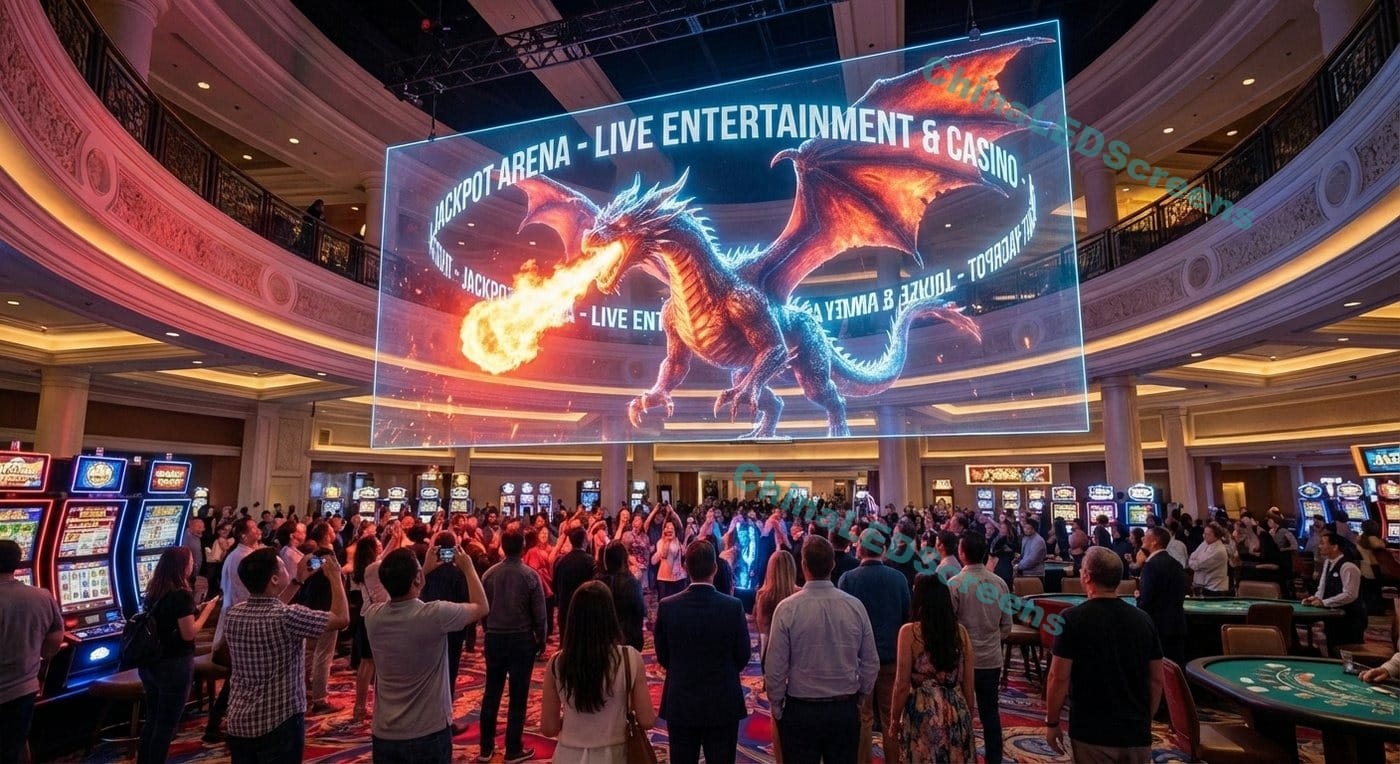
8) Entertainment Venues, Casinos & Arenas
Holographic visuals work exceptionally well for:
- themed environments
- character reveals
- jackpot announcements
- “photo moment” activations
Engineering considerations
- strong contrast and motion
- high stability for long operating hours
- clean cable routing to maintain aesthetics
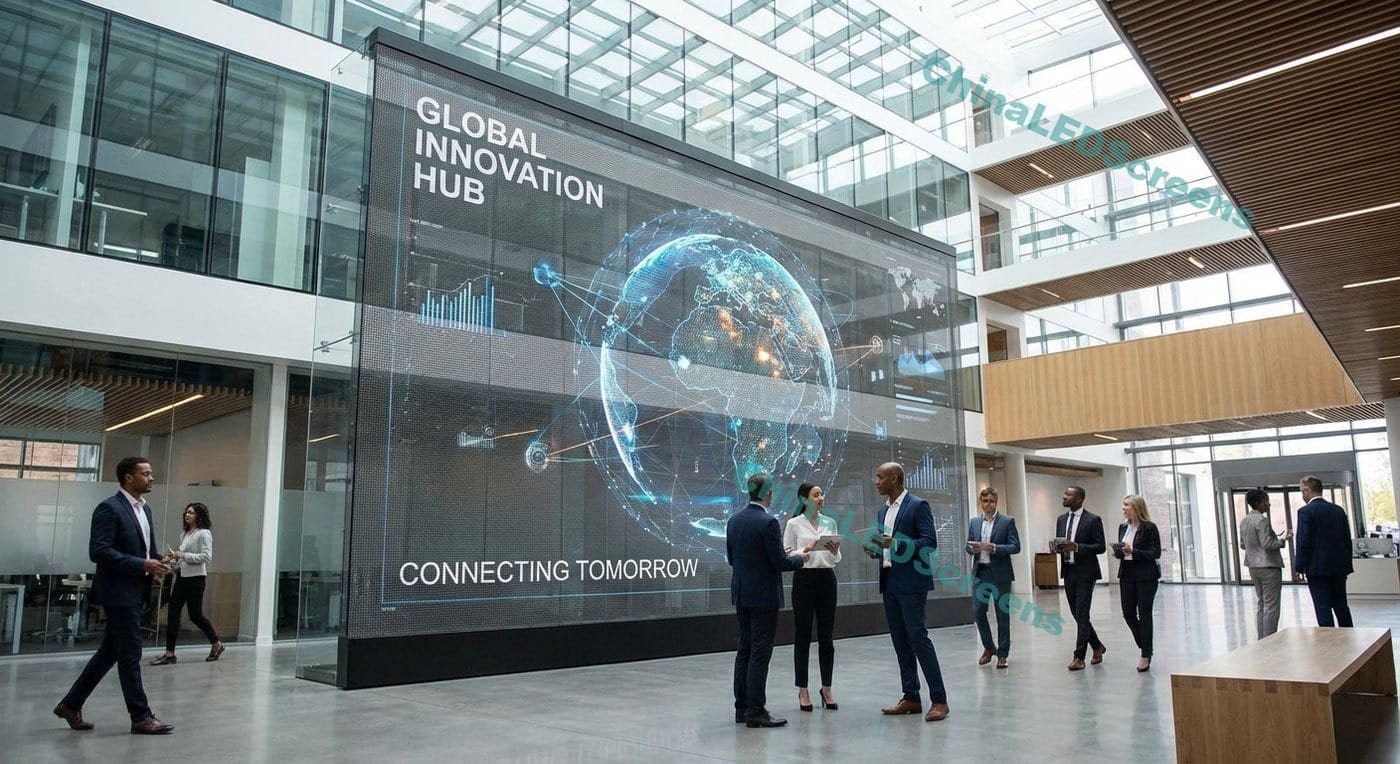
9) Corporate Headquarters & Innovation Centers
Corporate lobbies need:
- strong brand identity
- premium technological presence
- clean glass architecture
Holographic LED acts as a high-tech brand statement without obstructing spatial design.
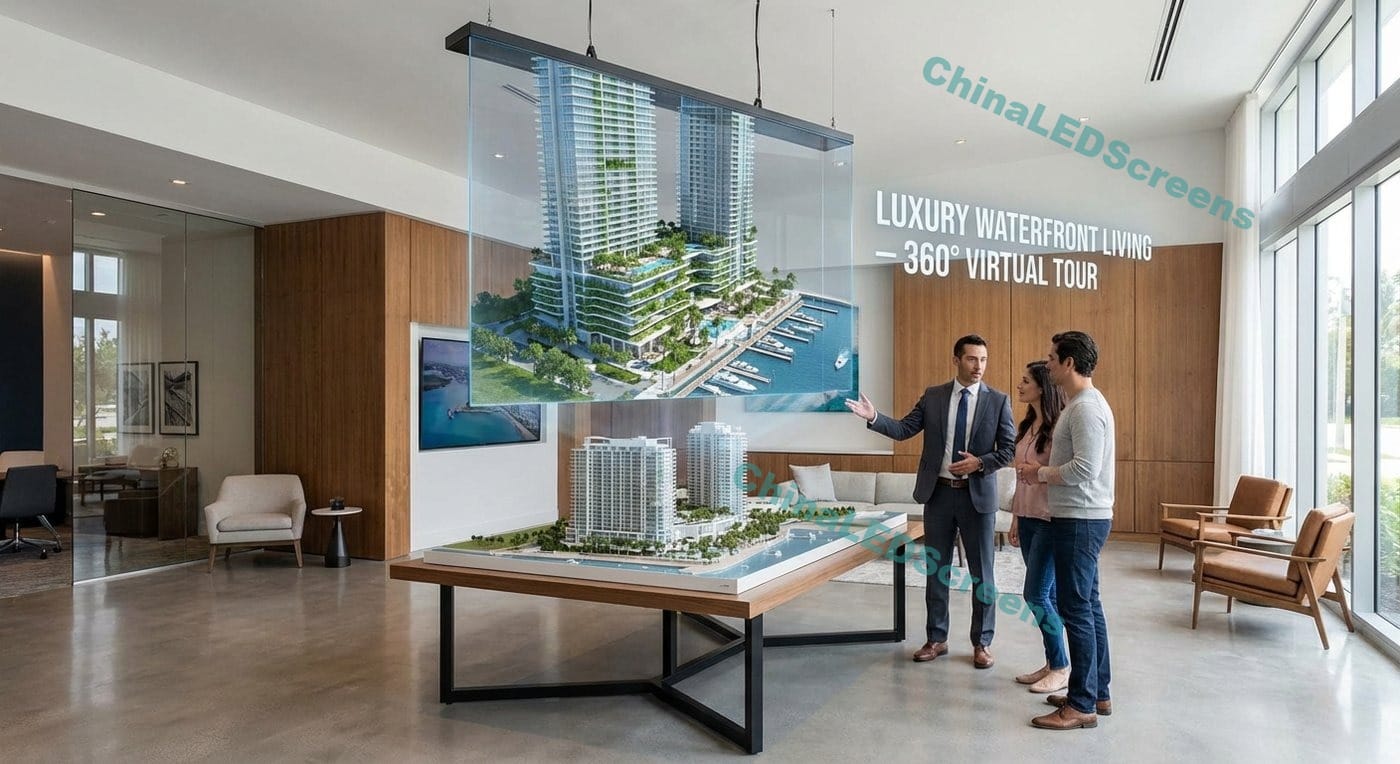
10) Real Estate Sales Galleries
Real estate selling is about storytelling and vision.
Holographic LED is used to:
- reveal building massing
- animate amenities
- show night views
- highlight key features
- float floor plans
Especially effective for:
- luxury condos
- mixed-use developments
- tourism/resort property sales
4. Content Engineering: What Makes a Holographic LED Visual Truly “Holographic”?
From an engineering perspective, content determines 70% of the “holographic effect.”
A) Use 60–80% negative space
This maximizes the illusion of floating objects.
B) Prioritize high-contrast object silhouettes
Transparency reduces mid-tone readability; contrast preserves it.
C) Keep motion slow and controlled
Fast motion breaks the perception of depth.
D) Minimal text
Text kills the illusion. Use 3–6 words per scene.
E) Use rotation, reveal, and assembly cues
These are the strongest triggers for perceived depth.
5. Engineering Checklist: How to Deploy Successfully in 2026
1. Viewing Distance → Pixel Pitch Rule
- <3m: finer pitch
- 3–8m: standard holographic pitch
- 8m: prioritize brightness and uniformity
2. Glass Reflection Management
Installers must evaluate:
- background reflectance
- viewer angles
- lighting behind glass
3. Camera-Friendly Configuration
For launches, influencers, and PR filming:
- ≥3840Hz refresh
- low scanning ratio
- correct brightness curve
4. Cable Management
The quickest way to ruin a premium installation:
- exposed power cables
- mismatched routing
- visible drivers
5. Maintenance Planning
Specify:
- spare modules
- access method
- acceptance criteria
- brightness uniformity
Internal link for technical guidance:
6. ROI Framework for Holographic LED in 2026
A) Pre-installation baseline measurement
Track for 7 days:
- footfall
- dwell
- shop entries
- conversions
B) Activation (with holographic content)
Track:
- stop rate
- dwell delta
- entry lift
- QR scans
- direct conversions
C) Evaluate engagement lift
Holographic LED success metrics typically show:
- 15–40% stop rate increase
- 10–25% store entry lift
- 2–8% QR engagement rate
7. Common Mistakes to Avoid (Engineer’s Perspective)
- Full-frame video content — makes the screen look like a standard LED, not holographic.
- Poor cable routing — kills the premium glass aesthetic.
- Ignoring reflections — results in washed-out visuals.
- Tiny text-heavy content — defeats transparency and kills legibility.
- Not planning service access — leads to costly maintenance.
8. Conclusion: Where Holographic LED Makes the Most Sense in 2026
The highest-value applications are clear:
- flagship retail
- product launches
- trade shows
- automotive showrooms
- airports
- hospitality
- corporate centers
- real estate sales
From an engineering standpoint, holographic LED screens succeed when:
- content is designed for transparency
- installation is clean and well-planned
- the application matches the environment
- the brand measures real engagement impact
Holographic LED isn’t just “eye candy.” It is a functional, measurable, architectural-grade communication technology—and in 2026, it has finally reached maturity.