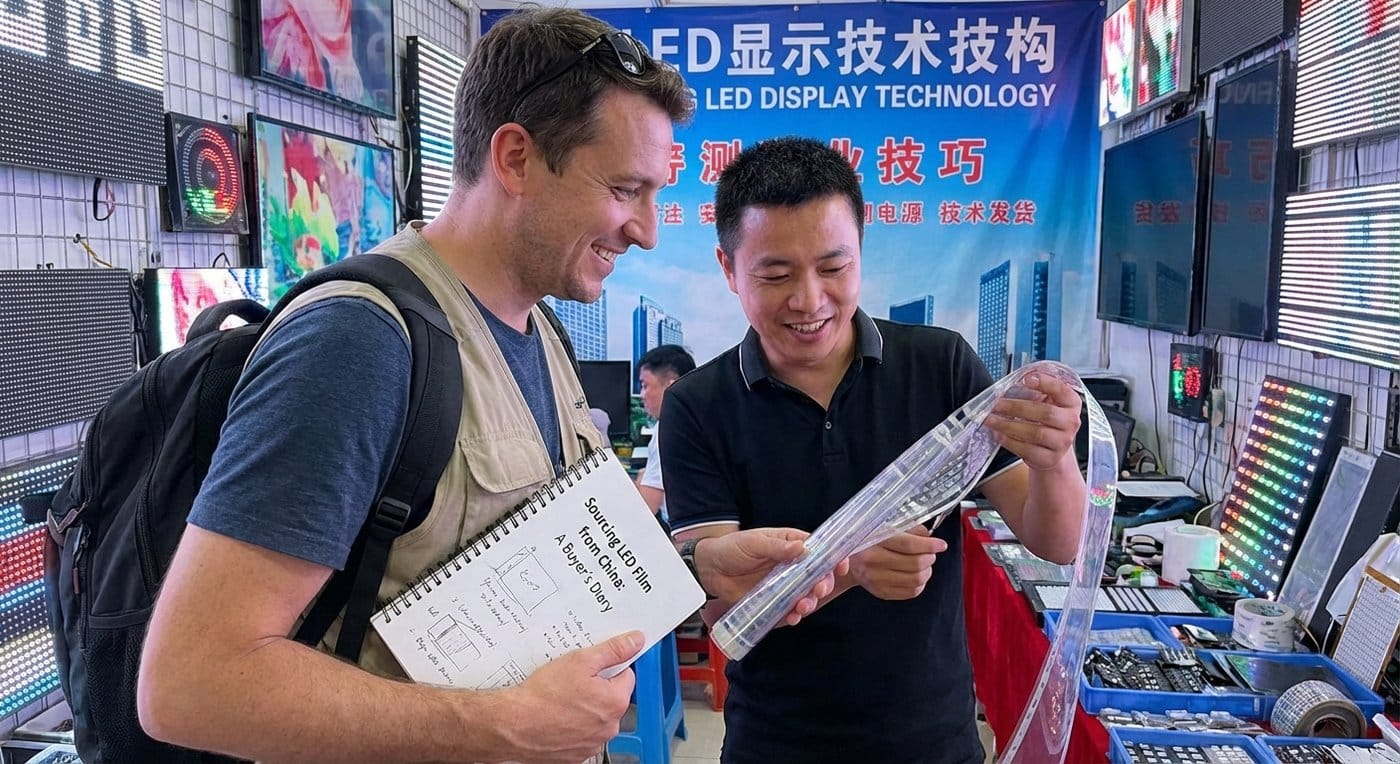
Day 0 — I stopped thinking like a shopper and started thinking like an integrator
My first instinct was the classic one: “Find a good China supplier, get a decent price, ship it, install it.”
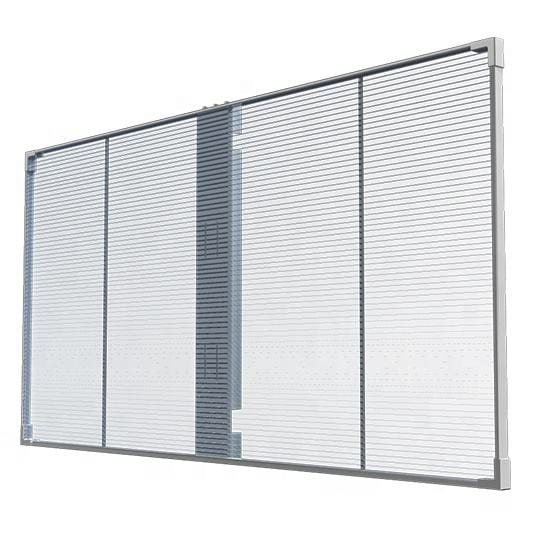
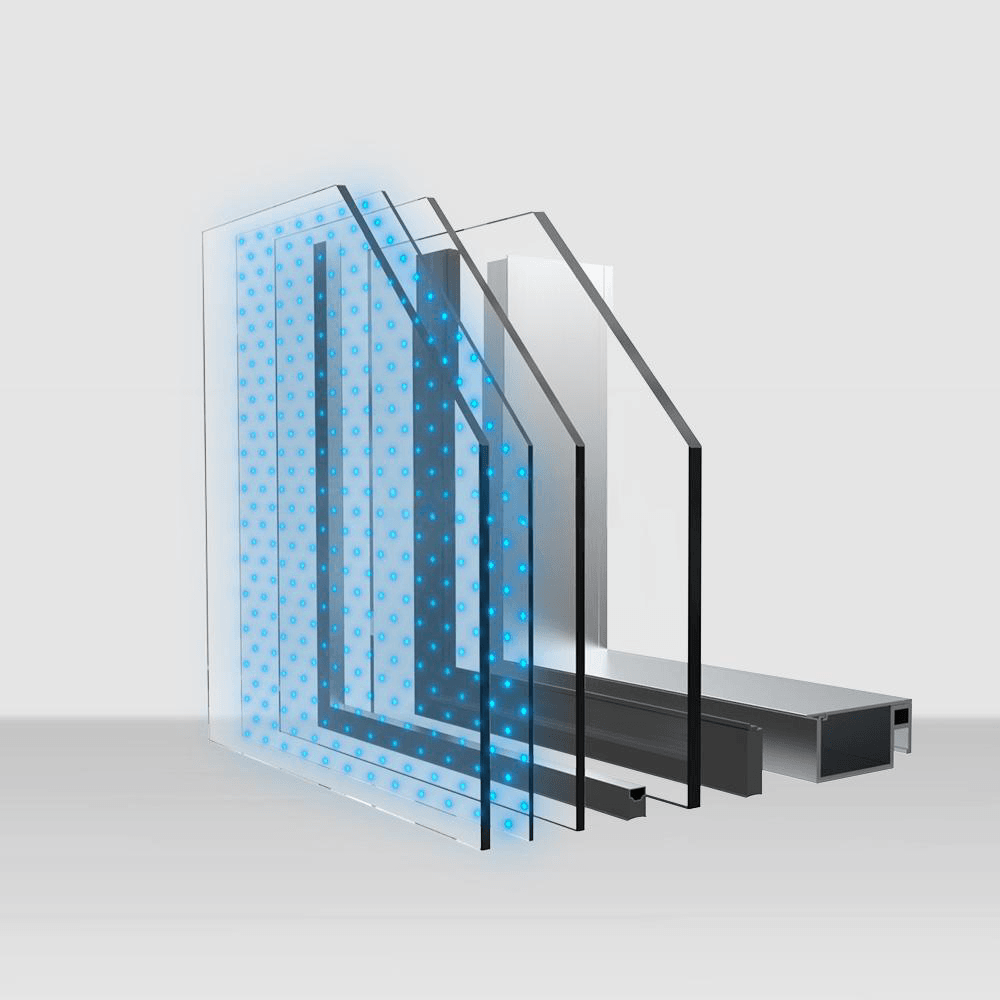
Then I remembered what LED film really is in the field: a system bonded to glass, with power/control constraints, content behavior that changes day vs night, and service risks if anything goes wrong.
So Day 0 was not “search suppliers.” Day 0 was define success.
The 3-part definition of success
1) Visual success
Readable at target distance in the worst daylight angle
Does not destroy sightlines (the glass still feels like glass)
Seams are acceptable from typical viewing positions
No distracting flicker on phone cameras (important for retail/social media)
2) Installation success
Cable routing and power boxes are hidden and serviceable
Adhesion survives cleaning routines and temperature cycles
Power constraints: available circuits, box locations
Cable routing constraints and hidden zones
D) Acceptance criteria (early draft)
Dead pixel policy at delivery and after install
Uniformity criteria (visual acceptance with test patterns)
Seam visibility tolerance
Basic camera test requirement
Burn-in requirement before shipment
Packaging + spares requirements
E) Commercial
Quantity now + potential rollouts later
Desired Incoterms (or request both FOB + DDP options)
Warranty length + what it covers
Lead time expectations
Spare parts kit requirement
I also asked suppliers to propose the best-fit product family—not just film—because sometimes film is not the right tool. When I needed a comparison baseline, I referenced:
Day 3 — Supplier shortlist: I filtered harder than I wanted to
I expected to shortlist 8–10 suppliers. I ended up with 3–5 serious candidates.
The fast disqualifiers
No clear answer on “Where can the film be cut/trimmed?”
No structured quality plan (only “we do QC”)
Can’t provide controller wiring diagrams and mapping workflow
Avoids writing down dead pixel policy or acceptance criteria
Can’t explain packaging strategy for film and accessories
Vague warranty language
The questions that separate manufacturer-level support from “just sell it”
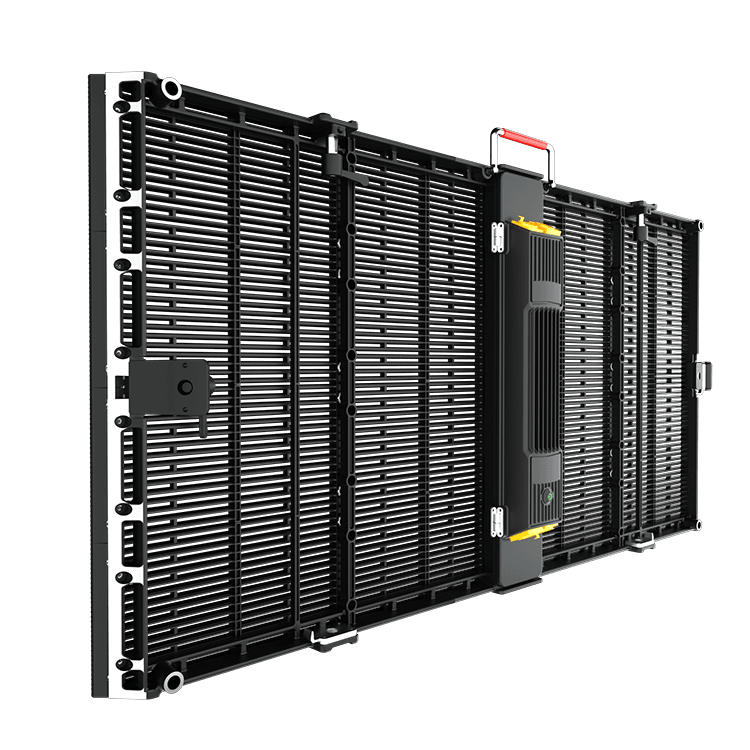
Who makes the film layer and who makes the power/control parts?
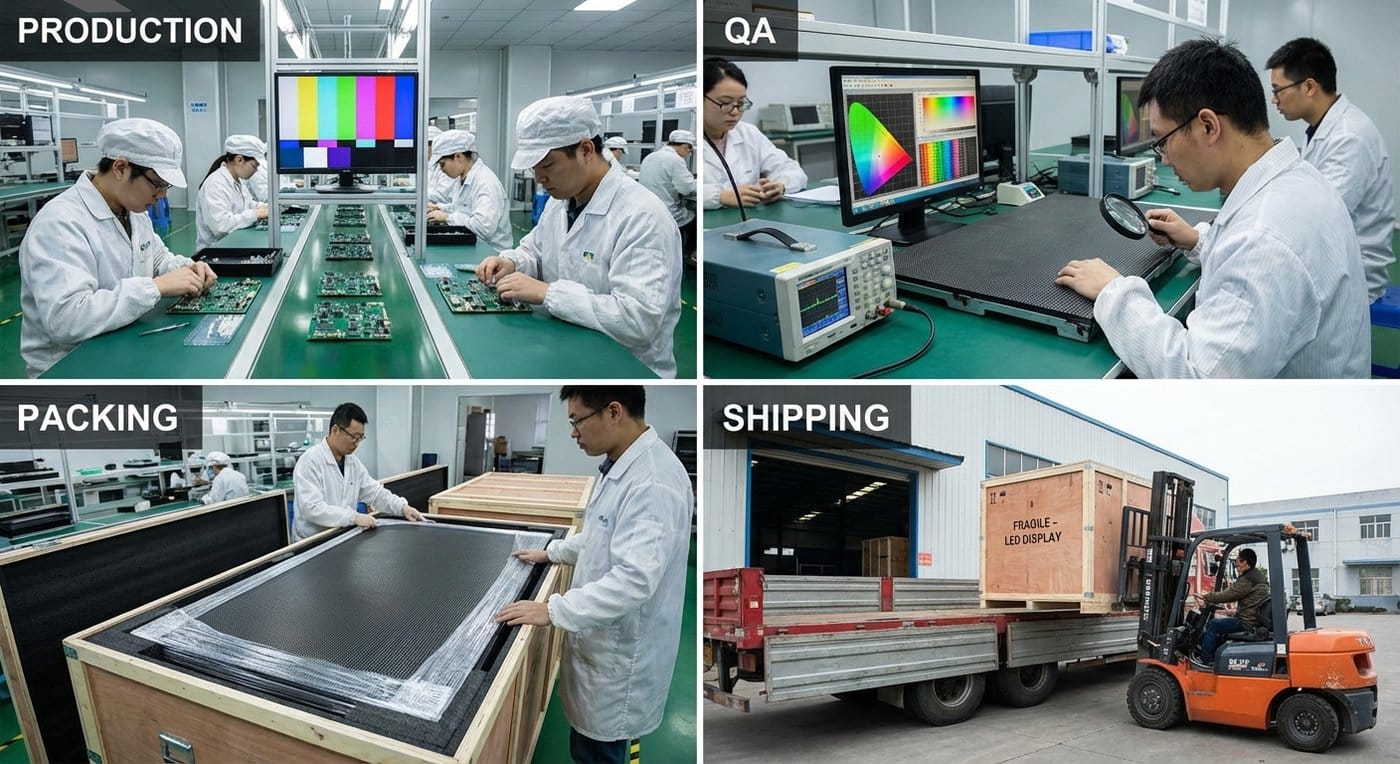
Can you show your process for burn-in/aging?
What is your standard spare policy per X square meters?
What is the replacement workflow for a damaged section?
How do you label tiles/panels for mapping and rework?
Can you provide installation training and commissioning checklist?
If a supplier can’t answer those clearly, you’re not sourcing a system—you’re buying a gamble.
To understand how a supplier thinks about reliability, I also cross-checked their technical positioning against our internal standards mindset at Technology & Quality.
Week 1 — Quotes arrived, and price became the least important number
Quote ranges were wide. That’s normal—because LED film pricing moves with:
pitch and density
brightness capability
controller architecture and redundancy
film segmentation method
cable harness quality
accessory completeness
warranty and support scope
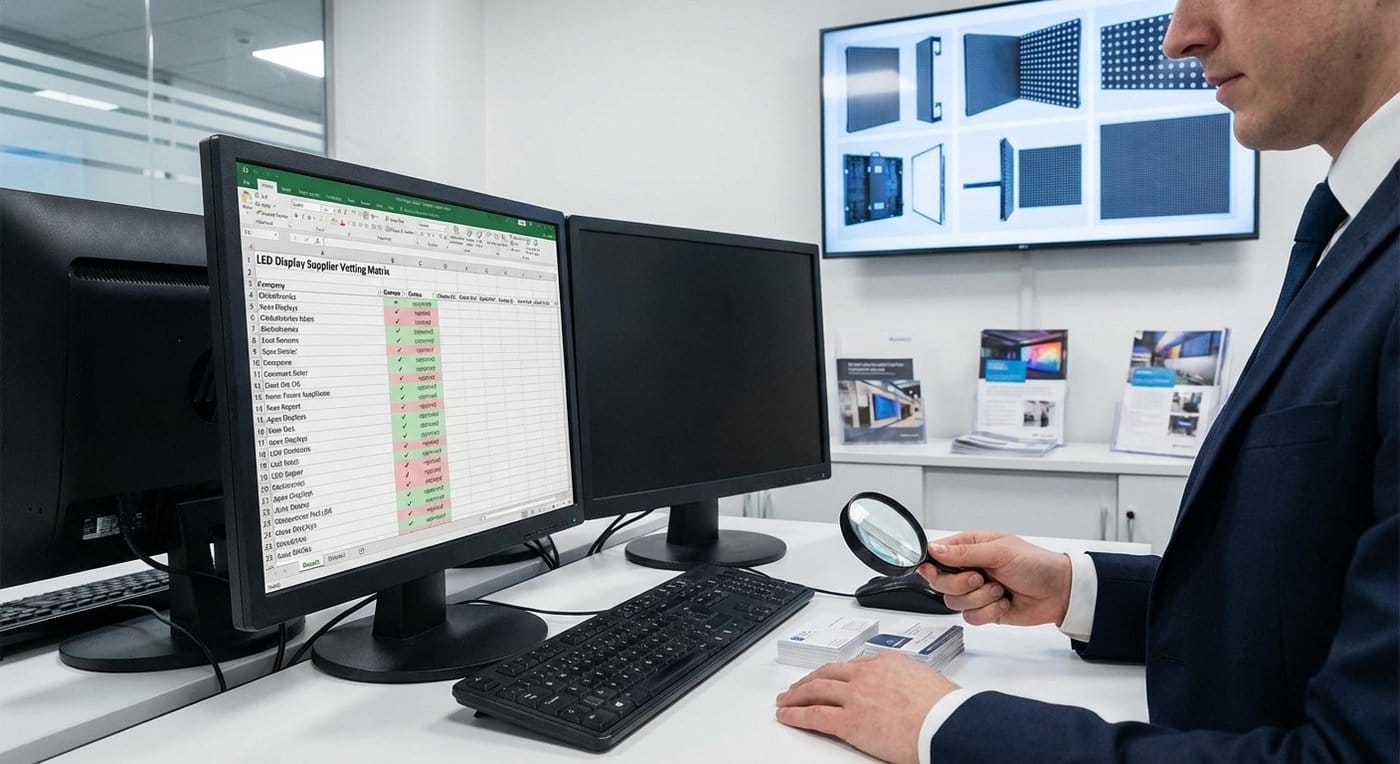
So I normalized the quotes using a scoring matrix.
Supplier scoring matrix (simple but brutal)
Category
What I looked for
Weight
Technical fit
pitch/brightness/transparency match RFQ
25
Engineering documentation
drawings, wiring, mapping workflow
15
QA maturity
burn-in plan, test patterns, traceability
15
Installability
cable routing plan, edge finishing strategy
15
Commercial clarity
Incoterms, lead time, payment, warranty
15
After-sales readiness
spares, response process, training
15
A low quote with weak documentation almost always becomes the highest total cost.
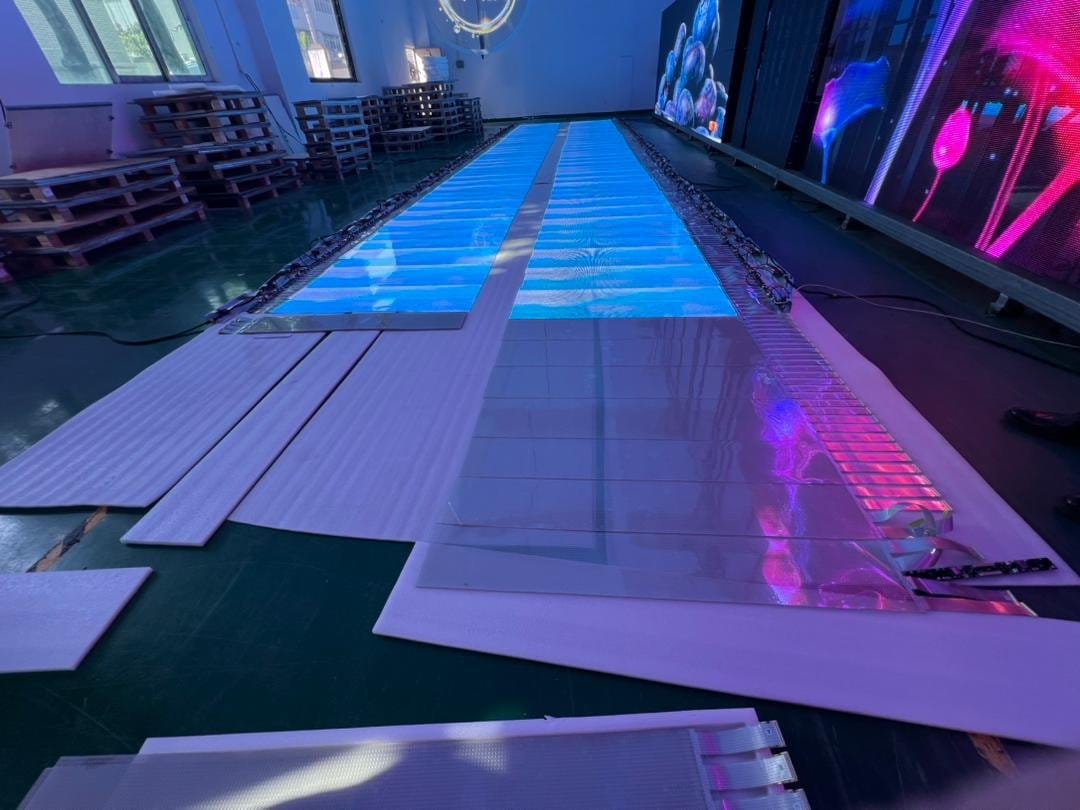
Week 2 — Samples: the test was designed to break the product
Most buyers treat samples as a showroom demo. I treated samples as a failure simulation.
Sample request: what I asked for
A representative section large enough to show seams
Full controller chain (sending/receiving if required)
Power supplies and harnesses identical to production
A short “commissioning checklist” from the supplier
Sample tests (what actually mattered)
1) Adhesion and edge behavior
Surface prep method repeatability
Edge lifting risk after cleaning
Edge finishing options (mask/reveal)
2) Uniformity and seam visibility
20–50% gray pattern (best at revealing banding)
Solid colors + gradients
Real content test (promos and brand visuals)
3) Mapping and “replaceability”
Can the supplier’s labeling help you remap quickly?
If one segment fails, can you replace without redoing the whole wall?
4) Day vs night behavior
Daylight test near glass
Dimming behavior at night (no glare bomb)
5) Camera test Retail buyers care about how it looks on phone cameras—because customers will film it. If it bands or flickers, you’ll get “cheap screen” impressions even when it’s technically fine to the eye.
Week 3 — Pilot plan: I wrote acceptance criteria before I placed the order
This is the step most buyers skip. And it’s why disputes happen.
I created two acceptance layers:
FAT: Factory Acceptance Test (before shipment)
Minimum FAT requirements I demanded:
Burn-in completed and recorded
Dead pixel count within agreed policy
Uniformity check using supplier’s test patterns
Controller mapping verified
All accessories included, labeled, packed
Photo/video evidence for key tests
SAT: Site Acceptance Test (after installation)
Minimum SAT requirements:
Day readability at target distance
Night dimming comfort
No obvious brightness bands at seams
Mapping stable after power cycle
Cable routing and service access signed off
Basic cleaning test (approved method)
Dead pixel policy (make it measurable)
Instead of arguing later, I defined:
allowable defects at delivery (per area)
allowable defects after install (per area)
how replacements are handled (tile shipped, credit, or local repair)
This removes 80% of future conflict.
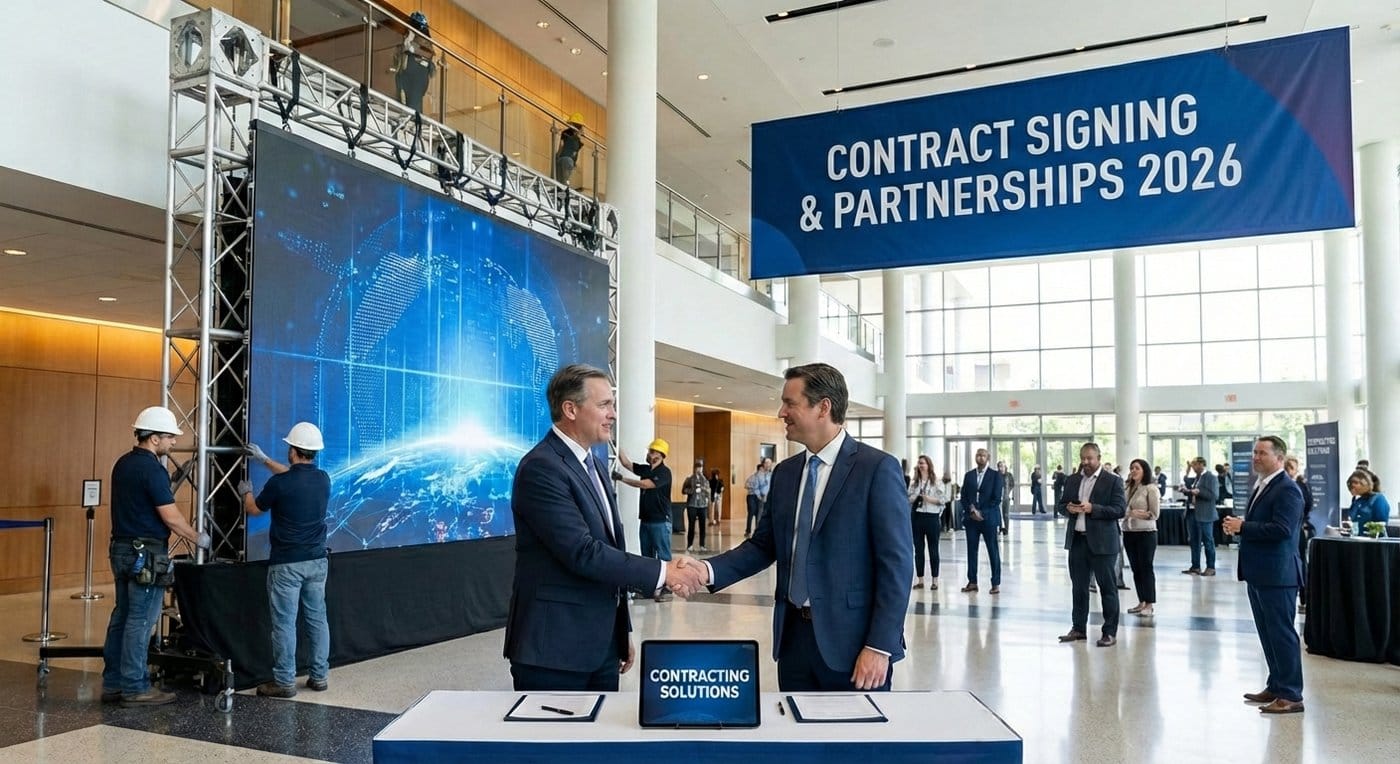
Week 4 — Contracting: I stopped negotiating price and started negotiating outcomes
Payment terms and Incoterms matter—but what mattered more was risk ownership.
Because with LED film, shipping damage and missing accessories can derail installs.
Packing and spares: what I standardized
Spare segments/tiles (enough for early failures)
Spare power supplies (the fastest swap item)
Spare data cables/harnesses
A labeled “commissioning kit” box
Clear “installation sequence” packaging (open box in the order you install)
And I asked for quick access to case-style references in the same product family so the team aligned on what “good” looks like. (For that, we used internal references like Projects & Case Studies.)
The lessons learned (10 rules that prevent expensive regret)
1) If the supplier can’t explain cutting/trim limits clearly, stop.
Custom glass happens all the time. If “cut to fit” is vague, you’re buying risk.
2) Don’t buy LED film without a pixel mapping workflow.
Film installs die when mapping becomes chaos. Demand labeling logic and port planning.
3) The best sample test is the one that tries to make it fail.
Adhesion, seams, power cycles, dimming, camera test.
4) Day vs night content is not optional.
One playlist rarely works. Budget content creation properly.
5) Build acceptance criteria before paying deposits.
FAT/SAT prevents disputes and saves your schedule.
6) Negotiate spares and response process, not just price.
When a tile fails, the project’s reputation is on the line.
7) Treat cable routing like architecture.
If cables and boxes look messy, the install looks cheap—no matter how good the screen is.
8) Use a scoring matrix to normalize quotes.
Otherwise you reward ambiguity.
9) Always plan for cleaning reality.
Glass will be cleaned. If edge finishing is weak, you’ll see lifting and complaints.
10) Choose partners who document like engineers.
Good suppliers hand you diagrams, checklists, and structured QA—not just videos.
If you want sourcing to feel predictable, treat LED film like a system procurement, not a product purchase. Write a strong RFQ, test samples aggressively, lock acceptance criteria early, and negotiate spares/support as part of the deal—not as an afterthought.
If you want us to sanity-check your RFQ and propose the best-fit solution category (film vs cabinet vs glass), start at ChinaLEDScreens and share your glass drawings, viewing distances, and sunlight conditions.