Adhesive LED Film Screen for Fridge vs Transparent LCD Screen for Fridge (Engineer’s Guide)
Adhesive LED Film Screen for Fridge vs Transparent LCD Screen for Fridge (Engineer’s Guide)
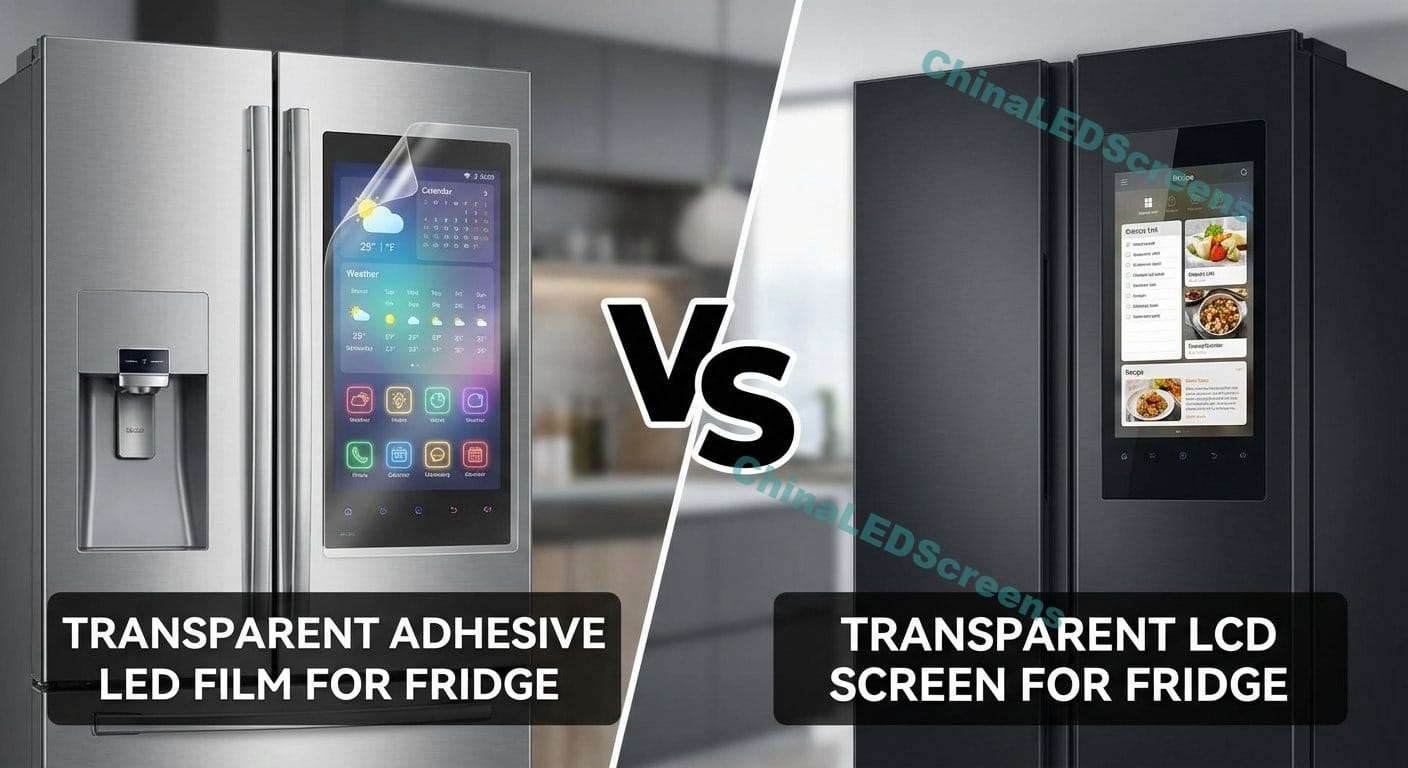
When someone says “a screen for fridge doors,” they usually mean one of two outcomes:
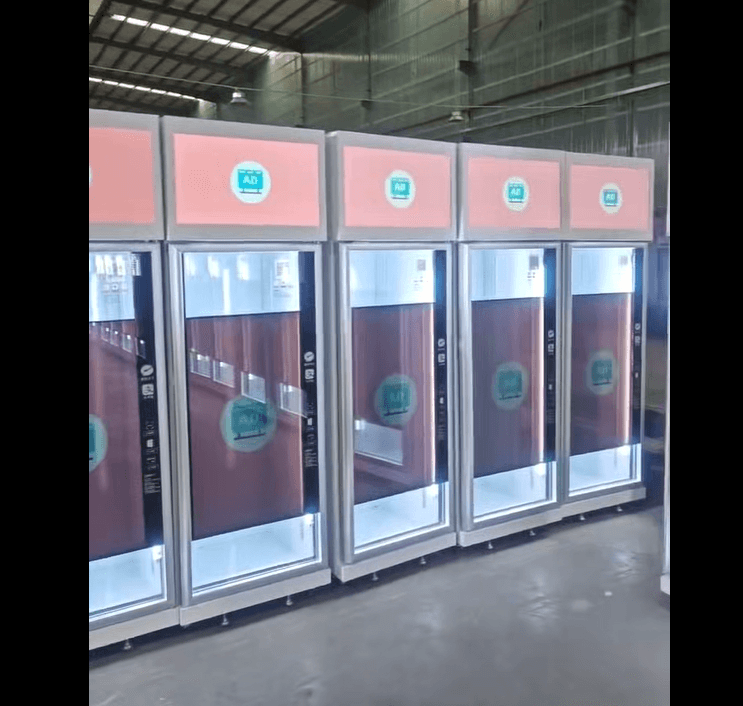
Turn the fridge door into ad inventory (maximum visual impact, product photos look real, strong brand messaging).
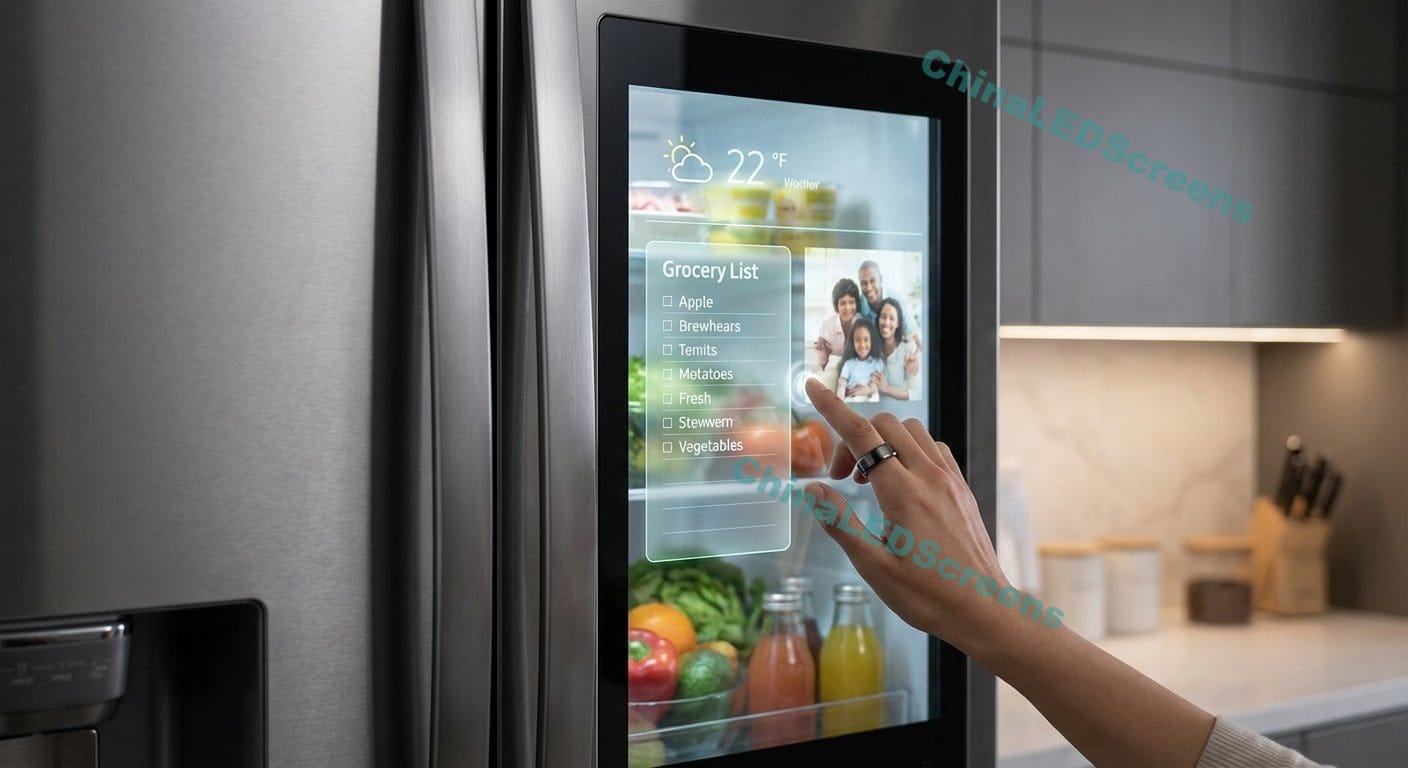
Keep the door see-through while adding motion graphics, pricing, and promotions (shoppers still see products inside).
LED film vs transparent LCD” is a meaningful comparison.
If you’re new to transparent LED product families, start from the manufacturer overview at ChinaLEDScreens, then come back here for the fridge-door-specific decision logic.
Table of Contents
Quick Verdict (30 seconds)
Choose adhesive LED film if…
You must keep visibility into the fridge (a true “see-through overlay”).
You want a lighter, thinner solution applied directly to existing glass.
Your content is graphics-first (branding, icons, big text, motion shapes) rather than “photographic realism.”
Choose transparent LCD (or “smart door LCD panels”) if…
Your priority is high-resolution product images (photo/packshot accuracy, small text, UI elements).
You can accept reduced see-through (or you plan to use “virtual shelf” camera/planogram techniques).
You have a mature ops team for software + service, especially in multi-store rollouts.
Choose “hybrid thinking” if…
You want see-through AND photo-real content: this often becomes a system design problem (glass, lighting, anti-fog heating, reflections, content design rules) more than a “panel choice.”
Definitions: What you’re actually comparing
What is an adhesive LED film screen?
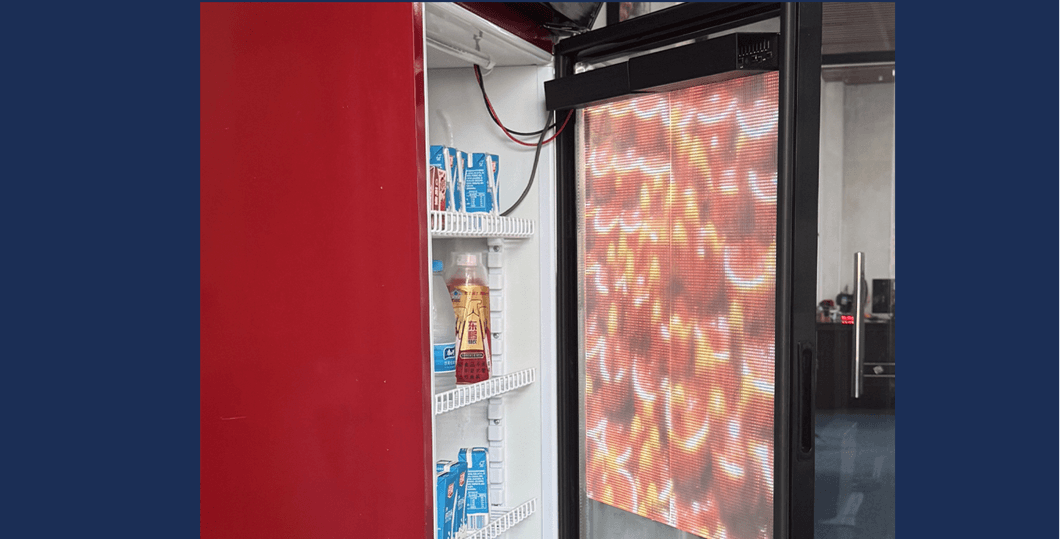
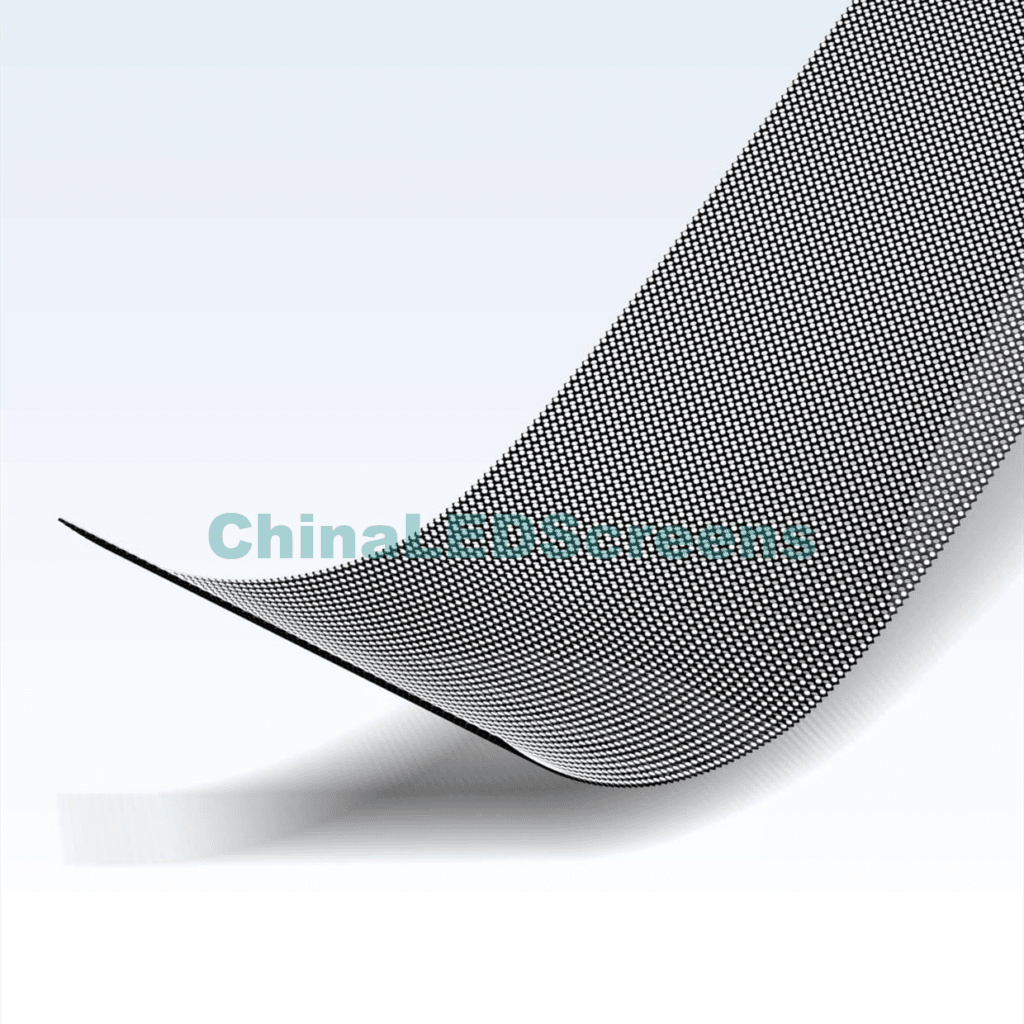
Adhesive LED film is a flexible, transparent LED film designed to be laminated or adhered onto glass. Think of it as a see-through LED matrix (pixels spaced on a film), where the glass stays functional as a door while the film adds emissive pixels on top.
Key practical implication: LED film is usually better at “overlay messaging” than ultra-fine UI detail, because pixel pitch and transparency trade off against each other.
What does “transparent LCD for fridge” mean in real projects?
In fridge-door deployments, “transparent LCD” often gets used loosely. It can refer to:
A transparent LCD panel that lets some light through (but is inherently limited in transmittance and needs a strong backlight). Transparent LCD designs often face a fundamental transmittance constraint, frequently cited as below ~10% in large-format implementations. (光學出版集團)
An LCD screen replacing the door’s visual function, where you no longer rely on transparency; the screen shows products/ads, sometimes using cameras or inventory models to simulate visibility.
Key practical implication: LCD can be excellent for image fidelity, but “true transparency” is usually the hardest part.
The fridge-door environment: why normal display rules fail
A fridge door is hostile compared to a normal retail wall display:
Retail cleaning adds chemical exposure (wipes, alcohol solutions, detergent residue). Impact: Any display solution needs proper sealing, surface protection, and a cleaning-safe design.
2) Low temperature + thermal shock
The door area can see fast temperature swings during restock and frequent openings. Impact: Adhesives, films, and optical layers must tolerate long-term cycling without edge lifting, bubbling, or haze.
3) Door opening cycles + vibration
Convenience stores can see hundreds of openings per door per day. Impact: Cable routing and strain relief matter more than the display technology itself.
4) Bright store lighting + reflections
Fridge doors behave like mirrors in bright aisles. Impact: Contrast and anti-reflection strategies define “readability,” not just nits.
Side-by-side comparison (what matters for fridge doors)
Typically lower mass; still requires thermal design in door frame
Backlight can add heat load; heat can increase condensation risk
Installation on existing doors
Can retrofit onto existing glass (project-dependent)
Often requires replacing door assembly or adding rigid modules
Serviceability (one door down)
Film/panel segmentation matters; design for partial replacement
Mature module swap is possible, but often heavier assemblies
Content use cases
Promotions, big typography, brand motion, price overlays
Ads, video, product images, UI-like experiences
Risk at scale
Mostly engineering + installation discipline
Often engineering + complex software + service operations; large rollouts have shown disputes when reliability and service models fail (Fortune)
Deep dive: the decision factors that actually decide the winner
1) Transparency & merchandising: “Can shoppers still see products?”
Adhesive LED film generally wins when “seeing the real product inside” is non-negotiable. You get:
Real visibility of products and stock
A digital layer for brand motion and pricing cues
Transparent LCD, in true see-through mode, can struggle because LCD stacks inherently consume light. In display optics literature, LCD transmission losses are often tied to polarizers and color filters, contributing to low overall transmission. (Wiley Online Library) For transparent LCD specifically, low transmittance is repeatedly highlighted as a core challenge. (光學出版集團)
Practical rule: If your merchandising team insists “customers must see the actual bottles,” adhesive LED film is usually the cleaner path.
2) Image quality at 0.5–1.5 meters (typical aisle distance)
A shopper stands close to a cooler door. That means:
Small text must be readable
Product packshots must look sharp
Pricing must be instantly understood
LCD is naturally advantaged for dense pixels and typography. LED film can compete, but only if the pixel pitch is selected correctly—and pitch drives cost and can reduce transparency.
Practical rule:
If your creative relies on photo-real product images, LCD-type solutions are usually easier.
If your creative is bold graphics + big pricing + animation, LED film can perform extremely well.
3) Brightness, contrast, and reflections (the “why does it look washed out?” problem)
In bright retail aisles, the battle is contrast vs reflection.
LED film: emissive pixels help “punch through” reflections, as long as brightness is specified for the environment.
Transparent LCD: must overcome both ambient reflections and the optical inefficiency of the LCD stack. LCD systems are known to have limited transmission (often discussed around the ~10% order of magnitude, depending on configuration), largely due to polarizers and filters. (Wiley Online Library)
Practical rule: If you cannot control lighting and cannot add strong anti-reflection/anti-glare measures, prioritize the technology that maintains contrast under glare (often LED film).
4) Power, heat, and condensation feedback loop
Here’s a fridge-door-specific trap:
More backlight / more brightness → more heat in the door area
More heat near cold glass edges → can change condensation behavior
LCD backlight systems can introduce meaningful heat sources. LED film can also generate heat, but typically the mass and mechanical integration are different (more distributed, often easier to design ventilation paths in the frame).
Practical rule: Your mechanical design (door frame, venting, and isolation) can matter more than the panel choice. If the door design cannot handle extra heat, avoid architectures that rely on brute-force backlighting.
5) Reliability architecture: single cooler vs chain rollout
A single cooler door project can be managed manually. A chain rollout cannot.
Contract clarity: service response time, MTTR, liability for downtime
This is where some cooler-door “smart screen” deployments have become controversial—legal disputes and operational failures happen when reliability and service responsibilities are not aligned. (Fortune)
Practical rule: If you are deploying 200+ doors, judge vendors less by demo visuals and more by ops maturity: monitoring, parts pipeline, and service playbook.
6) Safety & compliance (don’t skip this)
Fridge doors are in public spaces; safety is non-negotiable.
Your solution should define:
Glass type (tempered/laminated)
Low-voltage design near customers
EMC/EMI compliance
Fire safety and material specs
If you need manufacturer QA and process assurance, use the technology & quality page as your internal anchor for how you present QA in sales and RFQs.
ROI: what the data suggests (and how to use it responsibly)
Digital signage isn’t “magic,” but evidence shows it can produce measurable lifts in specific conditions. A peer-reviewed study found in-store digital signage increased the likelihood of purchasing featured products by 8.1% (featured products effect). (SAGE Journals)
At the same time, the digital signage category itself is large and forecasted to grow—Grand View Research estimates the global digital signage market at ~$28.8B (2024) with growth toward ~$45.9B by 2030. (Grand View Research)
How to translate ROI into a fridge-door pilot that makes sense
Instead of promising “X% sales lift,” structure a pilot like this:
Pick 3–5 SKUs you can track reliably
Define a control group (similar store/daypart without screens)
Run A/B creative (price-first vs brand-first)
Track: unit sales, conversion on featured items, and “halo” effects (same brand family)
Best practice: prove the content + ops loop before scaling hardware.
Pick-by-scenario recommendations (what I’d do as a project engineer)
Scenario A: Convenience store (1–10 doors), need visibility + promotions
Recommendation: Adhesive LED film overlay.
Keep see-through visibility
Use big, high-contrast motion design (prices, bundles, limited-time)
If you have a retail media ops team: LCD-style “smart doors” can deliver high-fidelity ad content, but require strong service + monitoring (learn from industry disputes). (Fortune)
If you want simpler hardware with see-through: LED film can work well, but you must standardize installation and service segmentation.
Treat it as an IT system: monitoring, updates, and incident response.
Plan for failures at scale: a 1% failure rate becomes a daily headache at 5,000 doors.
Get contracts right: uptime definitions, responsibilities, and exit clauses.
FAQ
Is “transparent LCD” actually transparent enough for fridges?
It depends on expectations. Transparent LCD designs face a fundamental challenge: low transmittance is commonly highlighted as a key limitation, often pushing designers toward high-luminance backlights and careful optical design. (光學出版集團) If “customers must see real products clearly,” LED film overlays are usually more straightforward.
Which option is more future-proof?
Both can be, but the future-proofing lever is operability: monitoring, modular service, spare parts, and content workflow. The market tailwind for digital signage suggests long-term momentum, but only reliable systems scale well. (Grand View Research)
Will it really increase sales?
There is credible, peer-reviewed evidence that in-store digital signage can increase purchase likelihood of featured products (reported as 8.1% in one published study), but results depend on category, creative, and execution. (SAGE Journals)
Next step (internal-only CTA)
If you want, share:
fridge door size + quantity
“must be see-through?” yes/no
viewing distance + content type (photo vs graphics)
…and we can turn it into a one-page RFQ + recommended configuration. You can also route it via Contact Us for formal quoting and engineering support.