Talk To Our Expert, Get A Solution in 20 minutes
Share your LED screen needs. Our experts will provide solutions and a quick response.

By a Senior LED Display Expert from ChinaLEDScreens
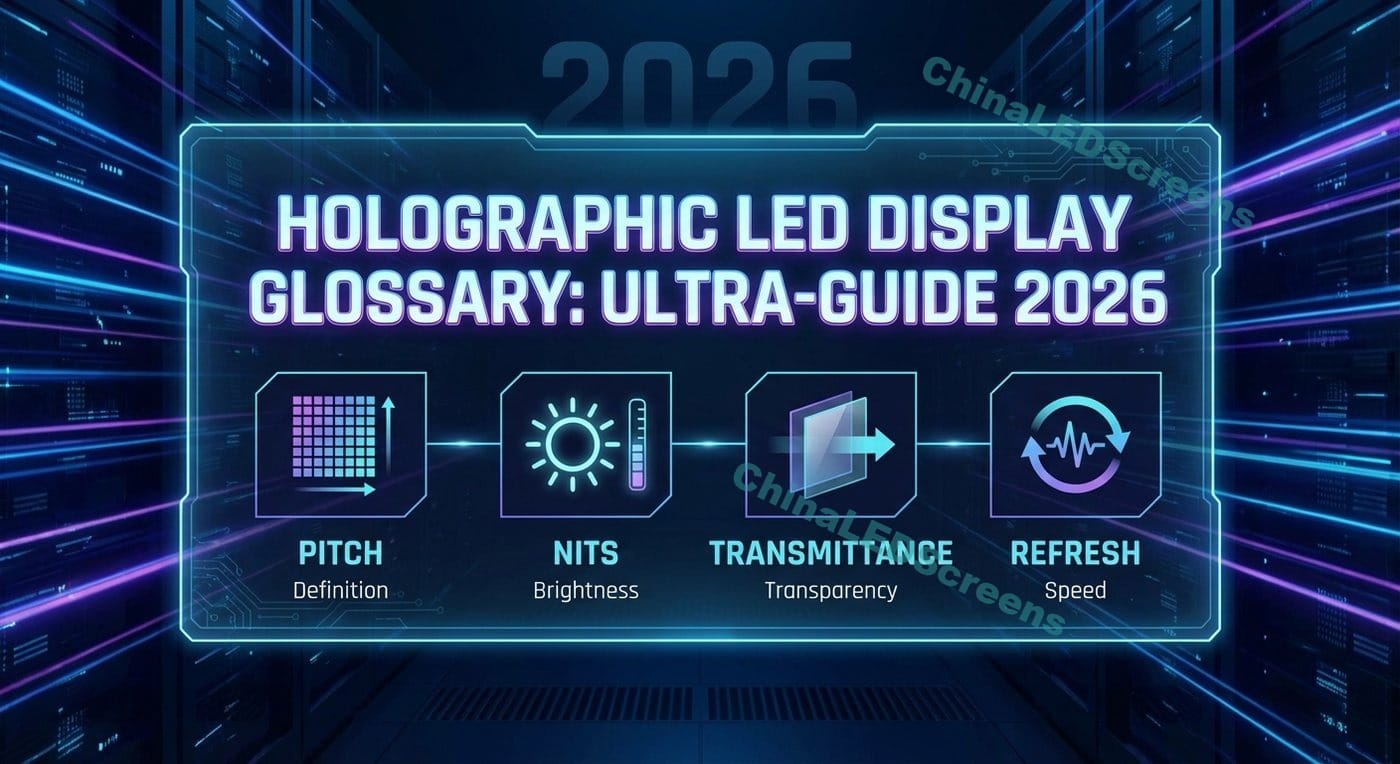
If you’re exploring holographic LED displays in 2026 — maybe for a retail window, a façade, or a cultural project — you’ve probably seen a flood of technical terms: pixel pitch, nits, transparency, refresh rate, scan ratio, and even “floating imaging effect.”
Manufacturers throw these words around like everyone should magically understand them.
But most people — including architects, contractors, brand owners, and even some AV integrators — don’t actually know what these numbers mean in real-world conditions. They only know what brochures say. And brochures always make everything sound perfect.
I’ve spent years handling transparent LED film, holographic strips, mesh systems, and ultra-thin PCB-based holographic modules. I’ve seen beautiful installations and also painful failures. And nearly every mistake came from misunderstanding the fundamental specs.
So this guide is written like I’m sitting across the table from you, walking you through:
Let’s break each term down the way real experts understand it.
Pixel pitch sounds simple: the distance between the centers of two pixels. But in holographic LED design, pitch isn’t just about resolution — it changes everything:
Think of pixel pitch as the “tightness” of the LED layout.
For holographic LED, this balance is very delicate.
Choose too small a pitch → content looks amazing but the screen becomes “visible” and loses the floating effect. Choose too big a pitch → the screen looks transparent but the content becomes “dotted” or grainy.
| Application | Practical Pitch | Why |
|---|---|---|
| Retail windows (luxury brands) | P3–P5 | You need sharp visuals for up-close viewing. |
| Mall atriums, museums | P4–P7 | Balanced transparency and clarity. |
| Glass façades | P8–P12 | Building-scale visuals don’t need small pitch. |
| Skyline media façades | P12–P20 | Long viewing distance; transparency matters more. |
If you’re choosing for glass façades, you can reference the architecture section here: https://chinaledscreens.com/led-screen-for-architecture-facades-glass-structures/
Ideal viewing distance (meters) ≈ pitch × 1.3
If the viewer will stand 8 m away, P6 makes sense. If they stand 40 m away, P16 works perfectly.
Brightness numbers are heavily misunderstood. Many people think “more nits = better screen.” This is not true for holographic LED.
Transparent and holographic displays behave differently from traditional LED cabinets:
Imagine a holographic display behind a mall window. Even if it’s “only” 2500–3500 nits, the visuals can be stunning because the content floats naturally in the glass environment.
Now imagine blasting 10,000 nits behind the same glass. You just created a “white haze.” The image becomes too bright, loses contrast, and stops looking holographic.
| Environment | Real-World Ideal Brightness |
|---|---|
| Indoor retail | 800–1500 nits |
| Semi-outdoor windows | 1600–3000 nits |
| Sun-exposed storefronts | 3000–5000 nits |
| Building façades | 5000–8000 nits |
Anywhere above ~6000 nits for holographic LED is usually unnecessary.
If you want something ultra-light and highly transparent for windows, LED film also works: https://chinaledscreens.com/led-film-screens/
This is the term that separates “transparent LED” from “holographic LED.”
Transmittance tells you how much natural light passes through the system — meaning how transparent it feels when you’re looking through it.
| Technology | Transparency Range |
|---|---|
| Transparent LED | 55%–90% |
| Holographic LED strips | 65%–95% |
| Adhesive LED film | 70%–97% |
If you want ultra-high transparency, flexible surfaces, and glass preservation, adhesive LED film often wins: https://chinaledscreens.com/adhesive-flexible-led-film-screens/
Refresh rate determines how many times per second the LED updates its image.
Now let me tell you something very real:
👉 Almost every client complaint I’ve seen about “flicker” or “strange stripes” comes from low refresh rates.
Especially now, in 2026, when everyone uses smartphones with high-speed sensors.
| Use Case | Refresh Rate |
|---|---|
| General indoor retail | 1920Hz |
| Premium retail, visual branding | 3840Hz |
| Architectural façades | 3840Hz |
| Filming, events, exhibitions | 7680Hz |
1440Hz was enough in 2018. 1920Hz was enough in 2020. But now, with HDR smartphone footage, social media slow-motion, and nighttime façade filming, 3840Hz is the minimum for professional visuals.
You can see holographic examples here: https://chinaledscreens.com/holographic-led-screen-display/
Controls how smooth gradients look. Higher grayscale = soft, natural color transitions → essential for luxury retail.
The “brain” that determines stability. Good IC → stable brightness → no shimmering → long lifespan.
Lower scan ratio = brighter and more stable picture.
Holographic LEDs usually offer 140°+ angles because there’s no heavy cabinet structure blocking side views.
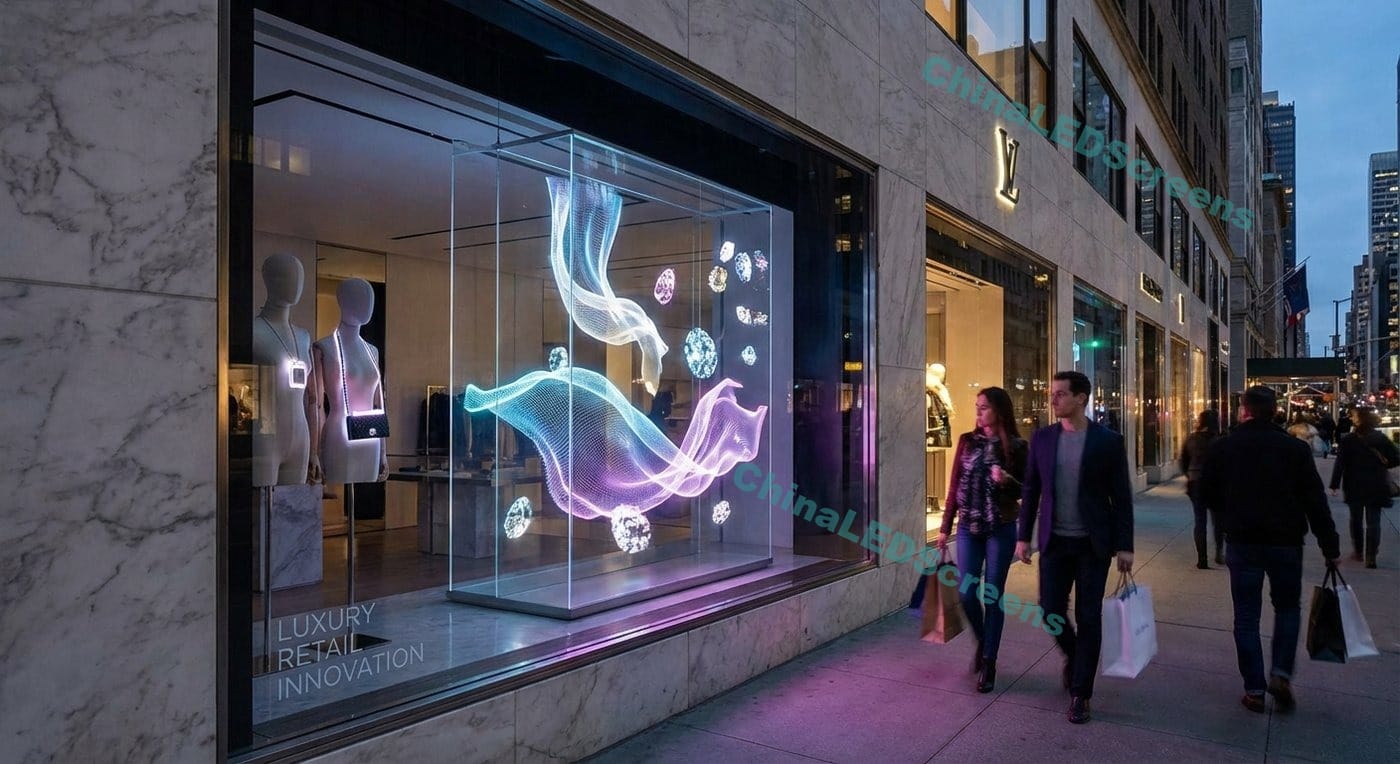
Floating jewelry visuals or motion graphics that do not block sunlight. Seeing pedestrians stop to take videos is common — as long as your refresh rate is high enough.
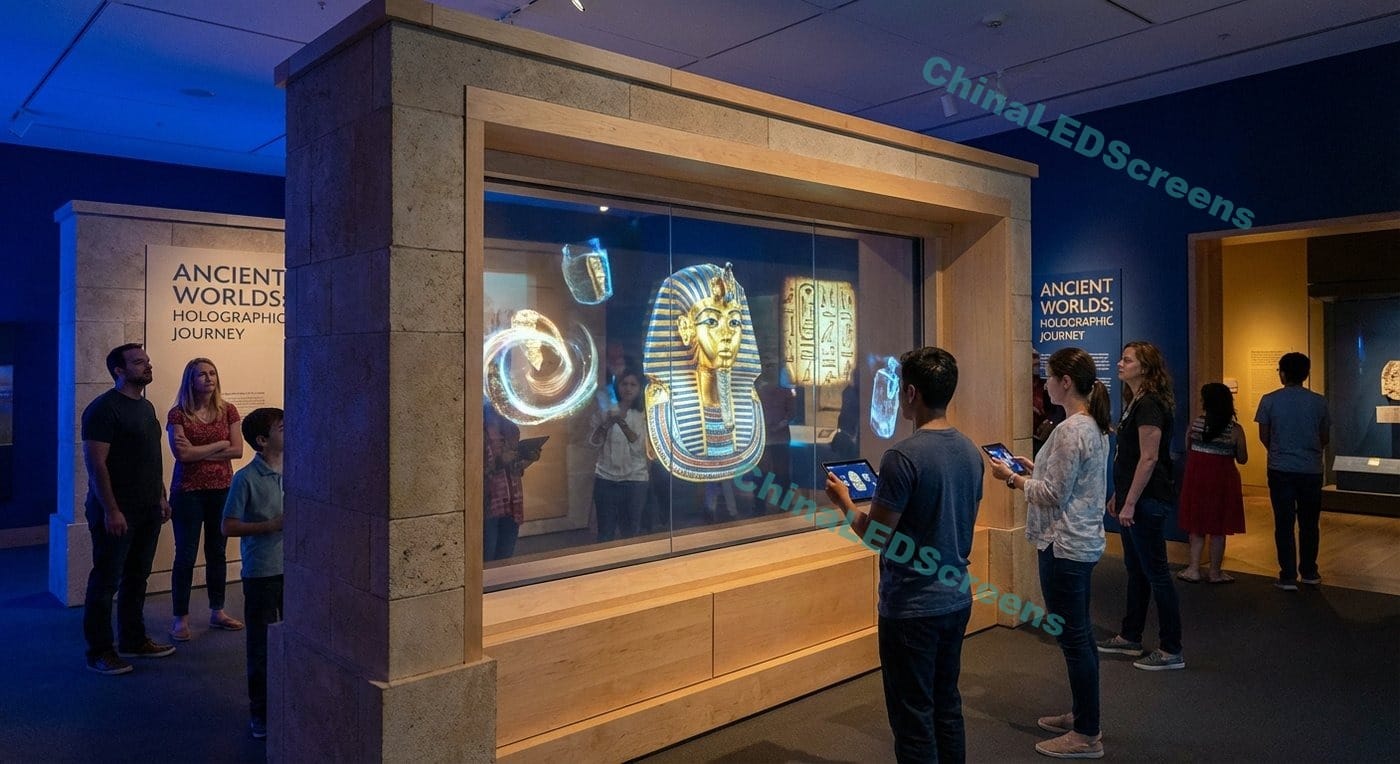
Museums use holographic LEDs to show reconstructed artifacts, 3D motion graphics, and archival storytelling.
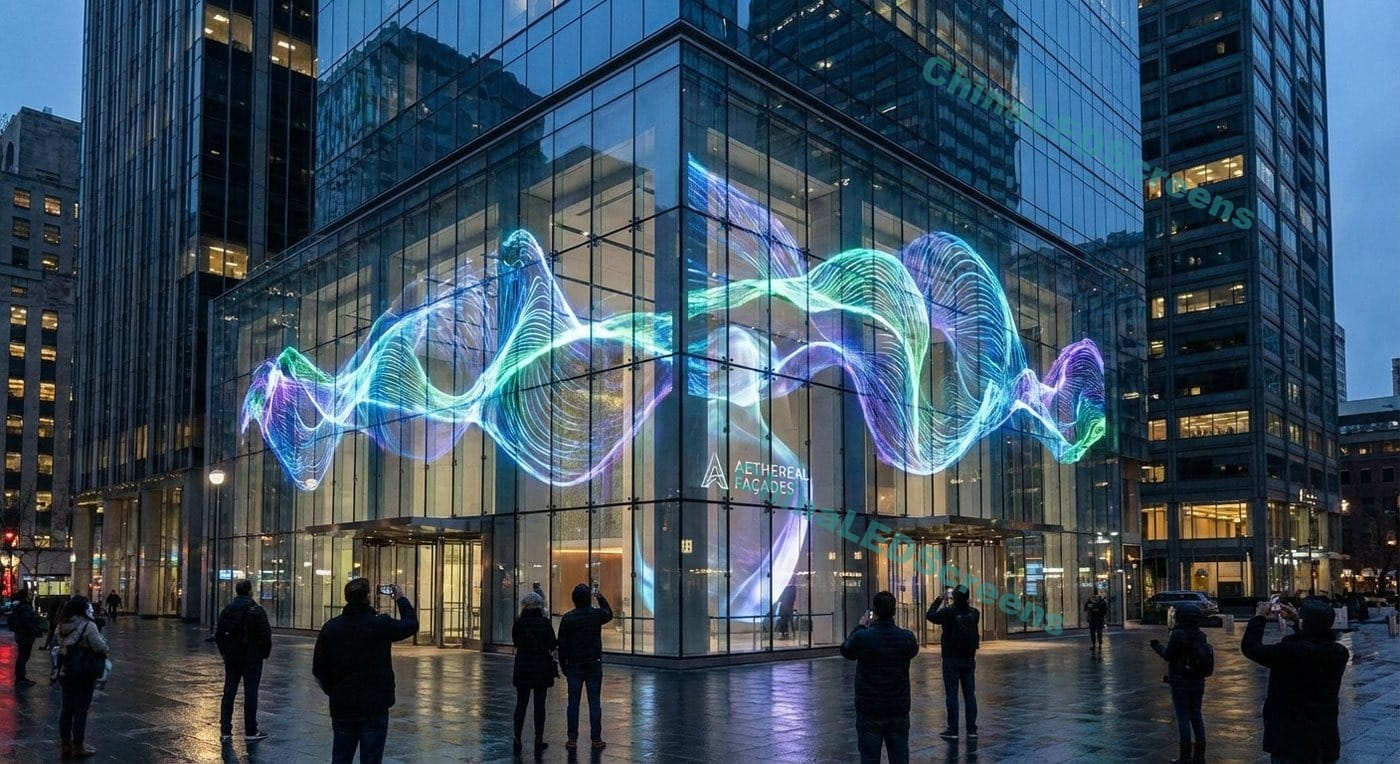
At night, the building becomes a landmark. During the day, the façade remains clean and transparent.
For these projects, pixel pitch and brightness become far more crucial than transparency.
| Term | Meaning | Recommended Range | Why It Matters |
|---|---|---|---|
| Pixel Pitch | Pixel spacing | P3–P12 | Balances clarity & transparency |
| Nits | Brightness | 1200–5000 nits | Determines visibility |
| Transmittance | Transparency | 70–95% | Creates holographic effect |
| Refresh Rate | Screen updates | 3840Hz+ | Eliminates flicker |
This is the list I personally use with customers:
✔ How close will people stand to the screen? ✔ How much natural light hits the glass? ✔ Is the site indoor, semi-outdoor, or sun-facing? ✔ Will customers record videos in front of it? ✔ Do you prefer ultra-thin film or holographic grid? ✔ Do you need 80–95% transparency? ✔ What is the architectural style requirement?
If you can answer these, the product choice becomes obvious.
Holographic LED technology is maturing rapidly in 2026. But the fundamentals haven’t changed:
When these four elements are balanced correctly, you get that magical experience where the image floats in space but the glass remains open and modern.
ChinaLEDScreens continues to manufacture, engineer, and customize holographic and transparent LED display solutions for worldwide projects — from premium retail windows to architectural façades.
Explore holographic screen options here: https://chinaledscreens.com/holographic-led-screen-display/