Talk To Our Expert, Get A Solution in 20 minutes
Share your LED screen needs. Our experts will provide solutions and a quick response.

Author: Senior Project Consultant, China LED Screens Date: December 30, 2025
I recently walked into a high-end sneaker flagship store in Shanghai. They had installed a massive, traditional indoor LED wall right against their street-facing window.
At night, it looked spectacular—a blazing beacon of 4K hype. But during the day? It was a disaster. The back of the screen (a wall of black plastic and cables) completely blocked the view into the store. From the outside, the sun glare washed out the image, and from the inside, the shop floor felt like a basement because 100% of the natural light was blocked.
They bought the wrong screen.
As a manufacturer, I see this tug-of-war happen daily. Clients get stuck between the raw power of Traditional LED and the sleek aesthetic of Transparent LED. They look at the spec sheets, see the lower price tag on the traditional cabinets, and think, “Why pay more for transparent?”
The answer isn’t about pixels; it’s about architecture.
If you are currently sitting on a quote for both technologies and trying to justify the ROI to your finance team, this guide is for you. Here is the unvarnished truth about which technology belongs where.
To understand the choice, you have to understand what happens when the power is turned off.
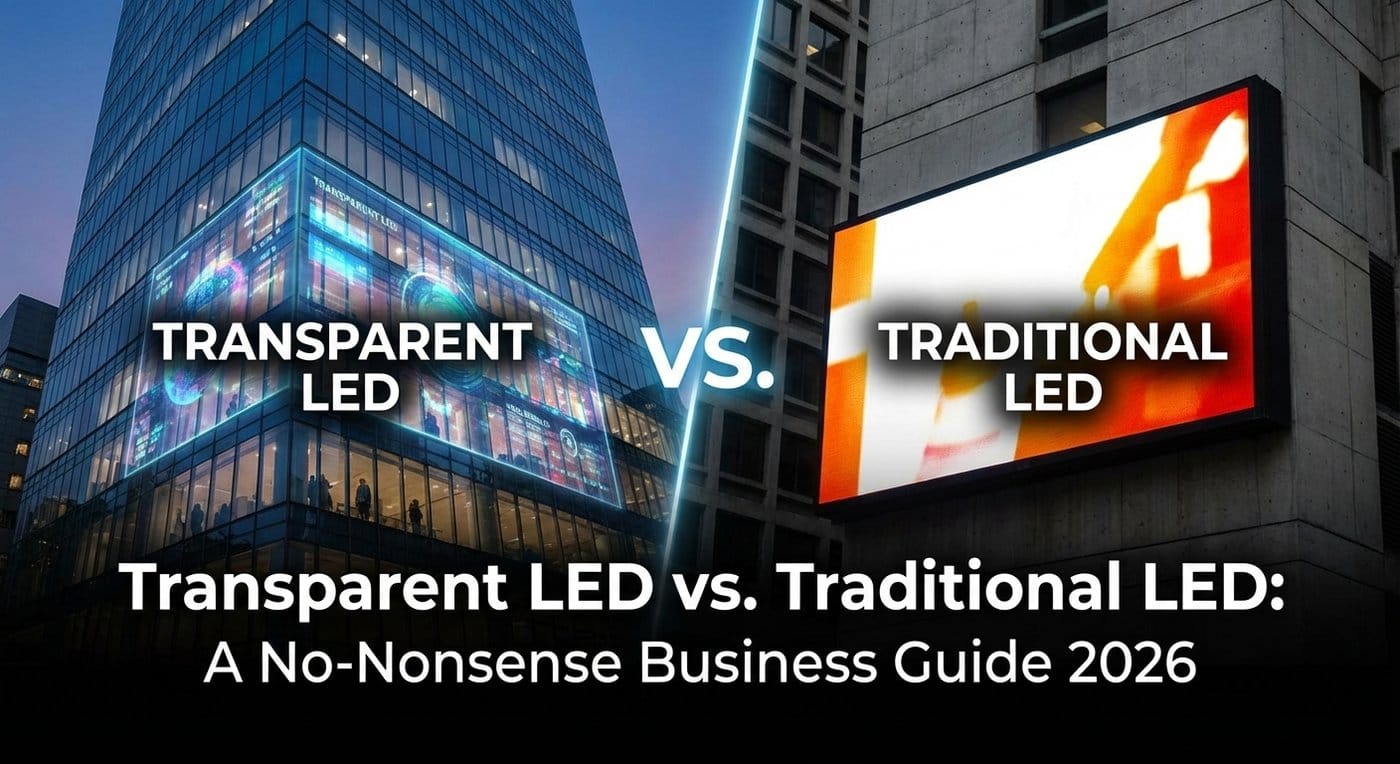
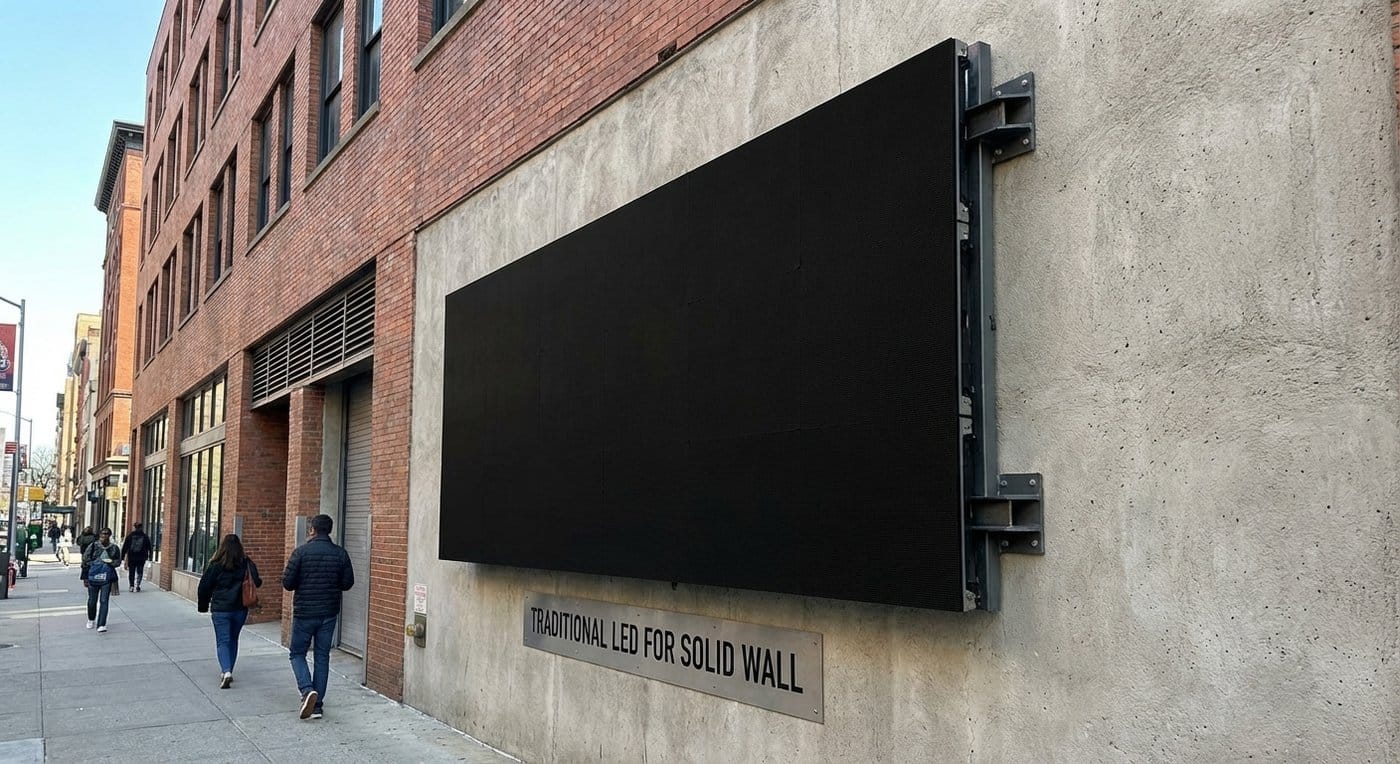
Traditional LED (The Black Wall) Standard LED cabinets (SMD or DIP) are built on solid printed circuit boards (PCBs). They are opaque.
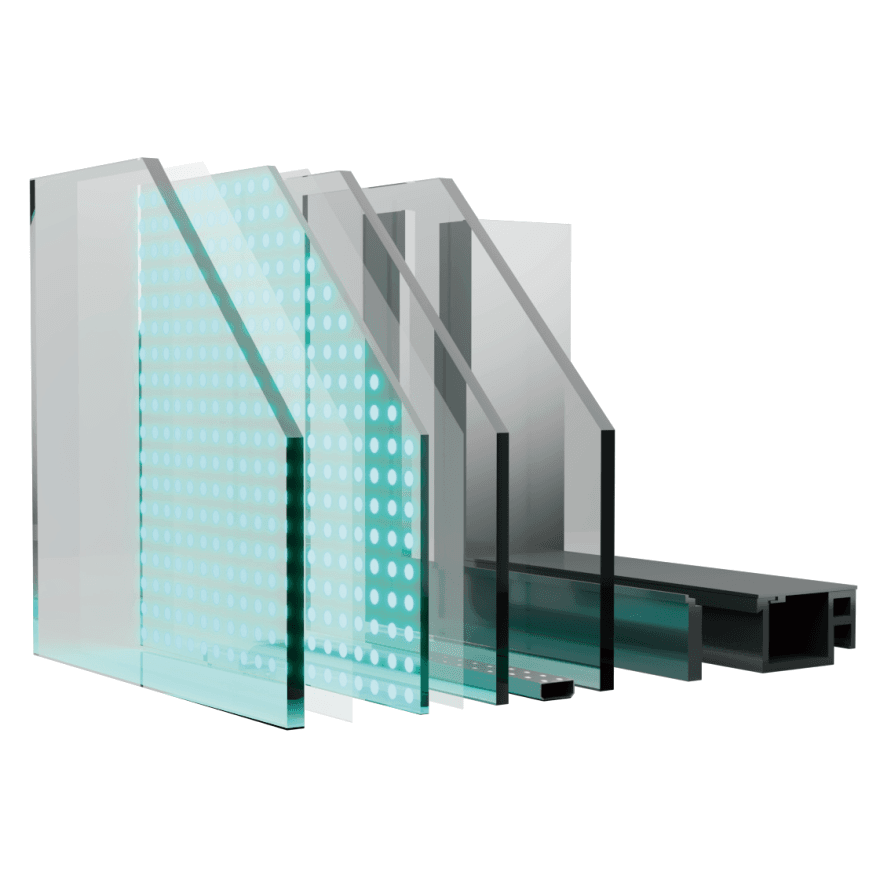
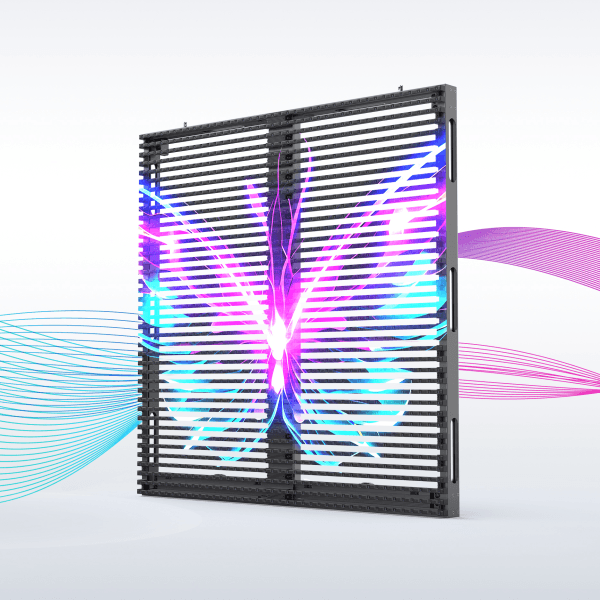
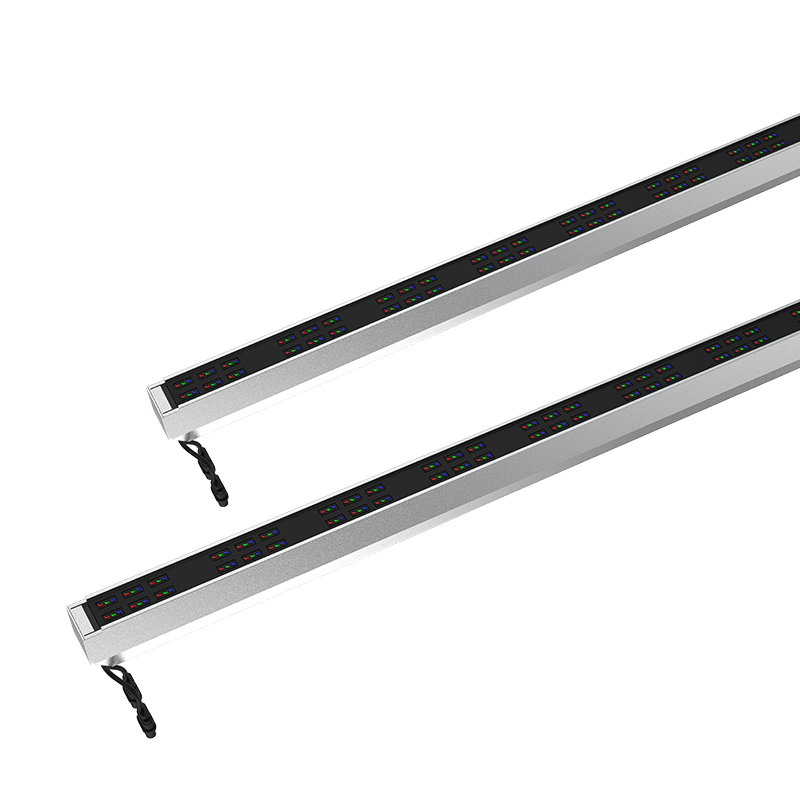
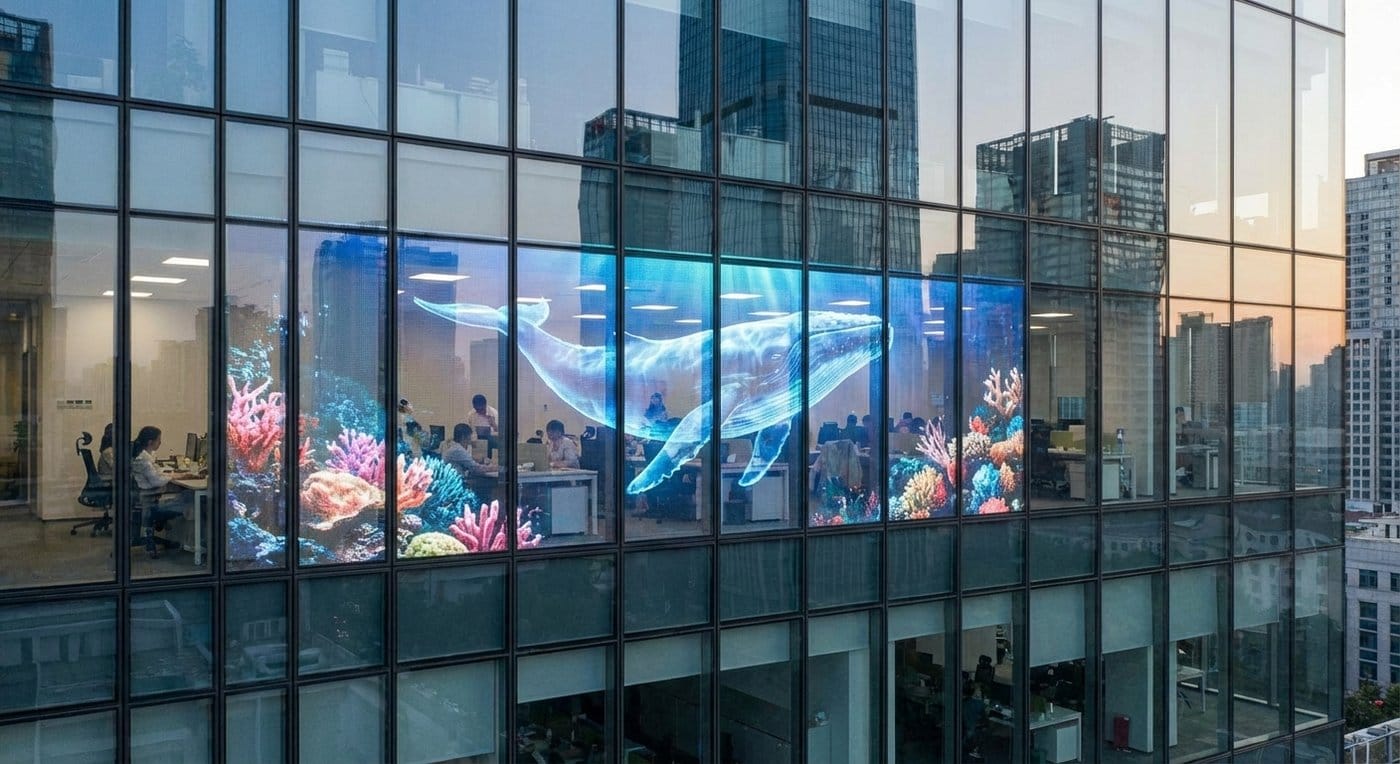
Transparent LED (The Digital Louver) Transparent LED (often called “Glass LED” or “Adhesive LED”) strips the cabinet down to its skeleton. The LEDs are mounted on thin bars with gaps in between.
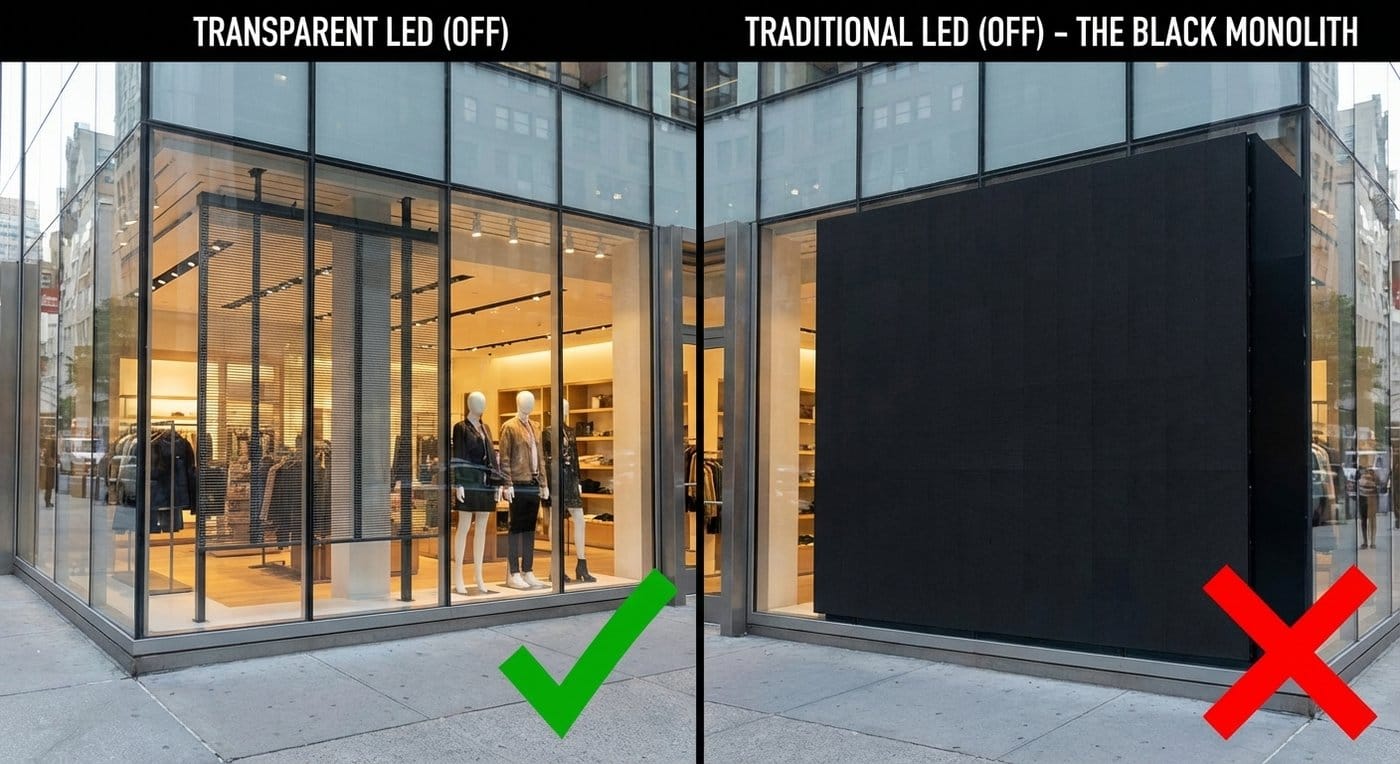
Forget the jargon for a minute. Here is how these two technologies fight it out in the real world.
This is where traditional LED usually wins, but Transparent is catching up.
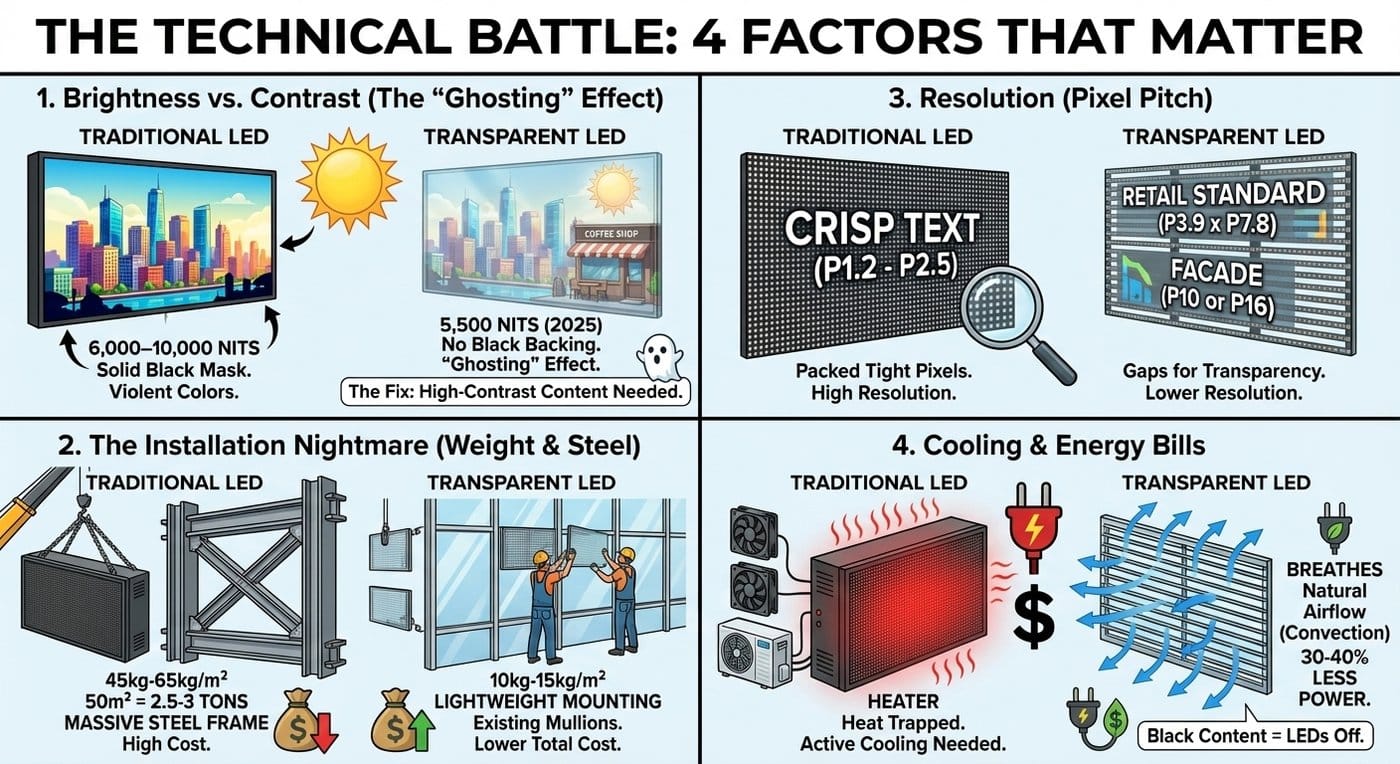
Traditional LED: Because the LEDs sit on a solid black mask, the contrast is incredible. Black is black. This makes colors pop violently. For outdoor billboards under direct 12:00 PM sun, you need the 6,000–10,000 nits that only traditional Outdoor LED Screens can reliably deliver year after year.
Transparent LED: Transparent screens have no black backing. “Black” on a transparent screen is just… transparency. You see the coffee shop across the street through the dark parts of the image.
This is the hidden cost that kills budgets.
Traditional LED: These cabinets are heavy—45kg to 65kg per square meter.
Transparent LED: These are featherweights—10kg to 15kg per square meter.
Architects love to ask for “4K Transparent Screens.” I have to be the one to tell them: You can’t have high transparency and high resolution at the same time.
This is a boring topic until you get your first electricity bill.
Traditional LED: It’s a heater. A big one. The heat gets trapped in the cabinet. You almost always need noisy cooling fans or AC units to keep it from frying itself.
Transparent LED: It breathes. The gaps between the light bars allow natural airflow (convection) to strip the heat away.
Stop looking at the price tag and look at the environment.
| Feature | Traditional LED | Transparent LED |
|---|---|---|
| Transparency | 0% (Opaque) | 60% – 90% |
| Daytime Brightness | Excellent (6000-10000 nits) | Good (4500-6000 nits) |
| Weight | Heavy (50kg+/m²) | Light (12kg/m²) |
| Installation | Requires heavy steel frame | Mounts on glass/mullions |
| Maintenance | Rear access (usually) | Indoor/Front access |
| Best Use | Billboards, Sports, Stage | Windows, Facades, Atriums |
The decision usually solves itself once you answer this question: “How much do I value the natural light?”
If light doesn’t matter (or is the enemy), save your money and buy a high-quality Traditional LED. But if you are working with a glass canvas, Transparent LED is the only way to digitize your space without destroying its architecture.
At China LED Screens, we don’t prefer one over the other—we manufacture both. We want you to buy the one that won’t make you regret the installation six months later.
Need a second opinion on your project specs? Drop us a line. We can look at your CAD drawings and tell you if you need a Mesh LED Display or a standard cabinet.