P10 LED Film Screen Project Case in Sichuan (Chengdu, China)

P10 LED Film Screen Project Case in Sichuan (Chengdu, China)

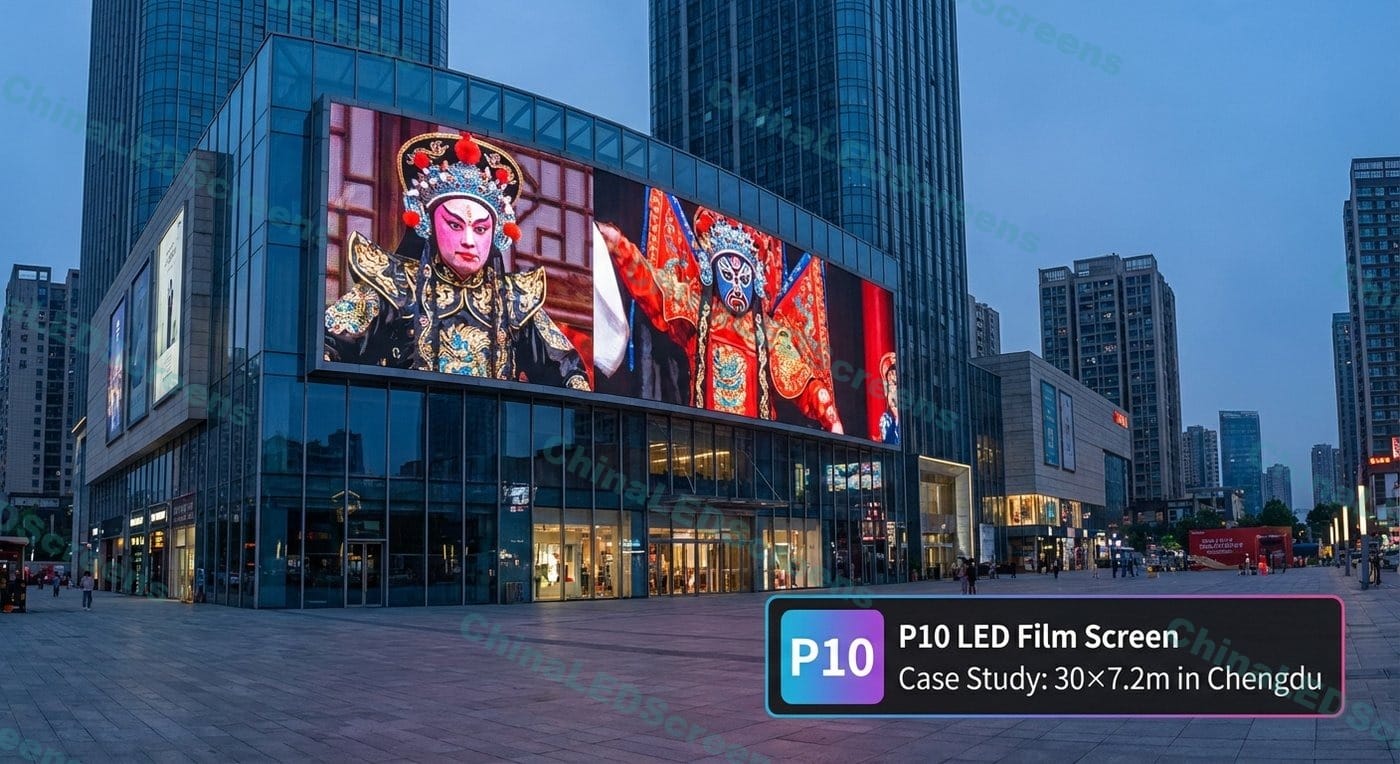
When a project needs large-format messaging without turning glass into a “wall,” transparent LED film is often the cleanest engineering answer. This Chengdu case shows how a P10 LED Film Screen delivered a 30m-wide media surface while keeping the façade visually light.

For product details, visit ChinaLEDScreens: https://chinaledscreens.com/ Explore the category: https://chinaledscreens.com/led-film-screens/ Related solution hub: https://chinaledscreens.com/transparent-led-screens/


Project Overview

Location: Sichuan, Chengdu, China Product model: P10 Transparent LED Film Screen (SMD) Screen size: 30 × 7.2 m (W×H) Total area: 204 m² Resolution: 3000 × 680 Installation method: Fixed installation

Quick Specs Table

ItemValue
Pixel pitchP10
Screen dimensions30 m × 7.2 m
Total area204 m²
Resolution3000 × 680
MountingFixed installation

Why Transparent LED Film for This Project

Traditional transparent LED cabinets can work, but for large glass surfaces the project team typically cares about three things:

  • Keep the building bright (daylight + sightlines)
  • Minimize structural load (less secondary steel, faster schedule)
  • Maintain a clean back view (especially in premium commercial spaces)

Transparent LED film is built to solve exactly that: the film lives on the glass, not in front of it—delivering content when needed, and visually “disappearing” when off.


Product Highlights Used in This Chengdu Case

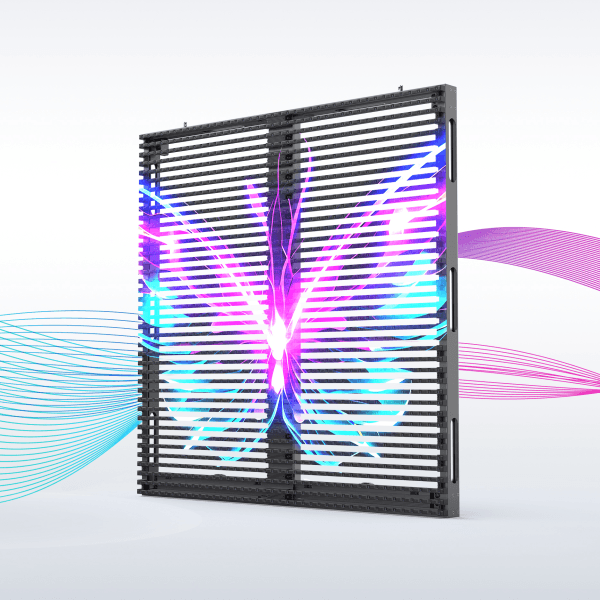
  • Ultra-thin & light — film ≤4 mm, 3.5–6 kg/m² (low load)
  • High transparency — ≥85% openness (daylight + sightlines)
  • Daylight readability — 4,500–5,000 nits (sun/shade clarity)
  • Flexible & cuttable — cut/splice for curves, arcs, silhouettes
  • Wide viewing angle — 140° × 140° (stable color)
  • Self-adhesive install — peel-and-stick from inside, no heavy frames
  • Silent, fan-less cooling — low noise, lower operating cost
  • Hidden cabling — premium finish, uncluttered glass

How the Film Fits Real Projects

“Glass-first” engineering

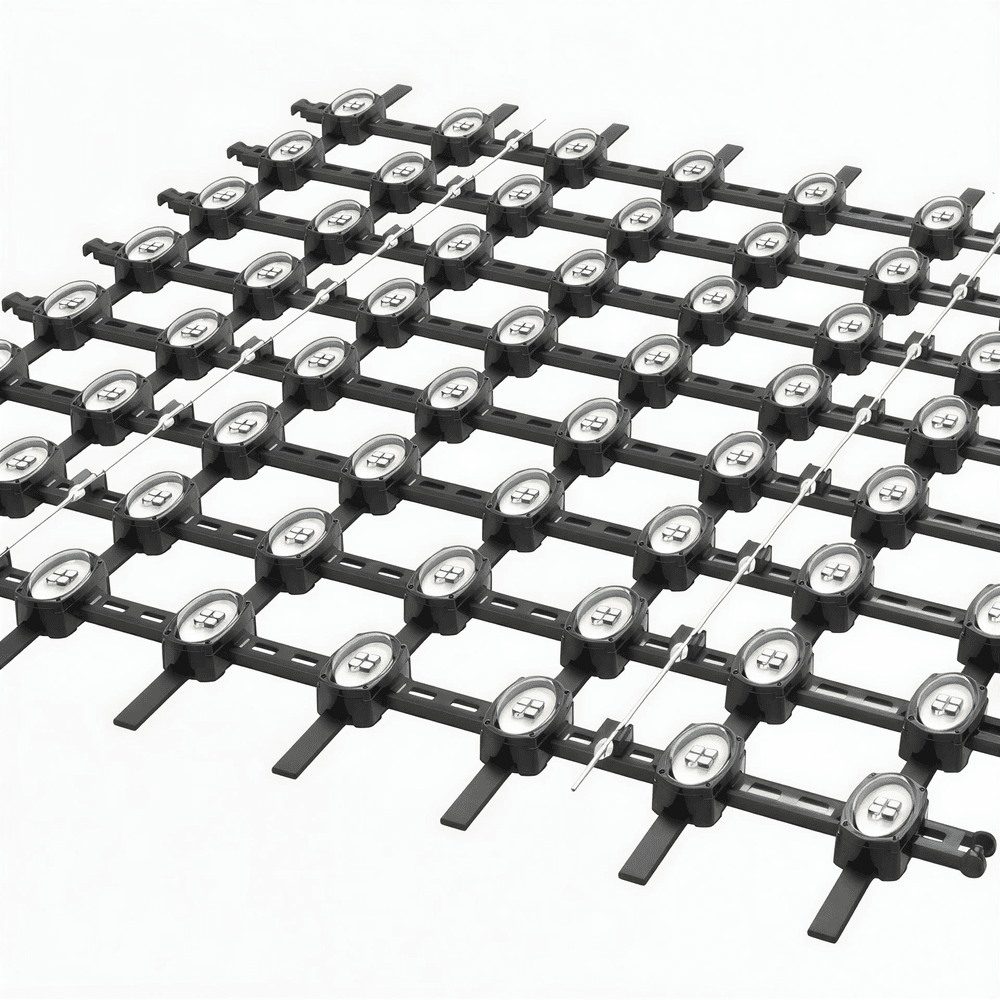
Micro-LEDs are patterned on a transparent circuit layer inside an adhesive membrane. The spacing between traces allows natural light to pass through, while pixels remain bright and uniform. Films can tile edge-to-edge, allowing:

  • Full-height media areas
  • Seamless multi-panel mosaics
  • Precise alignment to bays and mullion grids

When playback stops, the façade returns to clean glass—no bulky hardware visual penalty.

Fast installation, safer workflow

Most of the work is done from the safe side of the façade:

  1. Peel the backing
  2. Align to reference lines on the glazing
  3. Adhere and squeegee to remove bubbles
  4. Connect power + data
  5. Commission and calibrate

Because the system is low mass, projects often reduce crane time and simplify logistics compared with cabinet-based systems.


Why P10 Was a Smart Choice Here

For a 30 m wide screen intended for large-area messaging, P10 typically balances:

  • Visibility at distance (large-format readability)
  • Transparency vs. density (keep glass open while staying bright)
  • Cost efficiency for big square meterage
  • Content types (branding loops, motion graphics, event messaging)

If your audience is mostly close-range (pedestrian reading), you’d usually consider tighter pitches; for big façades and long viewing lines, P10 is a practical sweet spot.


Maintenance & Long-Term Operation

Transparent LED film simplifies daily operations:

  • Service approach: often a strip/section swap rather than lifting cabinets
  • Cooling: fan-less design reduces noise and maintenance points
  • Appearance: hidden cabling helps keep the interior/exterior “premium” even up close
  • Cleaning: optional edge protection details help in high-traffic glass environments

Business Wins You’ll Feel

Compared with traditional LED cabinets, transparent film typically delivers:

  • Preserved transparency (better retail experience + architectural intent)
  • Reduced secondary steel (lower structural scope)
  • Faster schedules (simpler install workflow)
  • Energy-smart operation (less heat, fewer accessories)
  • A screen that disappears when not in use

Application Scenarios

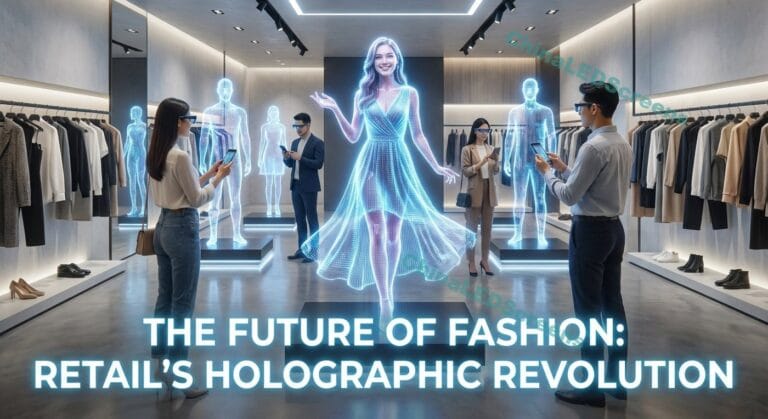
  • Luxury retail windows & flagships — fashion, auto, electronics
  • Commercial façades & glass partitions — conference rooms, atriums
  • Shopping-mall atriums & wayfinding glass — balustrades, escalators
  • Museums & exhibitions — glass cases, gallery fronts
  • Airports / metro hubs / transit corridors — info + advertising
  • Hotels / restaurants / bars — ambient branding, promotions

Want a Similar Glass Media Project?

Send us these 6 details and we’ll recommend the right configuration:

  1. Glass size (W×H) and quantity
  2. Viewing distance (closest / typical / farthest)
  3. Daylight conditions (direct sun, shade, indoor)
  4. Transparency requirement (high / medium)
  5. Content type (text, logo, video, mixed)
  6. Installation method and site constraints

ChinaLEDScreens – Transparent LED Film Screen solutions https://chinaledscreens.com/

Comments

Blog Comments
Share your love