Talk To Our Expert, Get A Solution in 20 minutes
Share your LED screen needs. Our experts will provide solutions and a quick response.

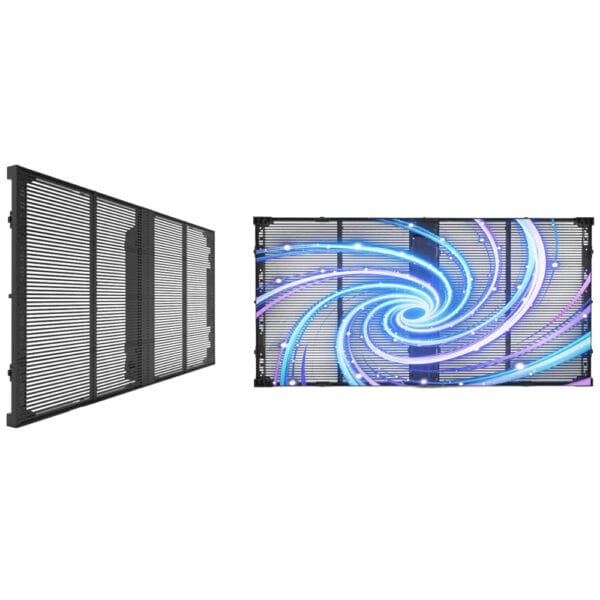
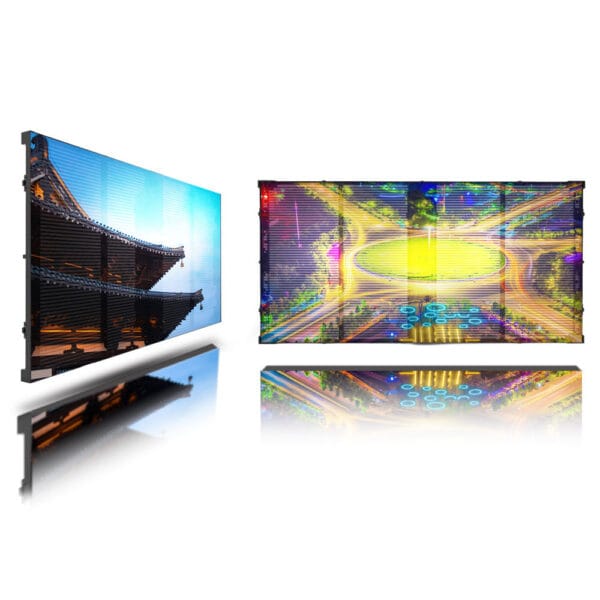
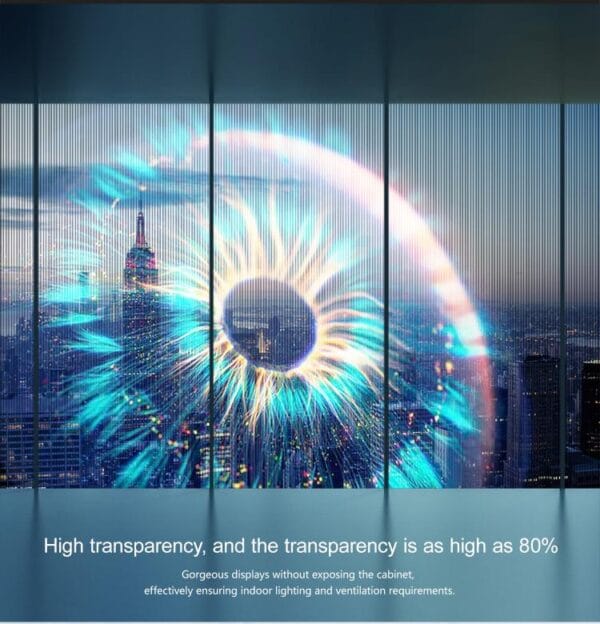
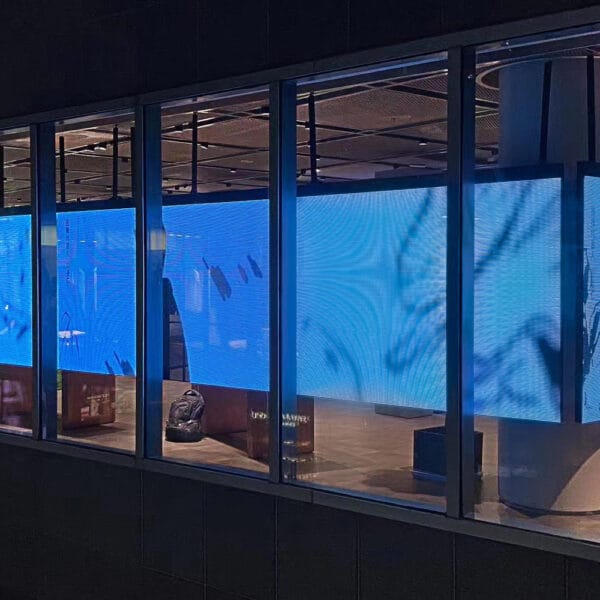
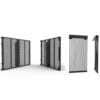
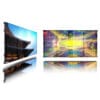
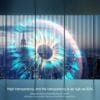
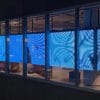
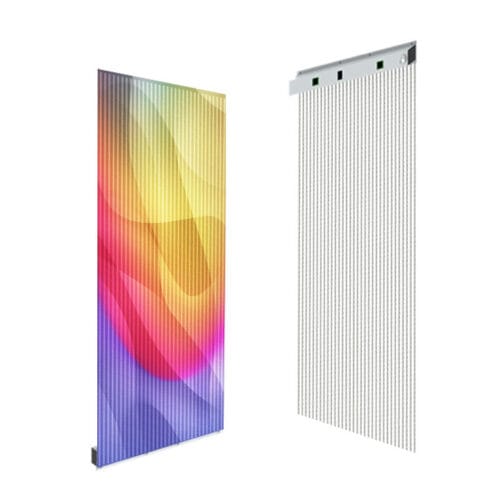
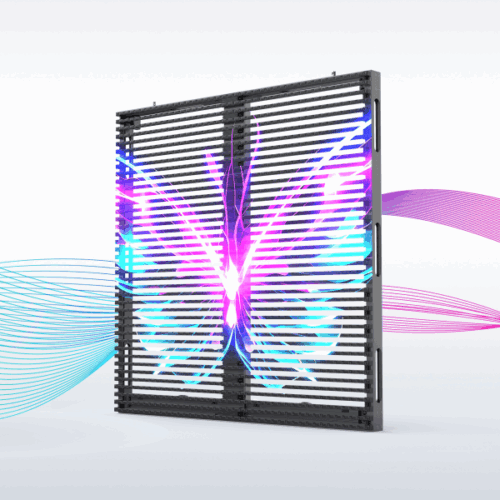
Turn façades into media without losing daylight. ChinaLEDScreens’ side-emitting outdoor transparent LED grille weighs 8–12 kg/m², keeps 20–75% transparency, shines 6,500–10,000 nits, runs at 100–140 W/m², and is IP65—built for curtain walls and rooftops.
Designed for real buildings, not just brochures.
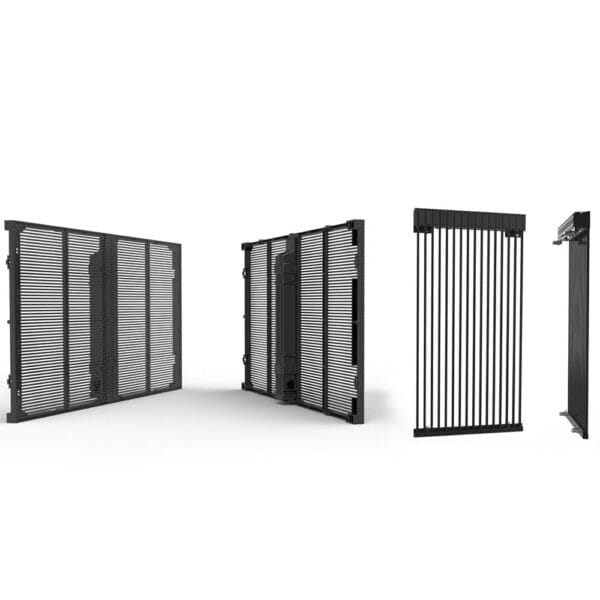
Our side-emitting transparent grille uses slim louvers with SMD LEDs mounted on the edge. Light projects forward to the street, while daylight passes through the gaps. From inside, your view stays open; from outside, content seems to float on the architecture.
Lightweight, low wind load: only 8–12 kg/m², easing steelwork and crane time on high façades and rooftops.
Keep the building transparent: 20–75% openness preserves sightlines and interior brightness.
Daylight-ready brightness: 6,500–10,000 nits for clear visuals under direct sun.
All-weather build: overall IP65 for dust and rain—reliable year-round.
Lower running cost: 100–140 W/m² average power keeps OPEX under control.
Clean aesthetics: hidden cabling, neat louver lines, and tidy terminations protect the façade’s design intent.
Modular cabinets align quickly across long spans; common mounting options—wall, hanging, roof brackets—fit both new builds and retrofits. Front/rear service options keep maintenance simple and safe without dismantling the façade.
Building façades that must remain airy and elegant
Tower and mall rooftops where weight and wind matter most
Landmark upgrades seeking a signature media presence with minimal structure
Result: a professional, outdoor-grade LED grille screen that respects architecture while delivering the brightness, efficiency, and reliability modern city sites demand.
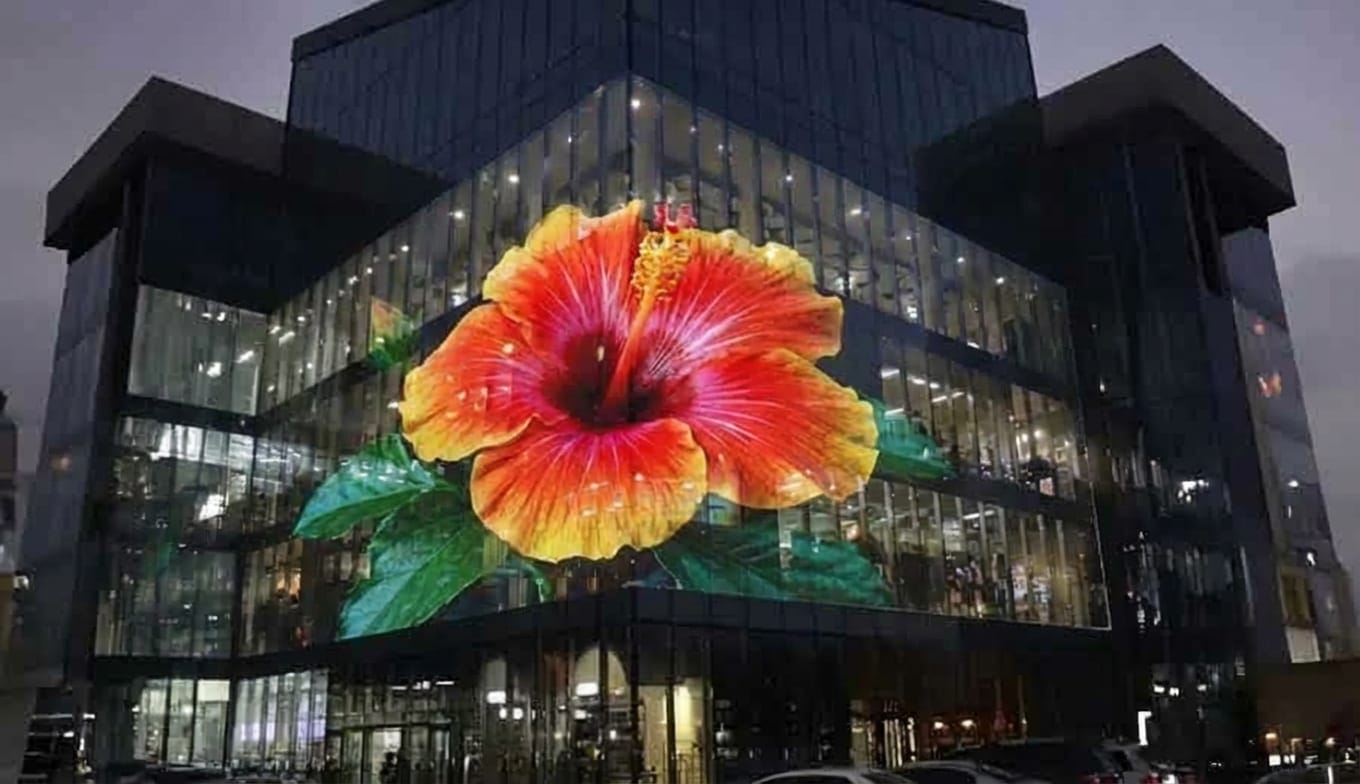
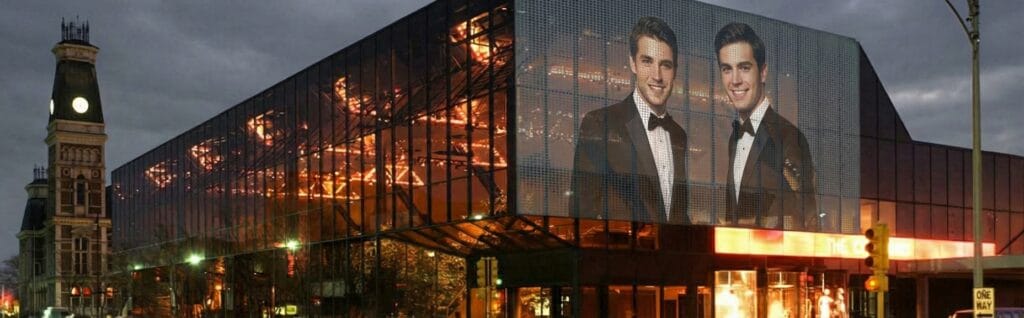
JF Series Outdoor Transparent LED Grille LED Display Specification Reference
| Product Parameter | |||||
| product model | PH15-15 | PH15-31 | PH20-20 | PH31-31 | PH50-20 |
| Point spacing | 15.625*15.625mm | 31.25*15.625mm | 20*20mm | 31.25*31.25mm | 50*20mm |
| Pixel composition | 1R1G1B | 1R1G1B | 1R1G1B | 1R1G1B | 1R1G1B |
| resolution ratio | 4096 points/m² | 2048 points/m² | 2500 points/m² | 1024 points/m² | 1000 points/m² |
| Box size WxH | 500×1000 mm | ||||
| Box resolution WxH□ | 32×64 points/m² | 16×64 points/m² | 25×50 points/m² | 16×32 points/m² | 10×50 points/m² |
| Weight of the box | 8 kg/ pcs | ||||
| Thickness of box | 67mm | ||||
| Transparency | 70% | ||||
| maximum power | 800w/m² | ||||
| mean power | 240w/m² | ||||
| levels of protection | IP67 | ||||
| grey scale | 14bit | ||||
| screen intensity | 6000-8000CD/m² | 6000-8000CD/m² | 5000CD/m² | 4000CD/m² | 2000CD/m² |
| contrast ratio | 1:1600 | ||||
| colour temperature | 6500-9300K | ||||
| intensity control | 0-255 levels | ||||
| horizontal view angle | ≥110° | ||||
| vertical angle of view | ≥60° | ||||
| optimum viewing distance | 15-500m | 20-500m | 20-500m | 30-500m | 30-500m |
| Refresh rate | 3840Hz | ||||
| Frame rate change | 60Hz | ||||
| data interface | DVI/HDMI | ||||
| control method | synchrocontrol | ||||
| Drive components | ICN | ||||
| Driving forces | Constant current static | ||||
| Display mode | 1920*1080 | ||||
| service voltage | 85-250 | ||||
| designed life | ≥100000 hours | ||||
| Heat dissipation method | Structural strengthening of natural convection | ||||
| Light bar structure | Single row single column, vertical | ||||
| Lighting strip materials | Stretching of aluminum | ||||
| working temperature | -40°c~+85°℃ | ||||
| storage temperature | -55°℃~+120°℃ | ||||
| Humidity at work | 10-90% | ||||
| Maintenance methods | Can be maintained before and after | ||||
O ecrã apresenta um design único de faixa oca que proporciona uma elevada transparência, que varia normalmente entre 30% e 80%. Esta estrutura permite que a luz natural e o vento passem através do ecrã, reduzindo significativamente a resistência à carga do vento até 60%. Isto torna-a mais segura e estável para instalação em fachadas de edifícios altos e paredes de cortina de vidro, minimizando o impacto na iluminação e ventilação interiores.
O produto foi concebido com um elevado grau de proteção, normalmente IP65 ou IP67, o que o torna totalmente à prova de água e de poeiras. Foi concebido para resistir a ambientes climatéricos severos, incluindo chuva intensa e ventos fortes. A estrutura do armário em liga de alumínio aumenta ainda mais a sua durabilidade e resistência à corrosão e aos raios UV, garantindo uma longa vida útil em ambientes exteriores.
Sim, o Ecrã LED de grelha para exterior está equipado com LEDs DIP ou SMD de elevado brilho, proporcionando normalmente níveis de brilho de ≥5000 nits e atingindo frequentemente até 8000-10000 nits, dependendo da configuração. Isto garante que as imagens e o conteúdo de vídeo permanecem claros, vívidos e altamente visíveis mesmo sob luz solar forte e direta, tornando-o ideal para publicidade exterior diurna.
Não, o ecrã utiliza a sua estrutura de grelha oca para uma dissipação de calor natural eficiente. O ar flui livremente através dos espaços entre as tiras de LED, eliminando o calor sem necessidade de ar condicionado ou de ventoinhas de arrefecimento pesadas. Este design de “auto-arrefecimento” não só reduz o peso do ecrã, como também diminui o consumo de energia, tornando-o mais eficiente em termos energéticos do que os tradicionais painéis LED sólidos para exterior.
O ecrã foi concebido para ser leve e ultrafino, pesando frequentemente muito menos do que os armários de exterior tradicionais (cerca de 15-20 kg por metro quadrado). Este perfil de alumínio leve reduz a carga estrutural no edifício. Suporta uma instalação modular e pode ser rapidamente montado diretamente em paredes de vidro ou estruturas de aço, o que o torna uma solução flexível para projectos arquitectónicos de grande escala.
O ecrã permite uma manutenção cómoda, permitindo frequentemente o acesso frontal ou traseiro, consoante o modelo específico. O design modular permite que os técnicos substituam faixas de luz ou módulos individuais sem desmontar todo o ecrã. Esta abordagem de manutenção direcionada poupa tempo e reduz os custos operacionais a longo prazo.