Talk To Our Expert, Get A Solution in 20 minutes
Share your LED screen needs. Our experts will provide solutions and a quick response.

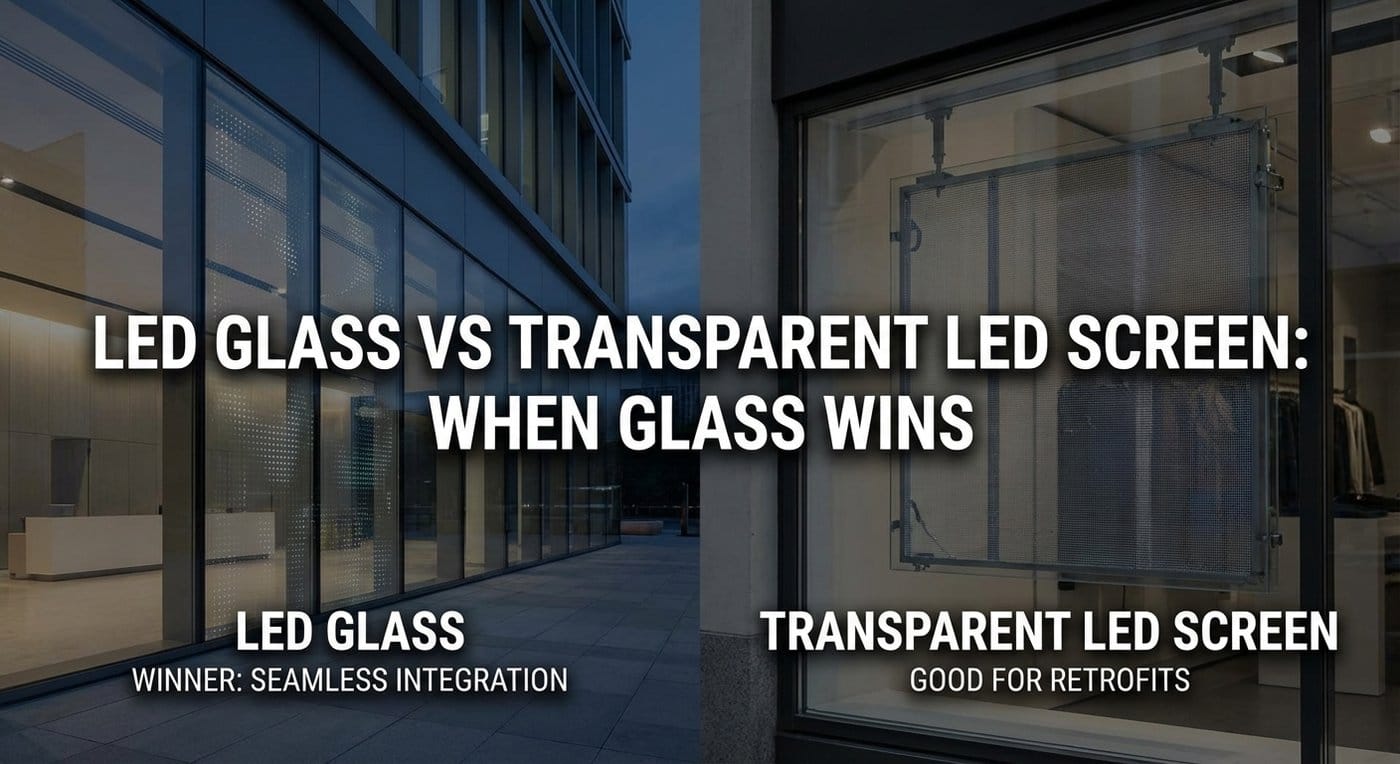
If you’ve ever sat in a façade meeting where the architect says, “We want it to look like pure glass,” and the integrator replies, “We can mount transparent LED cabinets behind it,” you already know the problem: two different mental models.
Both can create “see-through media.” But when the project’s success is judged by architecture first, glass often wins.
If you want the broader product landscape first, start at the ChinaLEDScreens transparent LED display factory homepage.
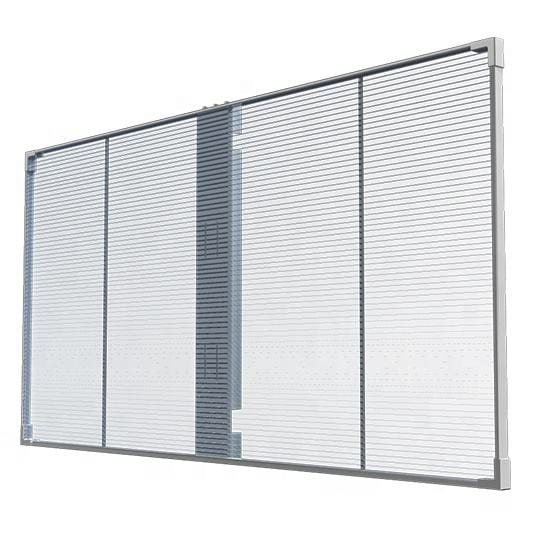
This is the classic approach most integrators recognize: modular transparent cabinets, installed on a secondary structure in front of/behind glazing. It’s scalable, serviceable, and often the fastest route to a large media area. See the transparent LED screens category for typical configurations.
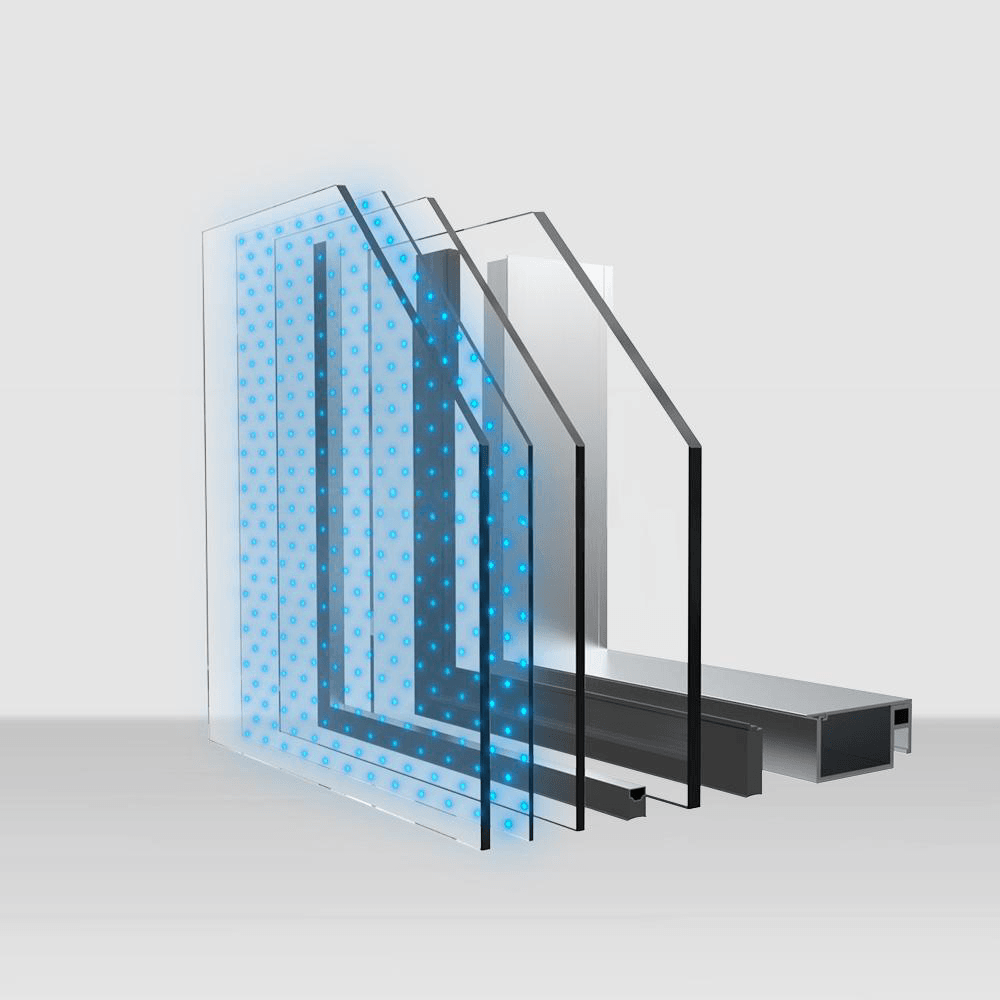
LED glass integrates LEDs into the glass itself (laminated or IGU-style assemblies depending on design), so the façade stays “glass-first.” This is where you move from “screen mounting” to “façade integration.” Start with our LED glass screens category, then go deeper via the LED glass screens transparent LED glass guide.
In premium façades, the visual language is mullions, sightlines, reflections, and daylight. A cabinet-based transparent screen can introduce:
LED glass wins because it can preserve a cleaner glass plane and reduce the feeling of “added hardware.” If you’re in a design-led project (luxury retail, landmark office, museum), that aesthetic integrity is often the deciding factor.
When the façade package is tightly controlled (curtain wall system suppliers, consultants, contractors), adding a separate “screen layer” creates scope confusion:
LED glass wins when the project team wants one accountable façade story instead of bolt-on AV structure.
Some projects require the glass to remain “glass” in how it performs and feels:
In these cases, LED glass wins because the integration path can follow building logic, not AV logic.
Here’s the uncomfortable truth: many cabinet-based transparent LED projects fail at the access meeting, not at the spec meeting.
If your transparent screen requires rear access but the building design doesn’t allow catwalks or internal service corridors, you’re heading for pain. LED glass can sometimes simplify the façade package (depending on system design), and more importantly, it aligns earlier with façade maintenance planning.
Cabinet-based transparent systems can be engineered well—but they often need additional steel, bracing, and careful vibration management. If the façade is tall, corner-exposed, or in a windy city, the structural story gets heavier.
LED glass wins when the project’s structural narrative is already “glass engineering,” because you can plan integration with façade deflection, loads, and fixing points from the beginning (instead of adding a second structural layer later).
Transparent LED screens can be extremely bright and punchy, which is great for daylight visibility. But luxury projects often care about:
LED glass wins when “premium presence” matters more than “maximum nits.”
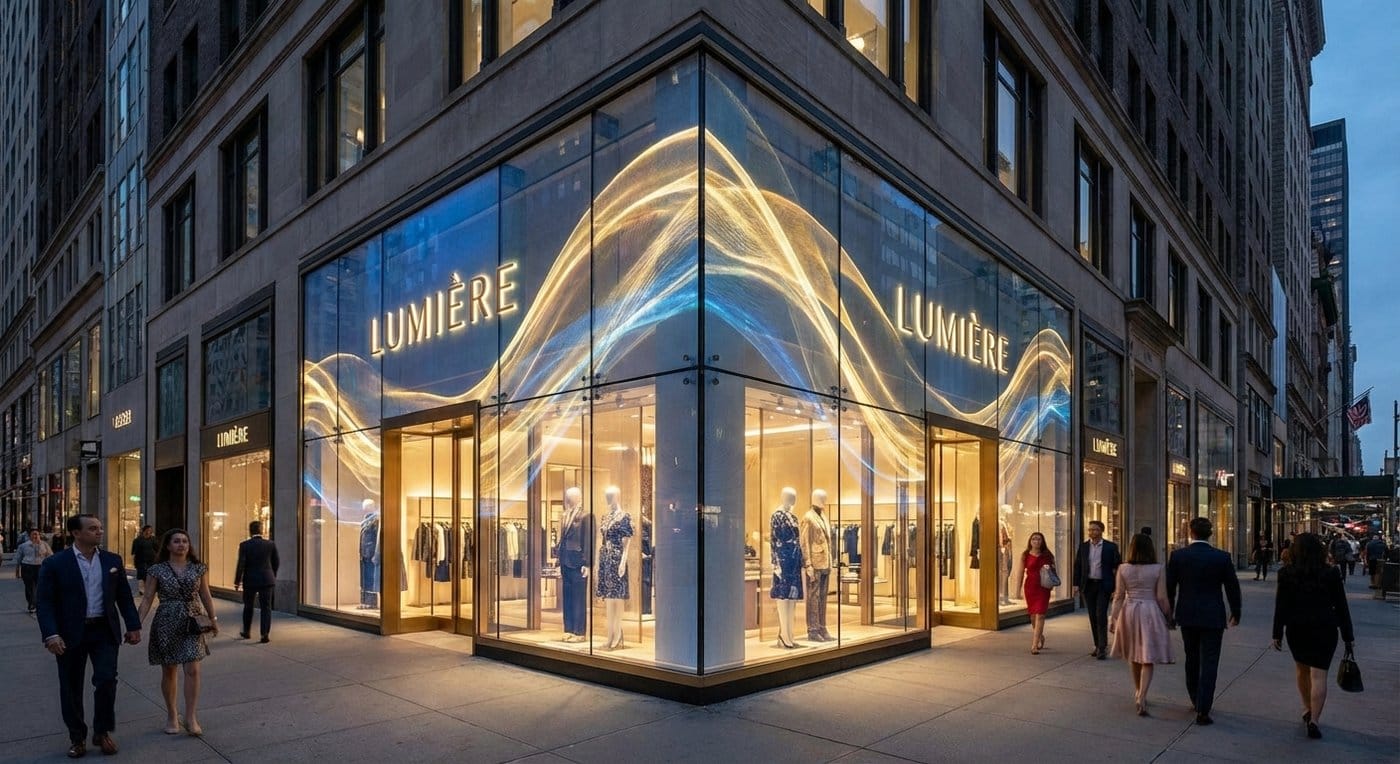
Some owners see media façades as part of the building’s identity for 10–15 years. In that mindset, LED glass can win because it’s conceptualized as a façade asset, not a replaceable signage unit.
If you’re collecting reference patterns to align stakeholders, browse our transparent LED display project gallery.
To be fair—and to avoid the common “over-architecting” trap—transparent LED screens are often the better business decision when:
If you’re early-stage and need a practical baseline for screen-type selection, our guía de pantallas LED transparentes gives a broader framework you can map to your project constraints.
With cabinet screens, you mostly coordinate with structure + power + content.
With LED glass, you coordinate with:
This isn’t a downside—it’s why LED glass wins when architectural integrity is the top KPI. But it does mean timeline planning must be realistic.
If you want smoother delivery, treat LED glass like façade scope from day one, and define responsibility clearly.
Use this in your internal meeting (architect + integrator + contractor + owner).
Transparent LED screens likely win if:
Practical advice: if you can’t clearly answer “how do we replace one panel?” in early design, you’re not ready to commit to glass yet.
If the store’s window is part of brand identity, LED glass often wins because it feels integrated and refined—especially at night.
Corporate spaces often demand “high-end calm.” LED glass can deliver media that doesn’t scream “advertising screen,” which is exactly what many corporate clients want.
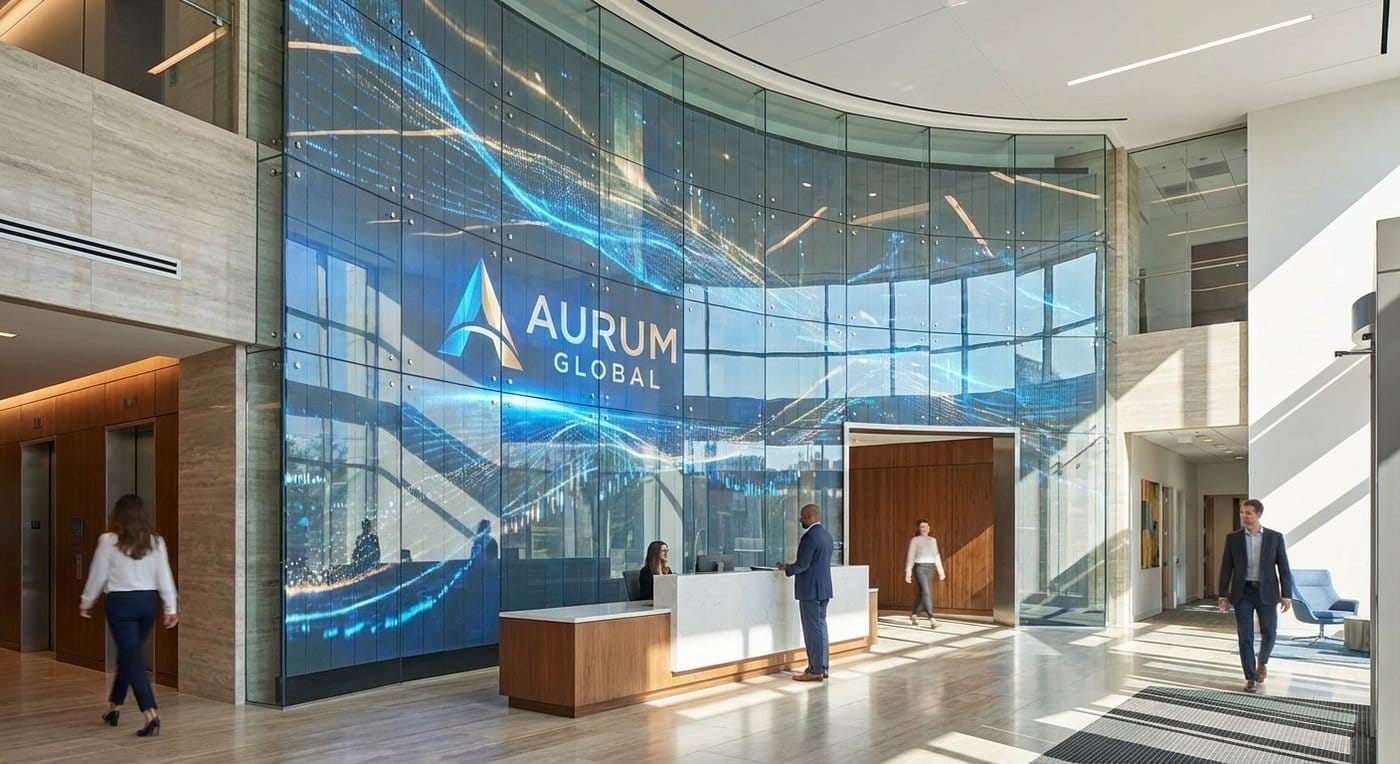
Where architecture is part of the experience, the cleaner integration of LED glass can preserve the building’s intent.
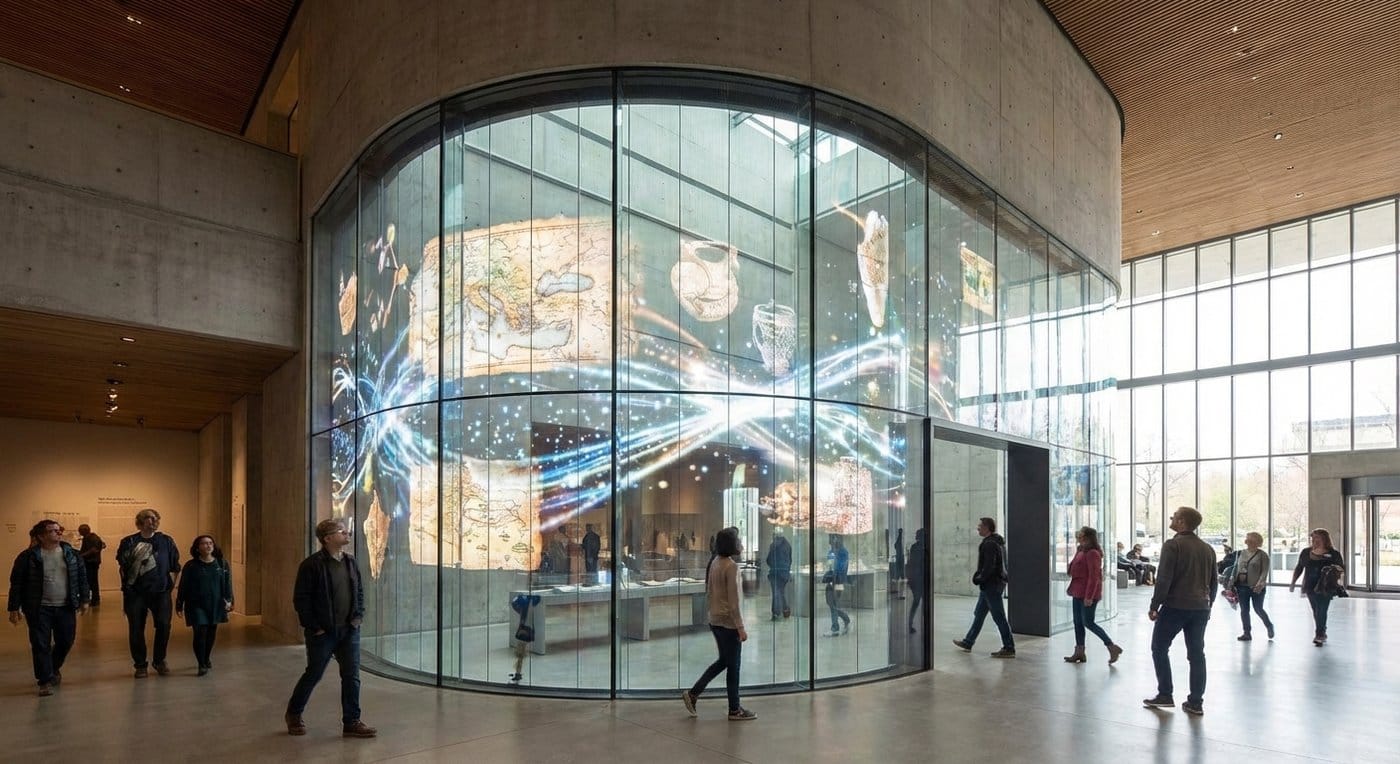
This is a glass-domain application. Treat it like glass from the start.
If you’re bidding, here’s what separates a confident proposal from a risky one:
If you need manufacturing/engineering support language in your proposal, you can reference our transparent LED display OEM service page as part of your delivery scope.
Transparent LED screens win when speed, scale, and serviceability dominate.
LED glass wins when the project is fundamentally asking for architecture that communicates—a building that becomes media without looking like it had media bolted onto it.
If you decide early which “world” your project lives in (AV system vs building material), the rest of your decisions—pitch, brightness, structure, access, cost—become cleaner, faster, and far less painful.