Talk To Our Expert, Get A Solution in 20 minutes
Share your LED screen needs. Our experts will provide solutions and a quick response.

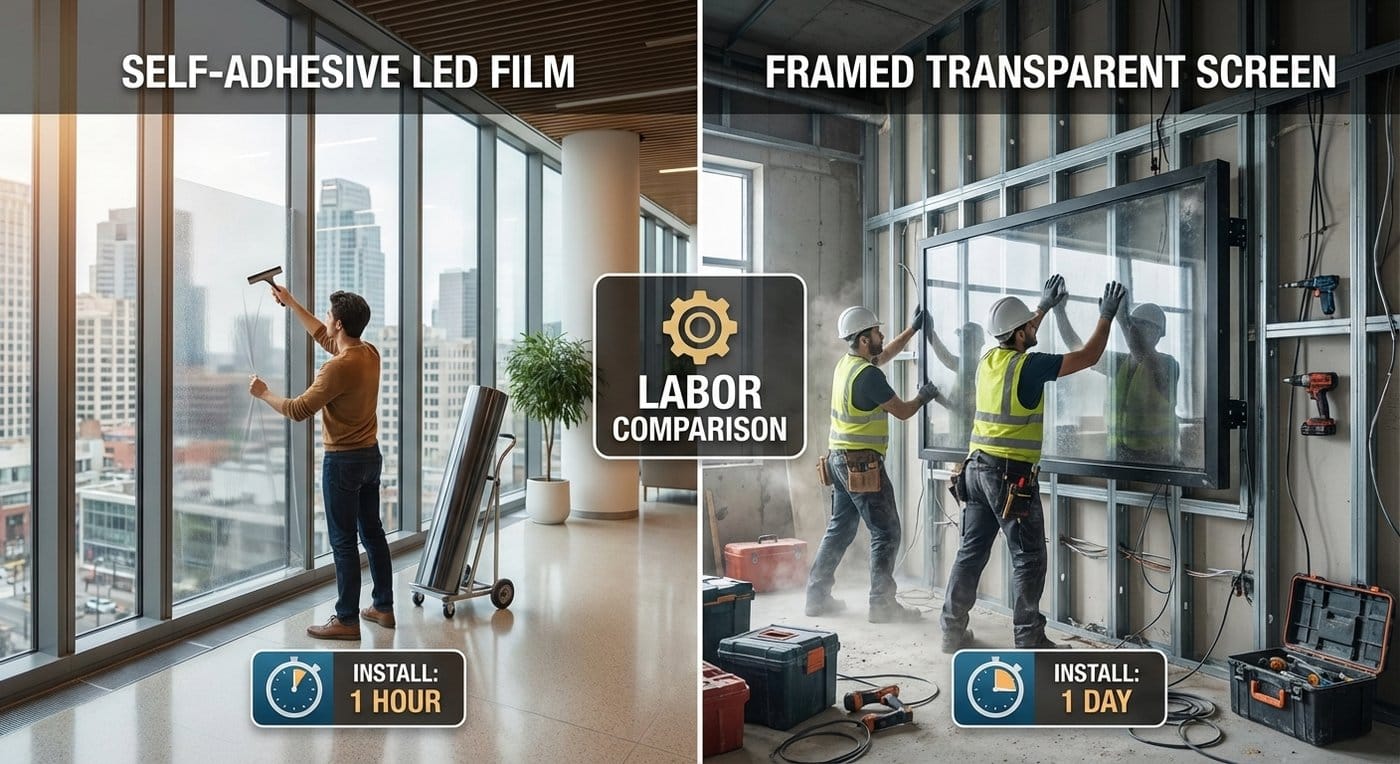
Transparent LED projects rarely go over budget because “the LED is expensive.” They go over budget because labor and access were underestimated: who’s allowed to touch the glass, how you route power/data, whether you’re working nights, and what happens when one panel fails 18 months later.
This article compares the labor reality of two common approaches:
For broader context on transparent families (screen vs glass vs film), ChinaLEDScreens also keeps a practical comparison framework here. (Transparent LED Screens Display) And if you want the full film category landscape first, start with our LED film overview and selection guide. (Transparent LED Screens Display)
Homepage reference (portfolio + OEM/ODM background): ChinaLEDScreens — https://chinaledscreens.com/ (Transparent LED Screens Display)
Instead of “Which is easier to install?”, ask:
Both can be “fast” in the right conditions—and painfully slow in the wrong ones.
Both need this, but film is less forgiving of surprises.
Film survey must confirm:
Framed screen survey must confirm:
Labor takeaway: film requires higher precision planning; framed requires heavier coordination with structure + safety.
Access is the silent cost driver.
Labor takeaway: if the building forces a boom lift either way, film’s “easy install” advantage shrinks.
For self-adhesive film, surface prep is not “wipe it once.” It’s a controlled process:
For framed transparent screens:
Labor takeaway: film is craft labor (precision). Framed is trade labor (mechanical + alignment).
Internal reference (film category + retrofit logic):
Typical labor steps:
If your film is cut-to-size and supports seamless splicing (common in premium film designs), you can reduce hardware labor—but you increase precision labor.
Product example (self-adhesive film concept): https://chinaledscreens.com/is/rf-series-transparent-led-flexible-film-display-screen-smd/ (Transparent LED Screens Display)
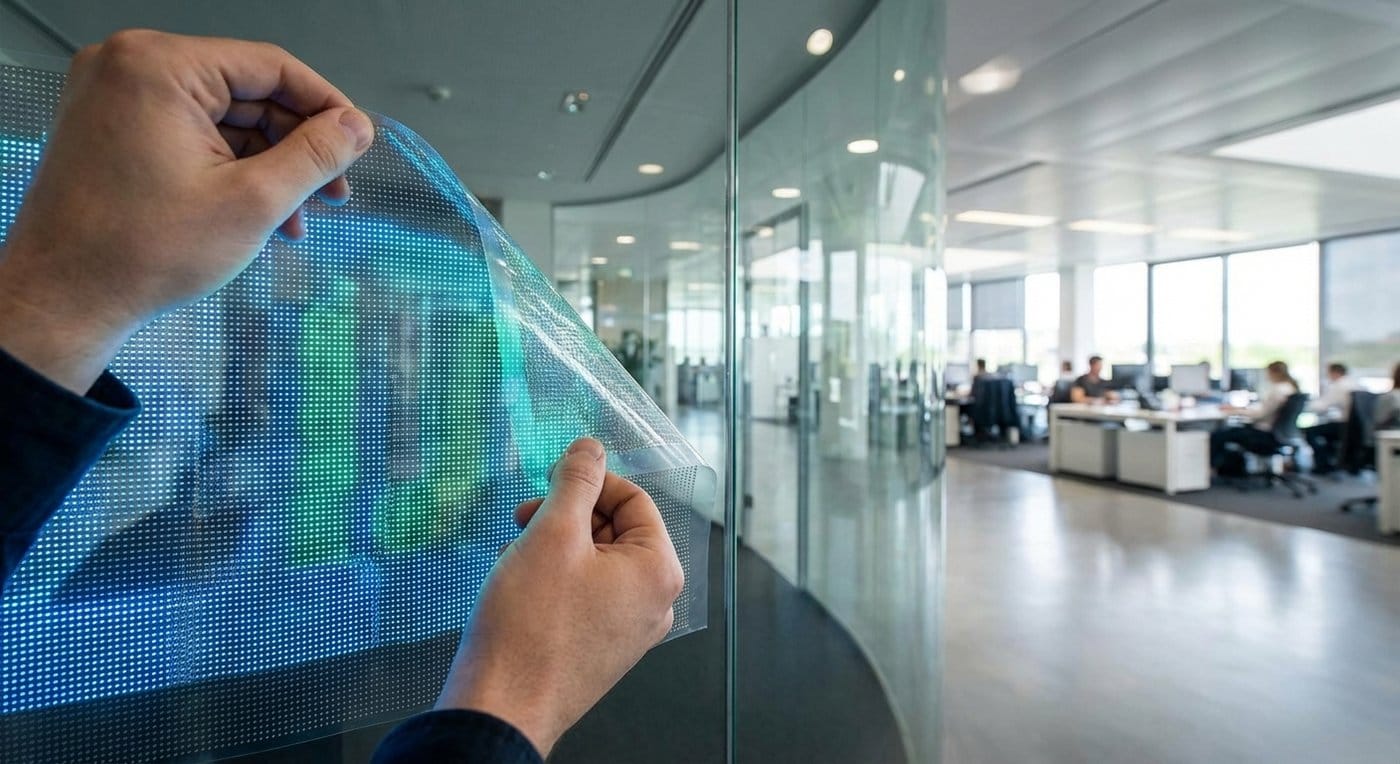
Typical labor steps:
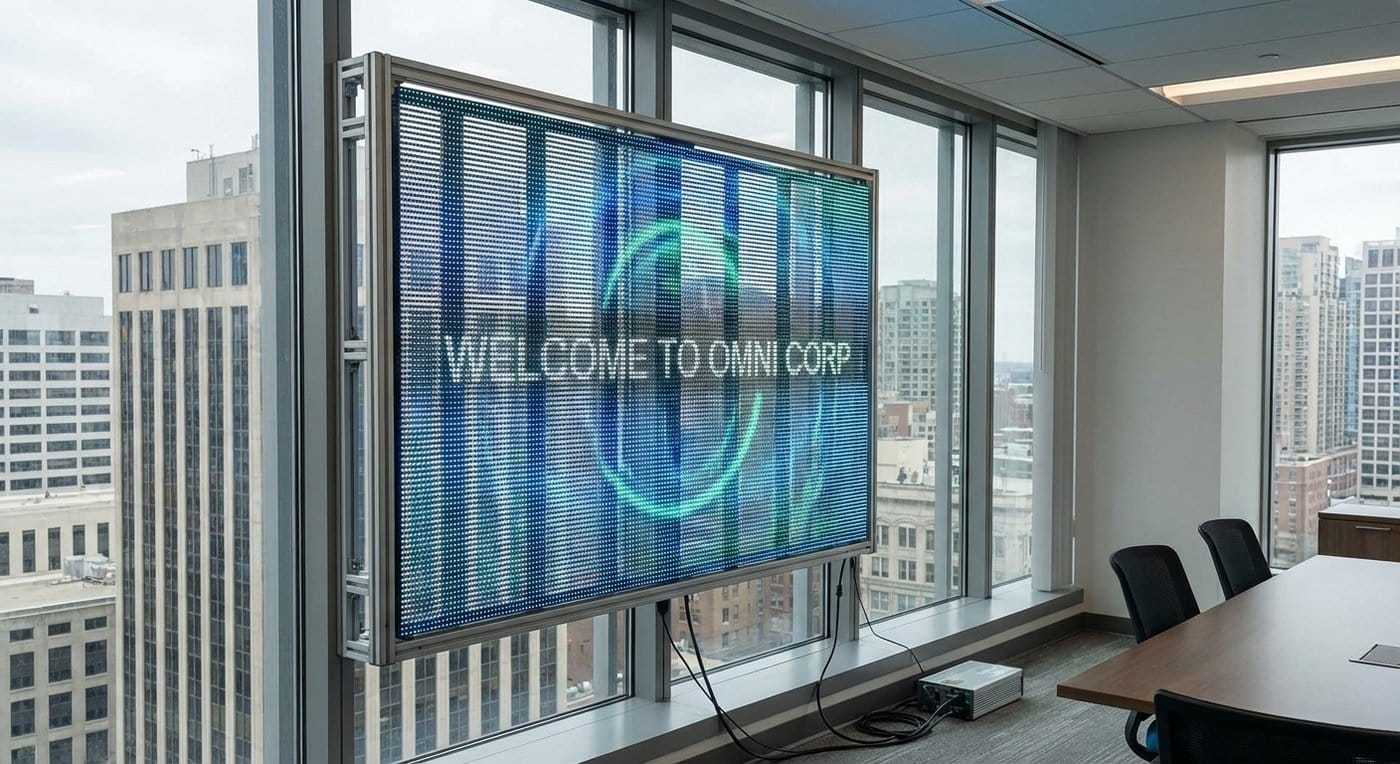
Framed systems are more tolerant of imperfect glass, but they demand more mechanical work and QA.
Labor takeaway: film labor is higher skill per square meter; framed labor is more steps + more hardware.
This is where many bids fail.
Best practice: budget labor explicitly for:
Both need:
But transparent projects add a nuance: background + reflections affect perceived uniformity. Calibrating at night only can cause “daytime complaints.”
Helpful internal primer on what an LED display “really is” as a system (modules + power + control + calibration): https://chinaledscreens.com/what-is-an-led-display-screen-the-ultimate-guide/ (Transparent LED Screens Display)
| Labor driver | Self-adhesive LED film | Framed transparent screen |
|---|---|---|
| Surface prep time | High (critical) | Medium |
| Mechanical install | Low–Medium | High |
| Access equipment dependency | Low if interior-reachable; otherwise medium | Medium–High |
| Cable concealment | Medium–High (can look messy if rushed) | Medium (easier to hide in structure) |
| Rework risk | Medium (bubbles/particles/crease = redo) | Medium (alignment/service access issues) |
| Maintenance labor (routine) | Lower hardware, but layer-style service | Modular swap is straightforward |
| Glass liability sensitivity | Higher (working directly on glass) | Lower (less direct adhesion dependence) |
Film can be excellent for fast retrofit campaigns—but service depends on product design and how it was applied:
If your project is marketing-driven (seasonal campaigns, frequent updates), film can reduce heavy mechanical labor—but plan the replacement procedure up front.
Cabinet/module-based transparent screens were built around field serviceability:
That’s why many integrators like framed systems for long-term operational sites—even if installation is heavier.
Reference: transparent screen described as cabinet/module-based with physical frames and serviceability focus. (Transparent LED Screens Display)
If you can work from inside without expensive access gear, film often wins because you avoid structural fabrication and heavy mounting.
Film can keep the space looking like glass—assuming cable concealment is designed properly.
Less fabrication and fewer structural dependencies can compress the schedule—but only if surface prep is controlled.
Useful supporting content on film category selection: https://chinaledscreens.com/led-film-screens-guide/ (Transparent LED Screens Display)
If you’re outdoors, you’re already in a structural world. The marginal labor of building a proper frame becomes justified.
If the client demands fast component swaps and predictable maintenance, modular framed systems often reduce lifecycle labor risk.
When the system is “serious AV,” structure and service access stop being optional.
(If you’re comparing other see-through families for large façades, mesh systems can be another route; this guide explains where mesh fits and why viewing distance and wind/airflow change the engineering.) https://chinaledscreens.com/is/mesh-led-displays-flexible-mesh-curtain-display-guide/ (Transparent LED Screens Display)
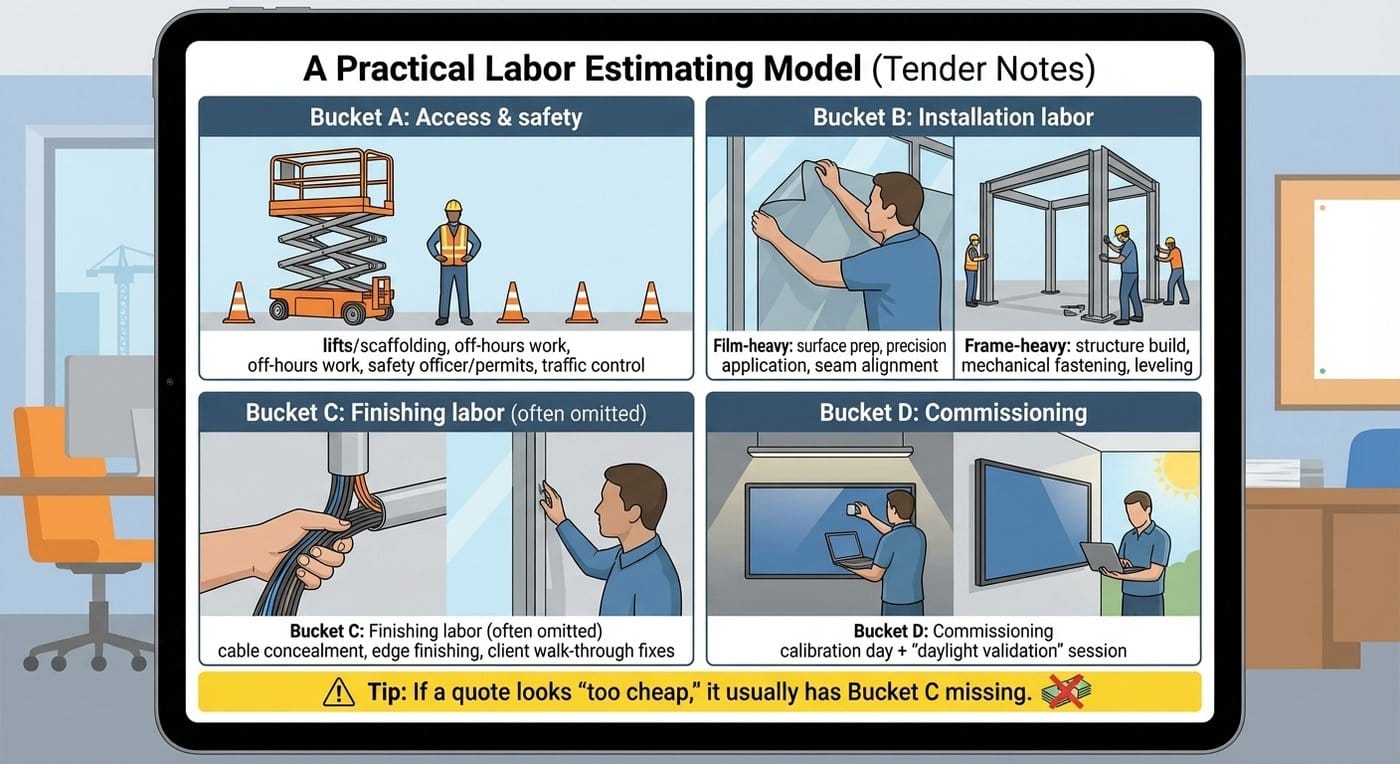
Instead of one number, estimate labor in buckets:
Film-heavy items: surface prep, precision application, seam alignment Frame-heavy items: structure build, mechanical fastening, leveling
Tip: If a quote looks “too cheap,” it usually has Bucket C missing.
If the client is stuck comparing “transparent screen vs film vs glass,” this decision framework is a useful pre-RFQ alignment tool: https://chinaledscreens.com/ko/transparent-led-vs-led-glass-vs-led-film-which-to-choose/ (Transparent LED Screens Display)
Self-adhesive film can be the fastest, cleanest retrofit path when glass access is easy and the install is treated like precision work. Framed transparent screens can look “more labor” upfront, but they often win when serviceability, uptime, and outdoor engineering are non-negotiable.
ChinaLEDScreens (founded 2009) supports both paths across transparent LED screens and film families, including OEM/ODM and project-ready QC workflows. Start with the product portfolio overview here: https://chinaledscreens.com/ (Transparent LED Screens Display)