Transparent LED vs LED glass vs LED film: which to choose
Transparent LED vs LED glass vs LED film: which to choose
Choosing the right “see-through LED” is one of those decisions that looks simple on a brochure—and turns expensive fast in the real world.
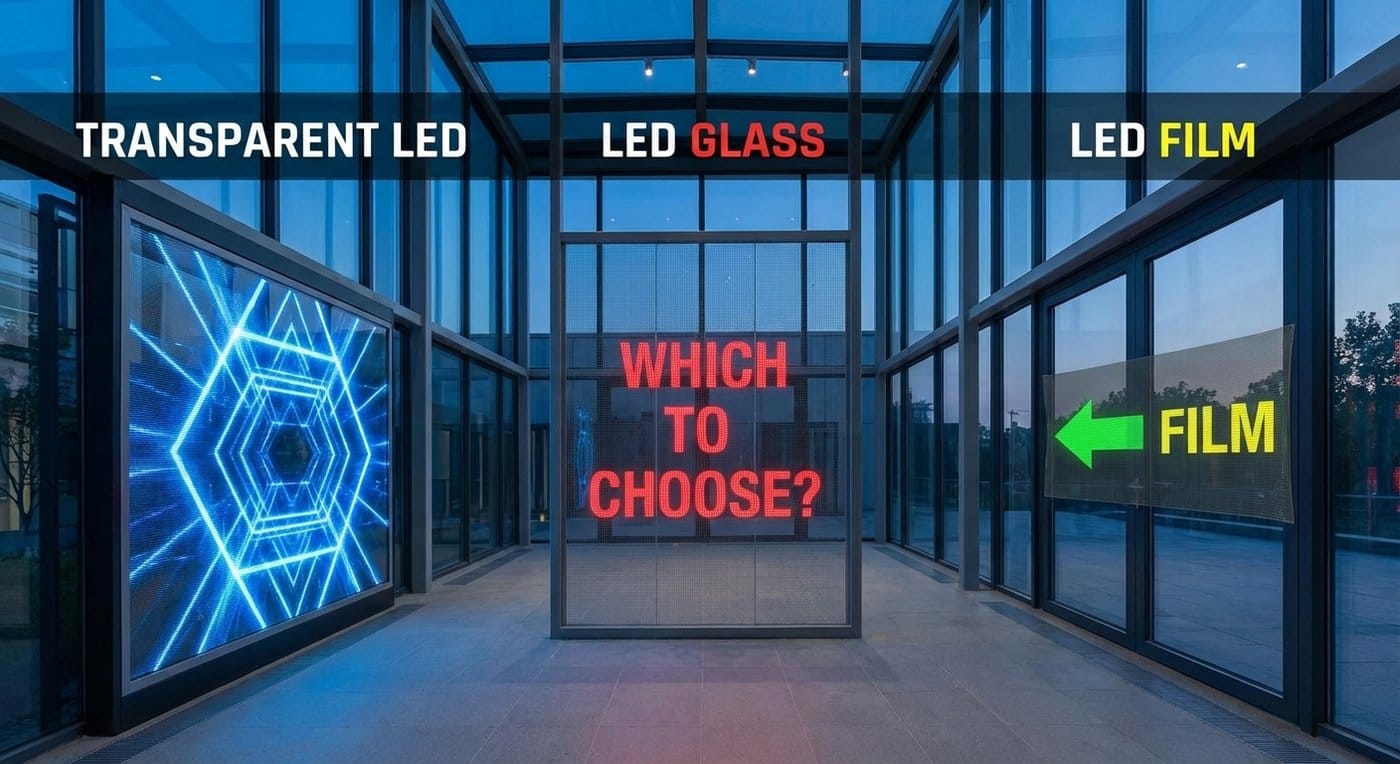
On paper, transparent LED screens, LED glass, and LED film all promise the same headline: video on glass without blocking daylight. But under the hood they behave very differently in structure, brightness strategy, service access, permitting, risk, and long-term cost.
This guide is written the way engineers, integrators, and project teams actually decide: start with constraints, not product names.
If you want a quick place to compare families and explore configurations, begin with ChinaLEDScreens and the broader transparent LED screens portfolio—then use the framework below to narrow down the right architecture.
Table of Contents
The three families in one sentence each
1) Transparent LED screens (cabinet/module-based)
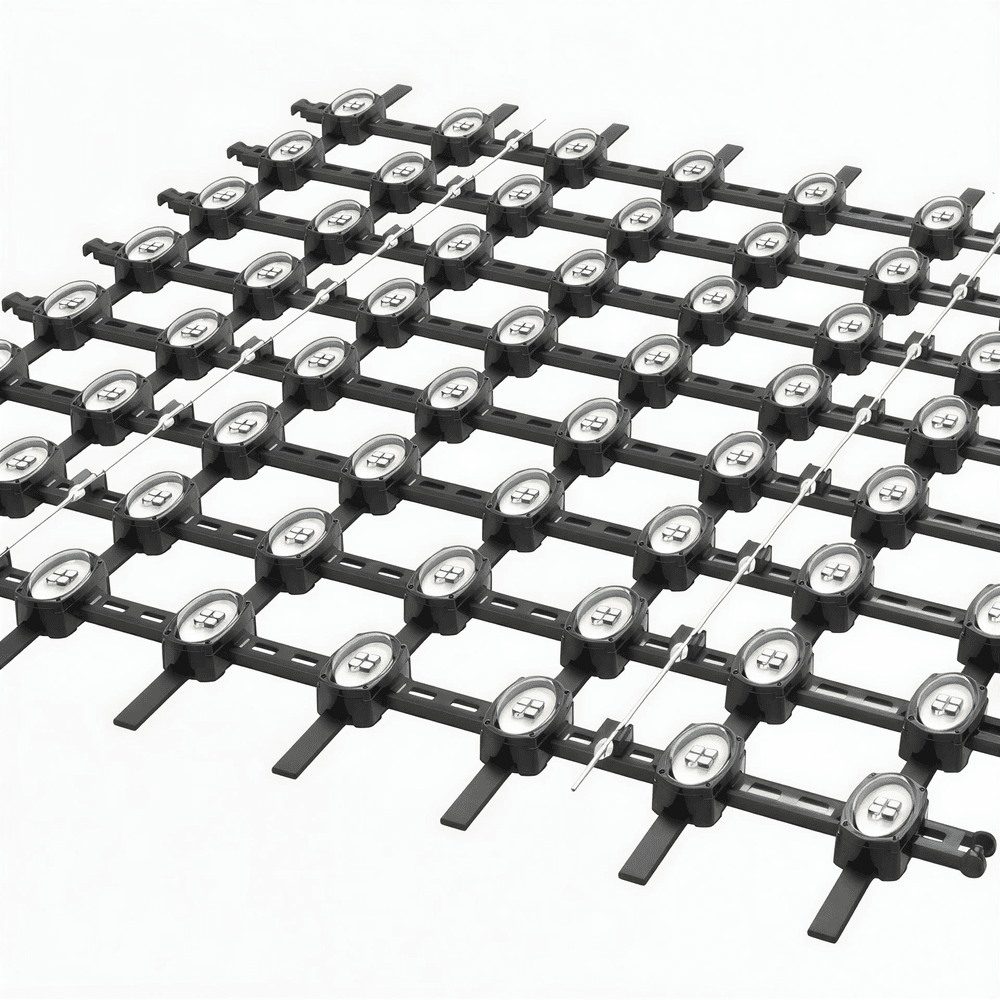
A modular LED wall with physical frames (cabinet or rail structure) where transparency comes from spacing between LED strips/pixels—best when you need touring-grade serviceability, higher brightness, and predictable engineering.
2) LED glass (LED integrated into laminated or insulated glass)
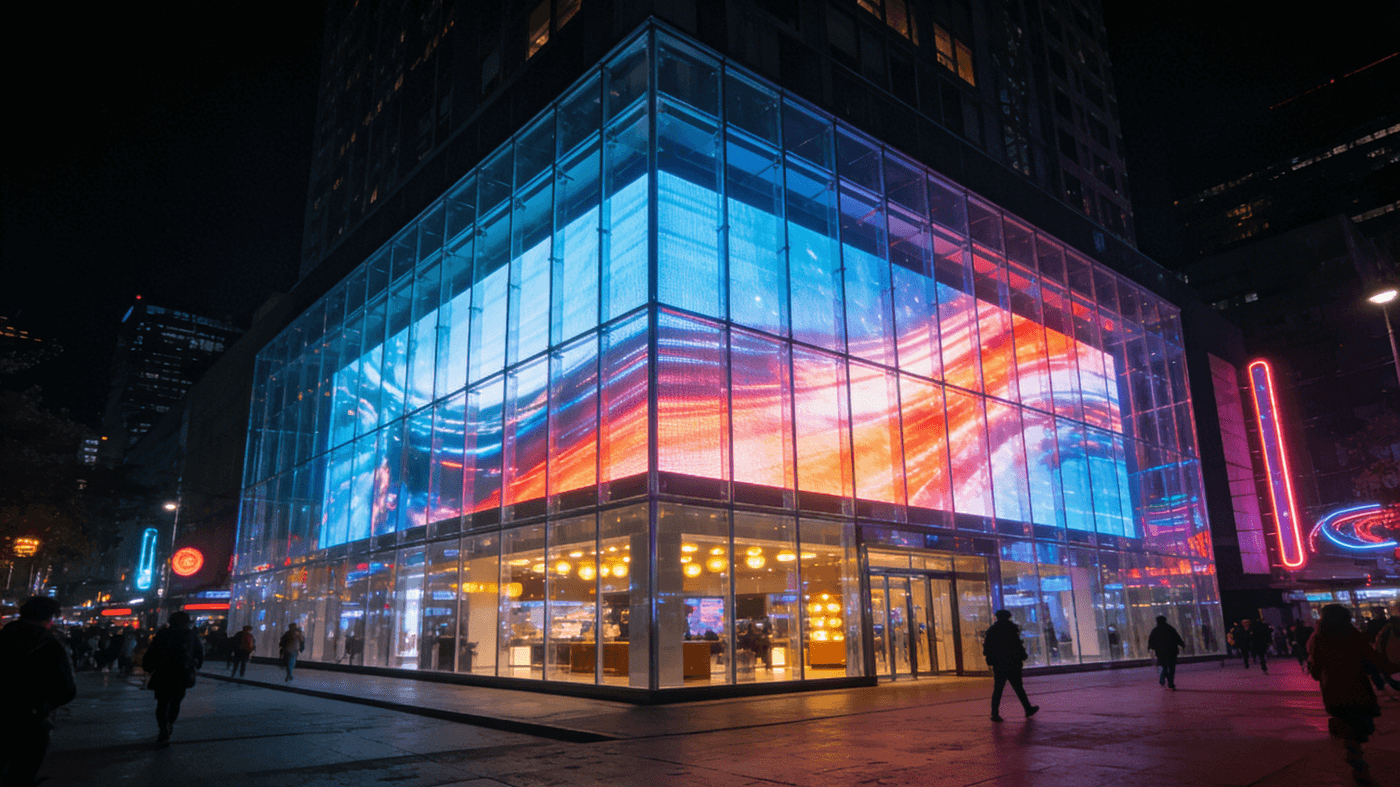
A glass-first building material where LEDs are embedded/laminated into a glass unit—best when the project demands premium architectural integration and the display must “feel like glass,” not a screen.
A thin-profile LED layer designed for minimal visual obstruction and light weight—best for clean glass installs where you want the thinnest look and you can accept more sensitivity to surface prep, environment, and service strategy.
The decision framework professionals use (5 questions)
1) Are you replacing the glass or adding a display to existing glass?
Replacing glass / building new façade → LED glass becomes realistic (it can be specified as part of the façade package).
Existing curtain wall / existing storefront glass → LED film or transparent LED screens are usually faster and less disruptive.
A simple rule: if the façade contractor owns the scope, LED glass fits; if the AV/low-voltage contractor owns it, film or modular transparent LED fits.
2) What’s the daylight + viewing requirement?
Ask two separate questions:
Daylight readability: does it need to “work” at noon on a bright street-facing façade?
Viewing distance: are people 2–5m away (retail window) or 20–60m away (façade / atrium / across a plaza)?
In practice:
If you need strong daytime punch, modular transparent LED screens often win because they can be built around a more aggressive brightness/power/thermal strategy.
If the content can be more atmospheric (patterns, brand motion, subtle visuals), LED film can be excellent—especially indoors.
3) What’s your service model: front access, rear access, or “swap the unit”?
This is where projects succeed or fail.
Transparent LED screens: typically designed for field service—swap modules, repair sections, predictable spare strategy.
LED film: service depends heavily on product design and installation method. Some setups allow partial replacement; others behave more like “replace the layer.”
LED glass: the service model is closer to glazing—you plan around replacing a glass unit or a defined section, with building access and safety rules.
If you can’t confidently answer “how do we fix one dead area in 18 months,” you haven’t chosen yet.
4) What’s the tolerance for visible hardware?
Want it to look like a display system (acceptable frames/structure)? → transparent LED screens.
Want it to look like premium glass that happens to light up? → LED glass.
Want the thinnest, least-obstructive layer on glass? → LED film.
5) What’s the approval and compliance environment?
Public-facing façade projects often involve structural review, wind load, fire and electrical codes, and sometimes landlord/municipality sign-off.
Interior retail projects may be simpler but still require safety and power planning.
A manufacturer with global compliance coordination and controlled production helps reduce approval friction—this is where technology & quality discipline and documentation readiness matter more than a one-page spec sheet.
A practical comparison (what actually changes)
Category
Transparent LED screens
LED glass
LED film
“Glass-first” aesthetic
Medium
Highest
High
Daylight performance potential
High
Medium–High (spec-dependent)
Medium (often best indoors)
Retrofit on existing glass
Good
Usually difficult
Best
Maintenance in the field
Strong
Glazing-style
Mixed (depends on design)
Structural/wind considerations
Needs proper framing
Built into façade logic
Very light, less wind load
Best-fit projects
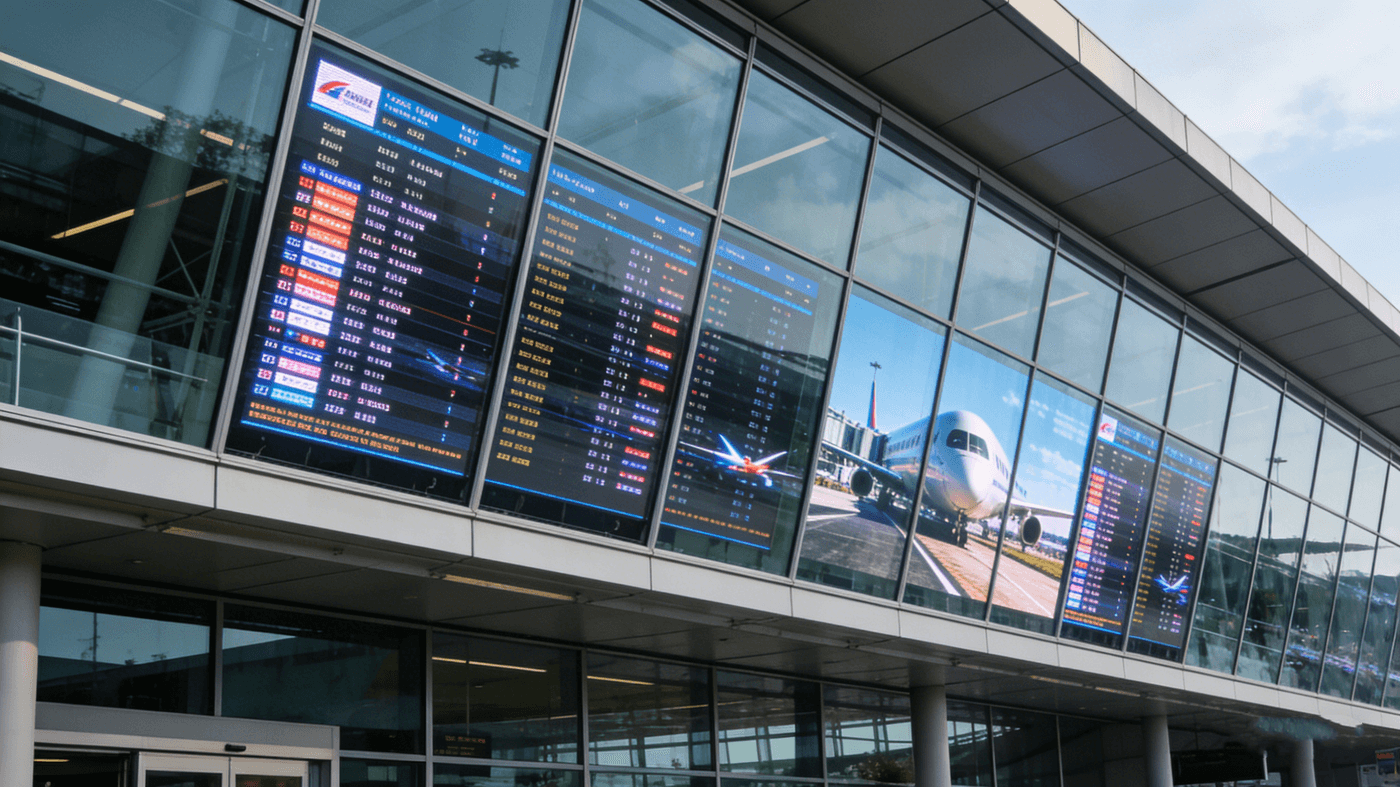
Retail windows, façades, atriums, events
Premium façades, high-end architectural builds
Retail glass, indoor glass walls, quick installs
When transparent LED screens are the best choice
Use them when you need performance + serviceability
Transparent LED screens are the “workhorse” option when:
the content must stay bright and legible,
the project needs predictable module replacement,
the schedule needs an AV-style deployment, not a façade rebuild.
What to watch (the deep traps):
Transparency vs stability: higher transparency often reduces “image density,” so content must be designed with contrast, not just brightness.
Structural discipline: even a light transparent screen becomes a sail without proper framing, anchoring, and wind strategy.
Cable and power routing: the cleanest installs win in reliability—messy routing becomes a maintenance nightmare.
If your project is closer to an “LED system install” than a “glazing product,” start your evaluation in the modular family: transparent LED screens.
When LED glass is the best choice
Use LED glass when the architecture must stay “glass-first”
LED glass is the right answer when the façade design intent is non-negotiable:
luxury retail and flagship architecture,
glass walls where visible frames are not acceptable,
projects where the display must feel integrated, not attached.
What to watch (where budgets surprise people):
Façade coordination: LED glass projects require alignment across façade contractor, structural engineer, electrical, and AV.
Longer lead and approvals: glass manufacturing and building interface details often make timelines less flexible than modular LED.
Replacement strategy: plan the “how do we swap a section safely” story early—access equipment, safety, and downtime.
fast deployment for interior or controlled environments,
a clean “floating content” look.
Where film projects fail (and how to prevent it):
Surface prep: film solutions are unforgiving. Dirty glass, imperfect adhesion conditions, or poor edge treatment can shorten life and cause artifacts.
Thermal + power density planning: thin layers still generate heat; ensure the system is designed for long-run stability.
Service approach: define whether you can replace sections or must replace a larger area—and what that means for spare parts and labor.
A strong starting point is the broader LED film screens guide. If your geometry is curved, irregular, or you need adhesive solutions, go one level deeper into adhesive flexible LED film options and installation constraints.
Use-case shortcuts (what I’d recommend in real meetings)
Retail window (street-facing)
If the brand wants high-impact daytime content and expects repairs over time → transparent LED screens.
If the brand wants minimal visual obstruction and can live with more “ambient” visuals → LED film.
If the store is a premium architecture build where “glass-first” is essential → LED glass.
Curtain wall / media façade
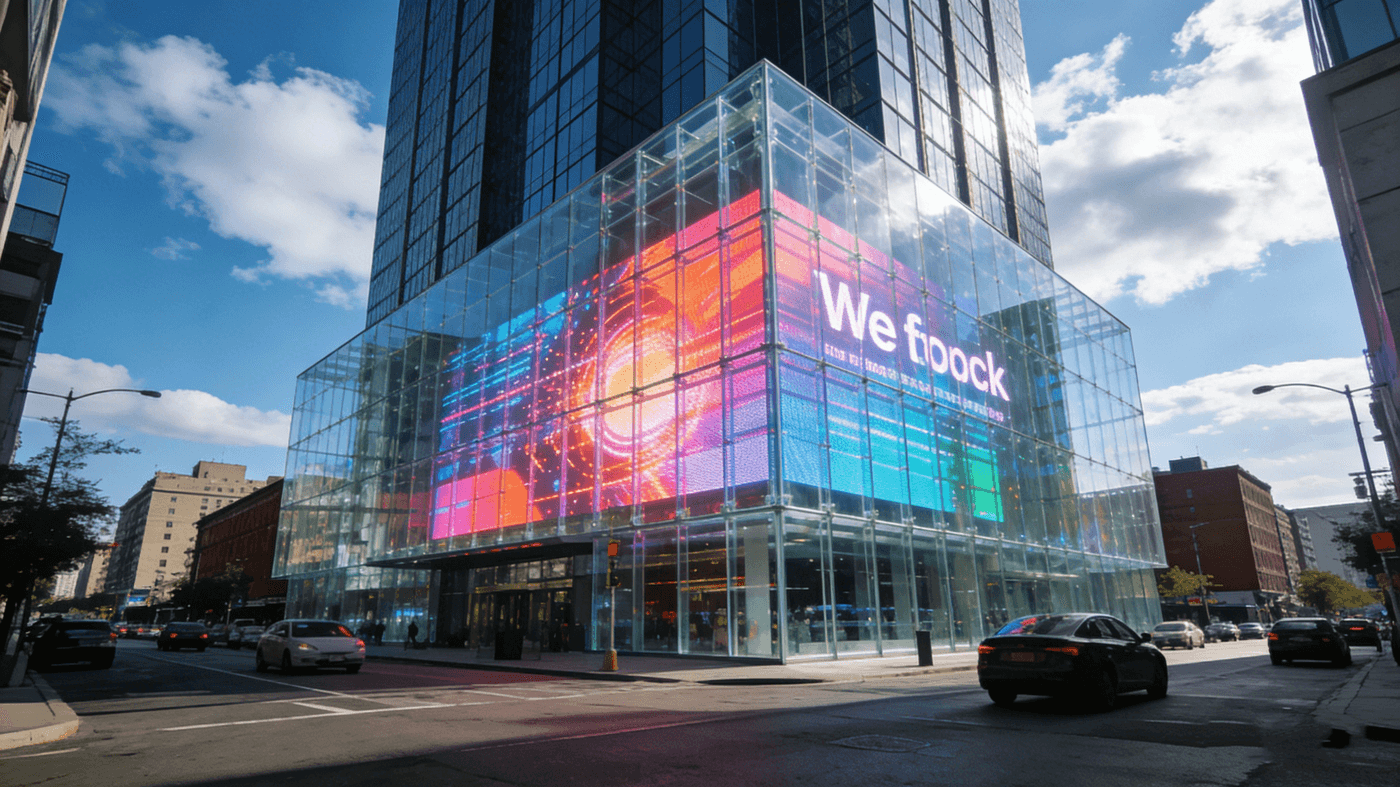
If it’s a true architectural scope with façade replacement or integrated glass packages → LED glass.
If it’s an add-on media layer with structural framing and service needs → transparent LED screens.
If you need airflow and lighter load over large areas, don’t ignore the broader “see-through family” (mesh/grille concepts). For that direction, mesh LED displays guide is the right reference.
Interior atrium / glass partitions
LED film is often the cleanest and least intrusive.
LED glass works when the building owner is upgrading the glass anyway.
Transparent LED screens are best when the space needs a robust “screen system” with easy service.
A buyer-grade checklist (copy into your RFQ)
Glass and structure
Are we replacing glass or retrofitting existing glass?
What is the anchoring strategy and who stamps the structural design?
Any wind load requirements (façade) or safety requirements (public space)?
Performance targets
Daylight readability requirement (define where and when)
Minimum acceptable transparency and the acceptable “pixel visibility”
Viewing distance and expected content style (text-heavy vs atmospheric)
Electrical and controls
Power capacity, circuit strategy, and redundancy expectations
Control system, content pipeline, and monitoring requirements
Service plan
Define the “1 dead area” scenario: repair time, spare parts, and access plan
Warranty scope that matches the service model (module swap vs unit replacement)
Documentation and compliance
Certificates needed for your market, and installation documentation quality
QA process and factory traceability
For inspiration on how different solutions look in real deployments, you can browse projects & case studies and reverse-engineer what worked.
How ChinaLEDScreens fits into this decision
ChinaLEDScreens (founded in 2009) focuses on transparent LED display solutions across modular transparent screens, LED glass, LED film, flexible film, and related see-through architectures—supported by OEM/ODM capability, global compliance coordination, strict QC, and end-to-end manufacturing control.
If you want to pick correctly (and avoid costly rework), the fastest path is:
choose the right product family (transparent vs glass vs film),
validate the service model, and
align installation details with real site constraints and approvals.
Start with the portfolio overview at ChinaLEDScreens, then go deeper into the product-family guides linked above.